It began on a spring day in 1999.
A man named Gary Comer was in a car, moving south on Michigan Avenue.
He was staring at the wall of buildings to the west and the work being done in the park to the east and this is what he thought: “I was looking at all these buildings, the construction work on the Millennium Park and I started thinking, none of this is going to be here in 1,000 years, at the next millennium all of this will be gone. Buildings are only built to last 100, 120 years. I thought we should have a record of the way the city looked.”
And so was born one of the most ambitious, audacious, remarkable, outlandish, captivating, important, playful, (choose your own adjective, there are many can apply) projects in the city’s history.
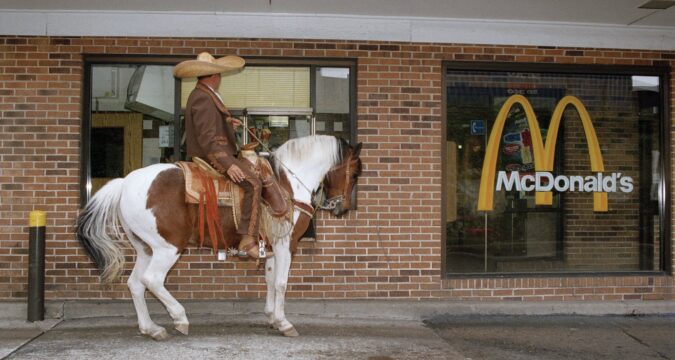
It would be called CITY 2000 and involved more than 200 photographers, videographers and journalists who would spend all of 2000 roaming the city and capturing moments both ordinary (kids on their way to a prom) and extraordinary (Barack Obama and supporters awaiting election results, which did not turn out his way), people from all walks of life, all ages, races and circumstances.
Comer funded the effort, which would eventually cost more than $3 million, and was very much hands-on, along with Richard Cahan, former picture editor at the Chicago Sun-Times, who was hired as the project director. When it began, Cahan told me it was to be “a diary of Chicago, in pictures and words, that captures the everyday lives of Chicagoans.”
Eventually, there were more than 500,000 photos. All of them were later donated to the University of Illinois Chicago, which is marking the 25th anniversary of this project with a new digital exhibit, and a massive online catalog of digitized images, as well as audio and video recordings. You can view it at the UIC Library’s Digital Collections at scalar-prod.lib.uic.edu, and an in-person exhibit that is planned to begin in October.
This has been made possible in large part by last year’s $120,000 grant from the National Park Service/Institute of Museum and Library Services to digitize, preserve and make accessible the more than 700 audio and video recordings from the collection, which include interviews with people who were photographed, behind-the-scenes details of the project and commentary.
How pleased Comer would be by this, I think. He is no longer around. He died in 2006, and I began his obituary by writing, “Best known and widely admired as the innovative founder of the Lands’ End clothing empire, Gary Comer was a most self-effacing billionaire whose largesse will have a lasting impact on Chicago.”
A Depression-era child of the South Side, Comer never forgot his humble beginnings and he shared his success, funding all manner of endeavors.
Gary Comer, left, chats with then-U.S. Sen. Barack Obama before a ribbon-cutting ceremony for Comer Children’s Hospital on Jan. 31, 2005. (Charles Osgood/Chicago Tribune)
There is the Gary Comer Youth Center, not far from his childhood home in the Grand Crossing neighborhood, in which he also built homes for people; his grammar school, Paul Revere Elementary School, receiving new computers, an air-conditioning system, uniforms and the promise to 8th graders that Comer would pay college tuition for any who graduated from high school; $80 million to the creation and expansion of the Comer Children’s Hospital at the University of Chicago; funding for the South Shore Drill Team. … The list is a long one, and the giving was ongoing through the efforts of his wife, Francie, who died in 2020, and their children, Stephanie and Guy, through the Comer Family Foundation.
When Comer died, his friend, Lois Weisberg, then the city’s cultural affairs commissioner, said, “there was nobody like Gary, and it wasn’t about money, about the numbers. Gary’s contributions to this city will be felt for generations. He wanted the best and he had the power and the passion to get what he wanted.”
Regarding CITY 2000, Weisberg told me, “Gary gave us the definitive image of our city.”
You, of course, can now judge for yourself.
I have seen so many of the photos, watched many being shot for a Tribune magazine cover story and know many of the photographers. I contributed an essay to a 2006 book, “City 2000: Chicago in the Year 2000,” featuring the work of 39 photographers and 14 other writers, including Rosellen Brown, Stuart Dybek, Aleksandar Hemon, Alex Kotlowitz and Studs Terkel.
It is exciting to revisit the photos, many by Tribune photographers, some of whom have retired, some who have died. But the entire package is a vital visual marvel.
This has all brought back memories of Comer, of the lunches we often shared, along with stories. I was reminded of some of those words that he told me about CITY 2000. He said, “One of the things that always amazed me about this, the quality of the people who wanted to be involved, the people who left good jobs to be part of this. The other thing was that most seemed more interested in people than in the backdrop. I had to open up to that.”
He did and was rewarded, “Seeing the photos has encouraged me to go out into the neighborhoods, seeing things and neighborhoods and streets I had never seen before. It made me look at the city in a very different way, to realize all over again that this is a great city, a friendly city, a city that is being reborn from within.”
And finally he told me, “I see this entire project as a message to the future.”
And here we are then, message powerfully delivered.
rkogan@chicagotribune.com
https://www.chicagotribune.com/2025/09/17/uic-city-2000-gary-comer/