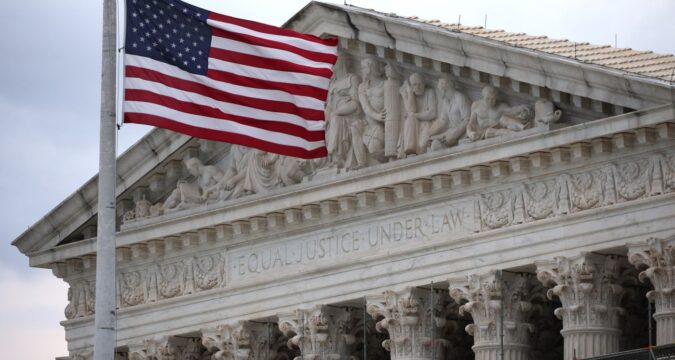
On Sept. 8, 2025, the U.S. Supreme Court, in a 6–3 split, lifted a lower court’s restraining order that had prohibited immigration authorities in Los Angeles from stopping or detaining people based solely on factors such as apparent race or ethnicity, speaking Spanish (or English with an accent), working in low-wage jobs, or being present at specific locations. As a result, federal agents, chiefly from Immigration and Customs Enforcement, may now resume “roving patrols” that rely on such immutable characteristics as grounds for suspicion.
Constitutional alarm bells are ringing. Critics across the legal and civil rights spectrum have denounced the decision as fundamentally un-American. Justice Sonia Sotomayor’s dissent captures the alarm: “We should not have to live in a country where the Government can seize anyone who looks Latino, speaks Spanish, and appears to work a low-wage job.”
By endorsing stops and detentions based on race, language, employment sector, or locale, the Supreme Court has effectively greenlit racial profiling tactics under the guise of “commonsense” criteria, as Justice Kavanaugh asserted in a concurring opinion. Civil liberties organizations warn that this deference to prejudice undermines the Fourth Amendment and tears at the fabric of equal protection.
Tragically, there are echoes of this is America’s dark past. This ruling evokes some of the SupremeCourt’s most shameful legacies, cases such as Plessy v. Ferguson (1896), which enshrined “separatebut equal,” and Dred Scott v. Sandford (1857), which declared Black Americans were not citizens. Though those decisions were eventually repudiated, they laid a foundation for systemic inequality. Suppose the Supreme Court’s conservative majority continues to sanction state-sanctioned discrimination. In that case, we could be witnessing early steps toward a new era of sanctioned inequality, where race and language inform suspicion, not actions.
Today’s Supreme Court risks reversing long-won protections, not through overt declarations of segregation, but through tacit permission for racially inspired surveillance and detention. These “shadow docket” rulings, issued without full briefing or argument, can have sweeping consequences with little explanation or transparency. The pathway from Terry v. Ohio, which permitted “stop and frisk” based on reasonable suspicion rooted in articulable facts, to this new standard is chilling, particularly when “reasonable suspicion” is now allowed to rest on immutable characteristics such as race or language.
In Los Angeles, where one in three residents was born abroad, the immediate consequences are palpable. Community leaders, local officials, and immigrant advocates warn that this decision instills fear in daily life, disrupts essential labor sectors, and undermines trust in institutions. California Gov. Gavin Newsom condemned the court’s conservative majority as “the Grand Marshal for a parade of racial terror in Los Angeles.”
Federal authorities did not hesitate; the Department of Homeland Security announced plans to “flood the zone” in Los Angeles, signaling intensified enforcement across urban centers.
History must not repeat itself. This moment demands vigilance. If the machinery of justice allows impunity for stops based on ethnicity or language, earlier victories to dismantle systemic racism may unravel. What begins in one city can ripple nationally, emboldening local law enforcement and federal agencies to adopt discriminatory practices.
At stake is the very notion of citizenship and belonging. Allowing individuals to be pursued not for suspicious behaviors, but for the shade of skin or the sound of speech, risks creating a second-class status based on identity, not conduct.
We must heed a call to resist and reclaim justice:
•Legal Resistance Is Essential: Lower-court litigation continues and hearings on more permanent injunctions are scheduled for later this month. Advocacy groups and immigrant rights organizations must marshal resources to challenge this ruling in court before it becomes entrenched.
•Political Accountability Matters: Legislatures and city governments should enact laws and ordinances that protect residents from profiling, regardless of the federal policy direction.
•Public Awareness Must Grow: We must remember Plessy and Dred Scott not as distant relics, but as warnings. Today’s decisions may not segregate train cars, but they surveil and detain entire communities. The threat lies in normalization.
The Sept. 8, 2025 ruling by the Supreme Court is not just an administrative tweak, it is a turning point. By sanctioning scrutiny based on race, language, or occupation, the court jeopardizes constitutional standards that have safeguarded civil liberties for generations. If unchecked, it could lead to a descent that debates citizenship in terms of identity, not innocence or intent. And while this court may be charting a dangerous course now, history proves that the arc of justice can bend back, provided we fight, organize and remain steadfast in our defense of equality.
This is a contributed opinion column. Tom Whalen is a retired physician who resides in Allentown. The views expressed in this piece are those of its individual author, and should not be interpreted as reflecting the views of this publication. Do you have a perspective to share? Learn more about how we handle guest opinion submissions at themorningcall.com/opinions.