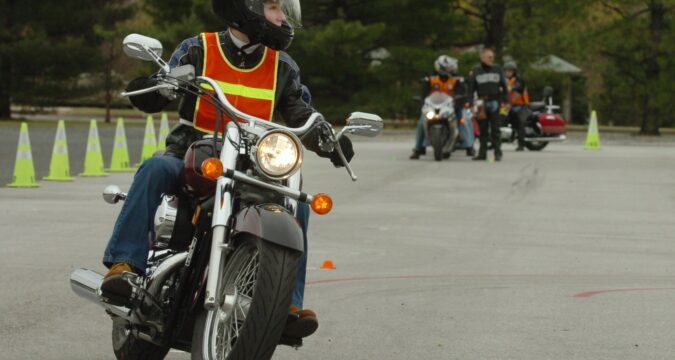
A video shows a lone Harley-Davidson motorcycle rumbling up a sunny quay and pulling to a stop. The rider removes his helmet and speaks to the camera.
“As a fellow longtime rider, I wanted to thank you for your service and ask you to ride safe, to preserve your life and our readiness,” says Vice Adm. Daniel Cheever, commander of Naval Air Forces and Naval Air Forces, Pacific Fleet.
After noting that 74% of motorcycle accidents are at least partially the rider’s fault, the Harley rider makes his central point.
“Navy motorcycle fatalities are currently projected to be the highest since 2008,” Cheever said in the video posted June 4. By that time, the Navy had already surpassed the 28 off-duty motorcycle crash fatalities recorded in all of 2024. “It’s unacceptable to lose one of you, let alone dozens, which we have this year. Let’s reverse the trend as we serve, excel and make a difference. Fly Navy, ride safe.”
From June to the end of the fiscal year Sept. 30, 10 more sailors and Marines died in crashes. In all, 30 sailors and 15 Marines died in motorcycle accidents in 2025.
The U.S. military’s death toll from motorcycle crashes in 2025 was 84, including 28 in the Army and 11 in the Air Force.
In 2023, motorcycle riders accounted for 15% of all traffic fatalities nationwide, according to the National Highway Traffic Safety Administration. In the U.S. military that year, the most recent year with comparable statistics, about half of all traffic fatalities involved motorcycles, according to the Pentagon.
More than 750 service members have died in motorcycle crashes in the past decade, the Pentagon says, which is why the military’s central message continues to focus on reducing deaths. But those who survive can face injuries serious enough to end their military careers.
An Army study showed that for every motorcycle death, there are five motorcycle-related hospitalizations and 22 outpatient visits. Hospital stays average 20 days. Each accident costs the Army an average of $100,000 in medical treatment and lost duty work time.
Injuries to scores of military motorcycle riders each year range from traumatic brain injuries and broken limbs to eye damage and “road rash,” in which a fallen rider skids across coarse pavement.
Crashes were usually caused by swerving between lanes, oversteering, loss of traction on wet or loose surfaces, driving while fatigued, not wearing helmets and other safety equipment, wearing low-visibility clothing and the failure of poorly maintained motorcycle parts, according to Pentagon studies.
About one-third of fatal accidents involve the consumption of alcohol, about the same as civilian statistics, the Army said.
The one key area where military motorcycle riders differed was speed. About half of all fatal accidents involving service members occur at excessive speeds, compared with a third of accidents for civilian riders.
Since the record 118 deaths in 2008, the Defense Department has instituted mandatory safety training and defensive riding courses. Older service members have been asked to mentor younger riders.
Beginning this month, all military personnel who ride motorcycles must register with their command and certify that they have passed safety and driver awareness classes and possess the proper headgear, clothing, and equipment for riding.
The Pentagon has also appealed to the motorcyclist’s sense of duty and patriotism, telling service members that avoiding accidents keeps them ready to deploy at any time, anywhere.
“Ride right — Stay in the fight,” one poster said.
https://www.dailypress.com/2025/10/07/us-military-motorcycle-safety/