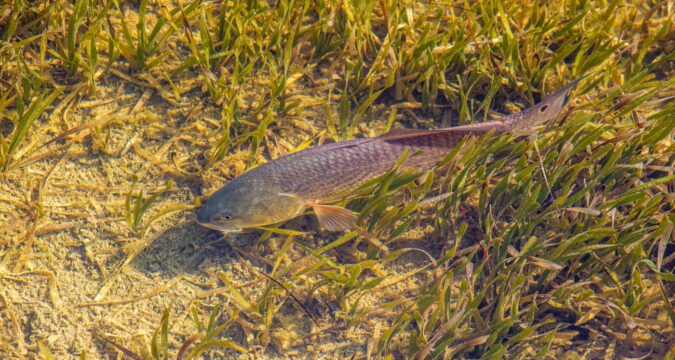
Floridians understand the value of clean water, healthy fish populations and vibrant coastal economies. Our way of life — and a major part of our state’s economy — depends on it. That’s why I’m joining leading sportfishing and conservation organizations all along the U.S. coast calling on President Trump to take executive action to protect America’s forage fish. This long-overdue step will be a game-changer in safeguarding the foundation of marine ecosystems in Florida and coastal states nationwide.
Forage fish — species like menhaden, herring, mackerel, shad, and river herring — may be small in size, but their role in the ocean is enormous. They feed on plankton and, in turn, feed everything from tarpon, snook and redfish to whales, dolphins and seabirds. Tarpon in particular rely on forage fish during their annual migrations. Without abundant forage fish, predators starve. And when predator populations decline, so do the opportunities for anglers, guides and coastal businesses that rely on marine-related tourism.
Jim McDuffie is president and CEO of Bonefish & Tarpon Trust. (courtesy, Jim McDuffie)
Unfortunately, industrial-scale fishing, which is often foreign-owned, has been allowed to harvest vast quantities of forage fish using high-impact methods like midwater trawls and purse seine nets. These practices sweep up entire schools, convert them into fishmeal and oil, and export them for foreign aquaculture and pet food industries. The ecological and economic cost is staggering. In some regions, forage fish populations have plummeted: Atlantic herring are now at just 15% of their target levels, and river herring have declined by more than 90% from historic abundance.
This depletion has real consequences in Florida. Anglers are seeing changes in the availability and behavior of gamefish. Guides are reporting fewer baitfish along our coasts. And our world-renowned fisheries are under increasing pressure from both habitat loss and alarming changes in the prey base that provide food for fish.
That’s why we are asking President Trump to sign an executive order that will end reduction fishing of forage species in U.S. waters and prohibit the use of destructive midwater trawls. We need federal agencies to manage forage fish based on their role in the broader ecosystem — not just their commercial value. Setting science-based targets would ensure predator fish, marine mammals and seabirds have enough to eat.
This policy isn’t just good for fish and wildlife, it’s good for Florida’s economy. Recreational fishing in the U.S. generates $138 billion in sales and supports 700,000 jobs. Here in Florida, it is a cultural cornerstone and a major driver of tourism. Studies show that forage fish left in the water are at least twice as valuable to the economy as when ground into industrial products. Executive action from the White House will prioritize local anglers, guides, bait suppliers and small-scale commercial fishers over a handful of foreign-owned corporations.
After decades of management that overlooked the ecological importance of forage fish, a strong executive order by the president would set a new standard, placing Florida’s coastal communities, fisheries and future generations first.
Please join us in encouraging President Trump to take this critical executive action to ban reduction fishing and industrial midwater trawling in the Gulf of America and on the East Coast. It will protect an iconic American industry from exploitation and restore economic growth to our coastal regions. This is not just about fish — it’s about families, jobs and communities that depend on healthy American-managed waters.
Jim McDuffie is president and CEO of Bonefish & Tarpon Trust, a nonprofit dedicated to conserving bonefish, tarpon and permit fisheries and habitats through science-based conservation, education and advocacy.
https://www.sun-sentinel.com/2025/10/12/floridians-win-when-forage-fish-are-protected-opinion/