A lot of people are poor because they’ve made really crappy decisions. A lot of liberals hate that observation. They seem more inclined to blame billionaires for poverty. I’ve read many op-eds making that argument but none of them explain how it is that billionaires drive people into poverty.
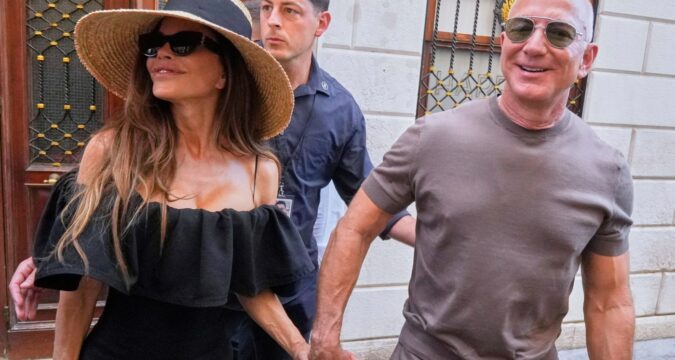
Actually, billionaires such as Jeff Bezos raise the standard of living for the rest of us by making better or cheaper products.
I grew up in a neighborhood with a lot of poor people making a lot of crappy decisions. A guy down the street picked up the interesting hobby of taking a bus to a better part of town to steal cars. He’d drive them around for a few hours, park them and take a bus home. This pastime came to an end when he received a cop’s bullet in the leg and a sojourn in the slammer. One of my brother’s friends lived across the street from us and dealt drugs out of his apartment. He drove a Porsche and lived large. Unfortunately, he was inclined to get high on his own supply and one day he was taken from his apartment on a stretcher with a sheet over his head.
Nobody on either side of my family had graduated from high school. My aspirations — to the extent I had any — were to grow up and get a job somewhere. Until my last year of junior high school I never did any homework or other out-of-class assignments. I attended school most of the time, so I learned the material anyway. Given the snail’s pace of instruction, you’d have to be pretty dumb not to. I did well on tests, but all those zeros for homework meant my grades were at best mediocre,
As I began my last year of junior high school, my brother mentioned to me that the neighborhood high school, which he was attending, had several gangs who seemed more in charge than were the teachers. He suggested I might consider going to the city’s academic high school instead. I’d been in a fair number of fights, but mostly with friends and acquaintances as a result of hard fouls or other mayhem during our endless games of pickup basketball. But I knew I was no match for hoodlums.
So, much to the amazement of my teachers, I started handing in homework and doing assignments. My grades soared and I aced the entrance exam to the academic high school. Once there, I had fun competing academically against bright and hardworking students. I went on to college and grad school, got a job, got married, and had three kids.
I followed what’s called the “success sequence”: graduate from (at least) high school, get a full-time job, and get married before you have kids. How well does following the success sequence work? Wendy Wang and W. Bradford Wilcox used data from the National Longitudinal Survey of Youth to see how a sample of people born between 1980 and 1984 were faring when they were 28 to 34 years old. They found that 97% of people who followed the success sequence weren’t poor. The moral: Don’t want to be poor? Then follow the success sequence. Obviously, that can be easier said than done. Some people are really screwed by life. They have physical or mental disabilities, their parents abuse or neglect them, or they go to schools that are so awful and chaotic that they have trouble learning even the basics. For these people, following the success sequence may be difficult to impossible.
In addition, although Wang and Wilcox found a high correlation between following the success sequence and escaping poverty, they didn’t demonstrate that following the success sequence causes people to escape poverty. Establishing causality using observational data like that in the NLSY is hard. That’s why we see so much conflicting advice as to whether we should or shouldn’t drink coffee or red wine or take vitamin supplements. In this case, though, the causality is staring us in the face. As George Mason economist Bryan Kaplan puts it: “’Dropping out of school, idleness, and single parenthood make you poor’ is on par with ‘burning money makes you poor.’”
Do we have a moral obligation to help the poor? Sure. But let’s acknowledge that many people are poor because they’ve made bad decisions in life. And, somehow, I don’t think Bezos is to blame for that.
This is a contributed opinion column. Anthony Patrick O’Brien is professor of economics, emeritus, at Lehigh University. The views expressed in this piece are those of its individual author, and should not be interpreted as reflecting the views of this publication. Do you have a perspective to share? Learn more about how we handle guest opinion submissions at themorningcall.com/opinions.
https://www.mcall.com/2025/11/15/opinion-billionaires-are-not-to-blame-for-poverty/