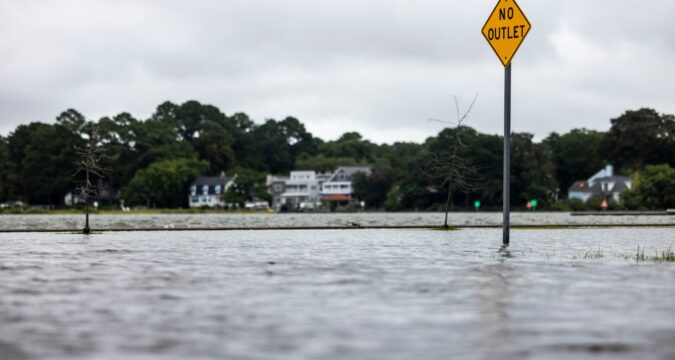
Hampton Roads needs no reminder that a changing climate poses considerable risks and is already bringing wide-ranging effects for our region and its residents. Rising seas, recurrent flooding and extreme weather — all evident here and throughout the commonwealth — require thoughtful, evidence-based solutions to protect threatened communities, public health and economic growth.
When the new General Assembly convenes in January and Gov.-elect Abigail Spanberger takes office, climate policies will be among the top priorities they must address. To help guide that important work, they are fortunate to have the newly released Virginia Climate Assessment, a first-of-its-kind state-level dive into changes affecting the commonwealth and the serious challenges our communities will face in the coming years.
The First National Climate Assessment, issued in 2000, represented an initial effort by hundreds of researchers, climate scientists and data experts to provide a comprehensive picture of how changing conditions would affect Americans from coast to coast. Subsequent editions refined and updated that work, resulting in the most recent report — the fifth assessment — released in 2023.
Those voluminous, data-driven reports spelled out the potential effects of a warming planet, including how an evolving climate would change “the natural environment, agriculture, energy production and use, land and water resources, transportation, human health and welfare, human social systems, and biological diversity.”
That work has been essential for policymakers as they pursue strategies to curb emissions, adapt to changing conditions, bolster resilience and help prepare communities for a hotter, wetter future. Sadly, another national climate assessment is unlikely; in April, the Trump administration fired the team preparing the report, which was scheduled for release in 2027.
That decision lends greater importance and urgency to the Virginia Climate Assessment, which George Mason University’s Virginia Climate Center released in late November. By narrowing the focus to the commonwealth, this landmark report provides a clear view of what the data says and what Virginians can expect as conditions continue to change.
Reflecting the work of dozens of scientists, academics, climate experts and government officials, the report intends to establish “a baseline against which future changes and impacts can be measured and understood, and adaptation effectiveness and resilience can be evaluated.”
It notes that Virginia boasts six climate regions, detailing the unique conditions each experiences, but offers a broad conclusion that the commonwealth’s climate has become warmer and wetter in recent decades, and that those trends are likely to continue. Warmer temperatures overall mean our coldest days aren’t as severe as in the past, but that our warmest days have not yet increased substantially.
Tidewater residents won’t find many groundbreaking conclusions for our region. The assessment found that greater precipitation extremes and more frequent tidal flooding occur along the Atlantic coast and that chronic tidal flooding will increase in communities such as those in Hampton Roads.
But the goal here was not to identify some remarkable new conclusions, but rather to compile and examine historic climate data, illuminate trends and point to how changes could affect our residents, businesses and communities.
Changing temperatures and increased rainfall (or prolonged drought) will affect farmers and crop production. Extreme heat and cold will place additional burdens on the vulnerable. Habitats that have thrived for centuries will be altered.
All of this demands thoughtful policies to ensure sustainability, resilience and adaptation. It means taking these factors into account when making decisions about energy, transportation, housing and environmental stewardship, among a host of other areas.
The entire report is a remarkable, valuable achievement, and those who invested years of work into its production deserve the commonwealth’s gratitude. The authors promise this will be the first assessment and updating its findings will continue to guide future policymakers.
For now, though, those taking office next month should review this data and make sure the effects of a changing climate are front and center as they begin their work. The challenges ahead won’t wait and should be met head-on with the urgency this report outlines and which the situation demands.