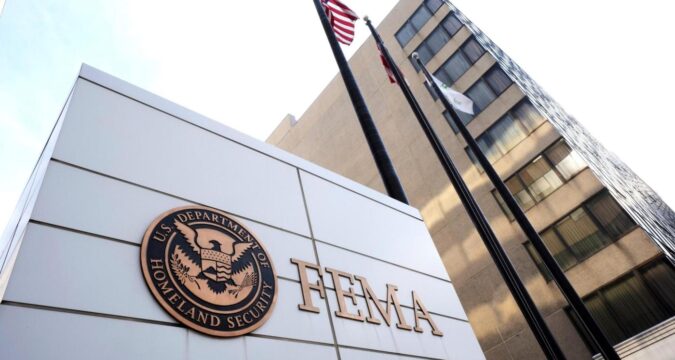
Extreme weather isn’t new for anyone living in Hampton Roads. We’ve long relied on the Federal Emergency Management Agency (FEMA) to catch us when hurricanes blow through, our streets wash out and families scramble for shelter. However, as storms intensify and occur more frequently, that safety net is unraveling precisely when we need it most. Some Hampton Roads low-income communities feel the disappearance more keenly, facing deeper losses and slower recoveries while federal support hangs in the balance.
When disaster strikes, FEMA is supposed to quickly bring the full resources of the federal government. With a governor’s request and a presidential disaster declaration, FEMA mobilizes housing assistance, clean water and emergency relief that can mean the difference between recovery and ruin. But when the safety net frays, we’re left unprotected.
Months after flooding, families are waiting for repairs, rent relief and safe places to live. Insurance payouts lag or never come. Landlords raise rents to offset repair costs. And because most Norfolk residents rent, and FEMA’s recovery programs are built largely around homeowners, those with the fewest resources are least likely to get help. For families already living paycheck to paycheck, the path from “disaster” to “recovery” keeps getting steeper. This growing vulnerability isn’t just a local issue — it’s a national one.
Climate change is fueling climate disasters everywhere. Communities in Virginia and across the country need a stronger FEMA, not a weaker one. Yet the Trump administration has been systematically undermining the agency that’s supposed to help Americans rebuild.
President Donald Trump has targeted FEMA by terminating roughly 20% of its workforce and critical grant programs such as the Building Resilient Infrastructure and Communities program (BRIC), designed to help towns build resilience before the next disaster strikes. These cuts aren’t just bureaucratic adjustments; they carry real, dangerous consequences.
Take Portsmouth, for example. Earlier this year, a FEMA BRIC grant worth $24 million that would have reinforced the Lake Meade Dam, a critical line of defense against flooding, was abruptly canceled. That decision didn’t just undercut a construction project; it put thousands of Virginians at risk. According to a 2024 Old Dominion University study, a Category 3 hurricane could cause at least $15.6 billion in damage across Hampton Roads. Without FEMA’s support, local budgets can’t shoulder that level of loss.
The Trump-appointed FEMA Review Council — on which Gov. Glenn Youngkin serves — was quickly assembled through an executive order to make FEMA “supplemental” to state disaster relief efforts. But this overlooks a fundamental fact: FEMA steps in only when disasters exceed state and local capacity, and most states, including Virginia, cannot manage large-scale recovery without federal expertise and resources. And even as the FEMA council prepares its long-awaited report, the Trump administration continues displaying its hostility to real improvements to FEMA.
It’s clear: Eliminating FEMA doesn’t make sense. The Trump administration must strengthen FEMA, not weaken it. The FEMA Act of 2025, which was introduced and approved by the House Transportation and Infrastructure Committee, now awaits scheduling for a full House vote. This legislation would modernize the agency and expand support for renters, low-income families and climate-vulnerable communities by providing faster reimbursements, streamlined applications, expanded housing options, improved transparency and broader eligibility for mitigation projects, measures vital to ensuring all disaster survivors can access timely and effective federal aid. Congress should pass the FEMA Act to modernize the agency and better prepare our communities for the accelerating climate crisis.
The future of our communities, especially those hit first and worst, depends on robust federal disaster relief. Everyone living in Virginia deserves a future where resilience is possible for all, regardless of zip code or income. The promise of environmental justice is at stake, and so is our chance to rebuild, not just after the next storm, but for generations to come.
Kim Sudderth of Norfolk is chair of the Norfolk Planning Commission, co-founder and CEO of Grass Roots Organizers (gRo) and a member of the Chesapeake Climate Action Network (CCAN) Board of Directors.
https://www.pilotonline.com/2025/12/27/column-a-stronger-fema-is-hampton-roads-best-defense/