When I came home from the Army, the move from “over there” to “back home” was not a clean break. It felt like drifting, carrying pieces of two lives that did not quite fit together.
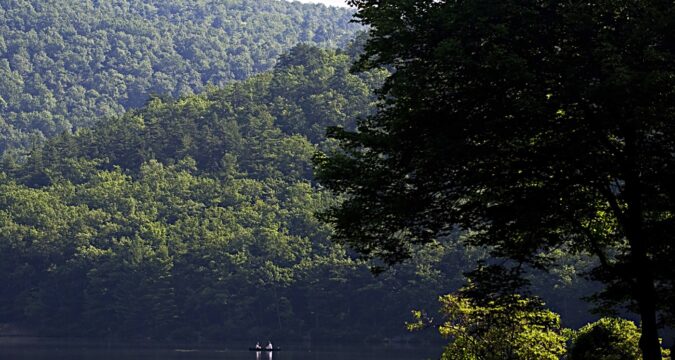
What started to put those pieces back in place were not offices or waiting rooms. They were the places where the pavement ends: the Appalachian Mountains, the blackwater rivers of southeastern Virginia and northeast North Carolina, the quiet corners of national forests where you can still hear your own footsteps.
I grew up paddling those rivers with the Boy Scouts, hunting in those swamps, camping in the cold and coming home smelling like woodsmoke. After my service, I went back to those same landscapes because I needed solid ground under me again. With a paddle in my hands or a pack on my back, I was not just a veteran trying to make sense of things. I was a husband, a friend and a Virginian who still knew how to read a river bend or hunker down to spot a deer at dawn.
That is why the push in Washington to repeal the Roadless Area Conservation Rule feels personal.
In 2001, after years of study and more than a million public comments, the U.S. Forest Service adopted what most people call the roadless rule. It set limits on building new roads and clear-cutting timber in some of the last large, mostly undeveloped parts of our national forests (close to 60 million acres across 39 states). These places are not closed off. People can still hunt, fish, hike, camp and watch wildlife. The rule restricts new road construction and certain timber harvests, but it does not shut the public out.
Repeal supporters often argue that we need more roads to fight wildfires. The record does not back up that claim. The rule already allows exceptions in emergencies and permits cutting trees to reduce hazardous fuels. If the real goal is to protect homes and lives, our focus should start where people actually live, along the wildland-urban interface where neighborhoods meet the forest. Less than 5% of inventoried roadless areas are near that zone. Studies show that the fires destroying the most houses are usually started by people and often begin on private land, not deep in national forest backcountry.
Looking at this as a taxpayer adds another layer. The Forest Service already manages more than 360,000 miles of roads and reports a multibillion-dollar backlog just to keep existing roads and bridges from falling apart. Every new mile is a long-term promise to plow, grade, replace culverts, and deal with washouts. In Alaska’s Tongass National Forest, an analysis by Taxpayers for Common Sense found that over roughly 40 years the Forest Service spent close to $2 billion on its timber program and brought in only a fraction of that in receipts, with road building taking up a large share of costs. Many remaining roadless areas are just as steep and expensive to log.
Those high ridges and deep draws also hold the headwaters that feed our rivers and reservoirs. Forests without a web of roads hold their soil, keep sediment and pollutants out of streams, and save downstream communities money on water treatment. They are where elk and deer move between summer and winter range, where bears still find cover, and where cold, shaded creeks keep native trout and salmon alive.
For veterans such as me, and for families across the country, these are the places we go when we need to clear our heads. They are where you can sit by a fire, watch the embers fall, and feel some of the weight you have been carrying finally ease off your shoulders.
Keeping the roadless rule in place is not about freezing the country in time. It is about choosing a few last big pieces of ground where the roads stop and the quiet begins, and making sure those places are still there when the next generation needs them as badly as mine did.
James Barry of Virginia Beach is a U.S. Army veteran.

