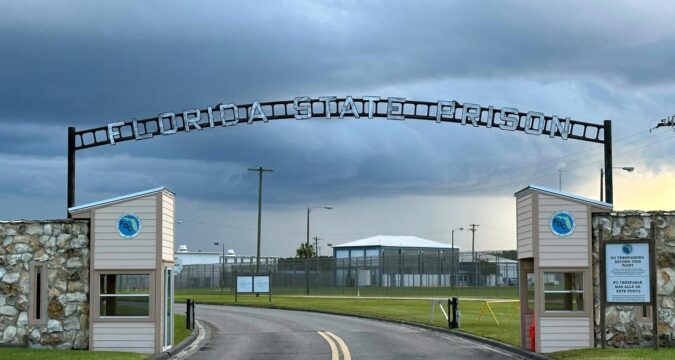
Florida is often described as a beacon for religious liberty, grounded in a simple constitutional truth: Government may neither establish religion nor prohibit its free exercise. That principle doesn’t stop at the prison gate.
For decades, Florida has recognized that faith-based programs inside correctional institutions can coexist with constitutional guardrails — and, when done well, can strengthen public safety, rehabilitation and accountability. At a time when staffing shortages and operational strain threaten that balance, Florida has an opportunity to reinforce what it already knows works.
Patrick Mahoney is former director of the Florida Department of Corrections’ Office of Programs and Re-entry. (courtesy, Patrick Mahoney)
Today, Florida operates two faith-based prisons and dozens of faith-based dorms and housing units, with thousands of incarcerated men and women participating in faith-based programming each day.
These programs integrate spiritual principles into rehabilitation by emphasizing personal responsibility, moral development, character formation and practical life and employment skills needed for successful reentry.
Delivered largely through community volunteers and peer mentors, faith-based programming addresses trauma, accountability and personal growth while reinforcing positive and responsible behavior inside the institution.
Over more than three decades with the Florida Department of Corrections, retiring in 2024 as the agency’s Statewide Director of Programs and Re-entry, there is one lesson that repeated itself in every facility I served: Real change inside a prison doesn’t come from more rules or more headcounts. It comes from the people who walk in with purpose and stay long enough to earn trust. Florida has long understood this, which is why our state has supported faith-based correctional partnerships for years.
Today, with inmate populations shifting and staffing stretched thin, we have an opportunity to strengthen what already works.
St. Peter Claver and Xtreme Soulutions are two such programs. These two prison ministry programs offer services to the incarcerated and also provide support services upon release. Support for prison ministry groups like these is cost effective and offers models for successful re-entry outcomes.
Brandon Burley is an author, criminal justice educator and retired detective. (courtesy, Brandon Burley)
At the same time, Florida’s correctional system is facing a challenge no Legislature can ignore: As staffing shortages deepen and turnover climbs, the people paying the price are the officers and inmates who depend on stable, consistent programming. The question is not whether Florida needs help inside its prisons — it is what kind of help actually works. For years, faith-based partners have filled that gap, and today the need has never been greater.
Long before “re-entry” became a buzzword in criminal justice, Florida was already building a different kind of correctional culture — one that recognized the role faith, mentorship and consistent community support play in reducing crime. That legacy hasn’t disappeared, but it is increasingly strained under the weight of rising needs and shrinking staff capacity. Strengthening the partnerships that built that legacy isn’t just good policy, it’s essential to public safety.
Florida has the opportunity to strengthen what it already believes: that transformation from the inside out is the most reliable public-safety strategy the state has. Supporting faith-based programming is sound policy, with a measurable return on investment. Faith-based programming reduces recidivism, lowers prison staffing churn and contributes to safer communities for all Floridians. With a current $117 billion state budget, Florida can make this a top priority for 2026.
Patrick Mahoney, of Tallahassee, is former director of the Florida Department of Corrections’ Office of Programs and Re-entry. Brandon Burley is an author, criminal justice educator and retired detective based in Knoxville, Tenn.