Florida fish and wildlife officials said this week that no bears were taken illegally as part of the state’s first bear hunt in a decade and no hunters were cited, calling it a success “by all measures.”
But they acknowledged that a large number — perhaps more than a third — of the 172 permits issued were not actively hunted, suggested they were snapped up by people who wanted to save, not kill, bears.
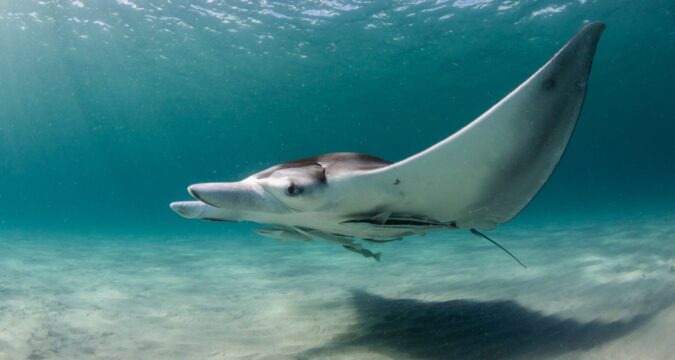
The announcements came at a Wednesday meeting where the state Fish and Wildlife Conservation Commission also took steps to protect a rarer species than black bears, imposing new limits on the harvesting of giant manta rays after a controversy arose last year over a viral video of a manta ray capture. However, state lawmakers are seeking to ban the taking of the rare ocean creatures altogether.
The bear hunt, anticipated to become an annual event, drew more of the commission’s attention.
In remarks at the meeting, Florida Fish and Wildlife Conservation Commission executive director Roger Young praised the commission’s law enforcement division for providing “extensive support for the hunt,” which was held for three weeks last December.
“Increased officer engagement and hunter education led to strong compliance with hunting regulations,” Young said. “Out of numerous interactions between officers and hunters, only one hunter received a warning for minor Wildlife Management Area violations, and no citations were issued during this hunt.”
The Commission issued 172 permits that allowed one bear to be harvested per permit. In total, 52 bears were killed, less than a third of the potential number. Early reviews of the hunt show that active hunters had a success rate of about 50 percent, Young said.
Those numbers suggest upwards of 60 permits were not hunted, underscoring the success of an organized effort by preservationists to enter the state’s lottery, win permits, and idle them. Young did not address that effort specifically.
“All harvested bears were checked by FWC biologists or contractors, and important biological information was collected. All bears taken met the size requirements of the hunt parameters,” which stated that bears weighing less than 100 pounds were off limits, Young said. “By all management measures, the hunt was a success.”
Bear hunting has long been controversial in Florida. Although it was a regular occurrence from the 1930s until 1994, it stopped for 21 years before being approved again in 2015.
The state’s 2019 Black Bear Management Plan included regulated bear hunting as a population-management tool, calling on FWC to use it in areas with the highest numbers of the animals. Florida’s black bear population is about 4,000.
“Hunting is an important and effective wildlife management tool, and the information collected during this hunt will be used in future bear management actions,” Young said. “Hunting is not a replacement for FWC’s efforts to minimize human/bear conflicts and conflict prevention, and other bear management practices remain a priority for the FWC.”
Last year’s hunt took place in the Apalachicola region west of Tallahassee; in areas west of Jacksonville; in an area north of Orlando; and in the Big Cypress region southwest of Lake Okeechobee.
The ocean harvest regulations endorsed by the commission Wednesday would limit the taking of giant manta rays in Florida waters to one every two years. No other state allows such a harvest at all. As the Orlando Sentinel disclosed last year, the ray in the surreptitiously filmed video was taken for transport to an aquarium in Abu Dhabi.
A public hearing is planned before the new rules become final.