Saudi Arabia Vs UAE
By Benjamin Picton, Senior Market Strategist at Rabobank
The Little Red Hen
Markets are bulled-up this morning on prospects for peace in the Iran war. The S&P500 and NASDAQ closed at fresh all-time highs and Brent crude prices closed 7.8% lower at $101.27/bbl. While some analysts are understandably wary of another Axios report touting progress in Middle East relations (and therefore lower oil prices!), markets are clearly not in a mood to look a gift horse in the mouth.
Iranian foreign ministry spokesman Ismail Baghieri told news sources that Iran is reviewing a 14-point American memo that outlines terms for peace. Axios reports that those terms include Iran giving up the nuclear fuel that it has enriched to near-weapons-grade (though, there is no detail on who they would give it up to), an Iranian commitment to never seek a nuclear weapon, moratoriums on Iranian nuclear enrichment, Iranian agreement to enhanced UN-led nuclear inspections, and a framework to gradually restore navigation through Hormuz and lift US sanctions.
The IRGC Navy announced via X that safe transit through Hormuz would be ensured. This comes just 24 hours after Donald Trump paused Operation Freedom, an initiative to free commercial ships trapped in the Persian Gulf that triggered exchanges of fire between Iran and the US and its allies – most notably the UAE. In a curious case of timing, Iran officially launched a new government agency called the ‘Persian Gulf Strait Authority’, which perhaps raises the probability that transit through Hormuz will not look as it did prior to the war, and that the Iranian tollbooth could be a concession made by the American side to get a deal done.
This has far-reaching implications for the post-war order. At face value, acceding to Iran operating Hormuz as a tollbooth looks like an American strategic defeat since it leaves the GCC and ‘the West’ in a worse position than prior to the war with respect to energy and other commodity flows. It also sets an uncomfortable precedent whereby other countries might get the idea that freedom of navigation through natural maritime chokepoints is no longer sacrosanct, and certainly no longer underwritten by US naval power for free. Regular readers will recall that an Indonesian minister recently did a bit of kite flying on the idea of tolling the Strait of Malacca, which would have sent a chill up the spine of most of East Asia and Oceania and drew quick (but polite) denunciations across the region.
On the plus side for the Americans, leaving Hormuz in nominal Iranian control would only increase the incentive for the GCC to build the infrastructure to send oil West to Israeli ports or Southeast into the Gulf of Oman. It seems awfully coincidental that the UAE announced that it would be leaving OPEC immediately after the US agreed to provide it with dollar swaplines, which are usually reserved for European allies. It seems to be the case that the UAE has answered the call to partner with the US and Israel because the latter two provided it with support versus Iran where others didn’t. This could mean that the UAE supports US ambitions after the war ends by pumping more crude than would have been the case had it remained in OPEC, but the question of where that oil flows and whether it remains part of a mostly fungible world market now looms.
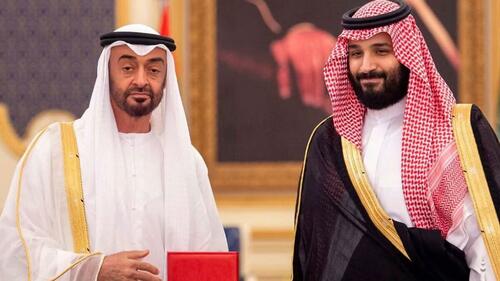
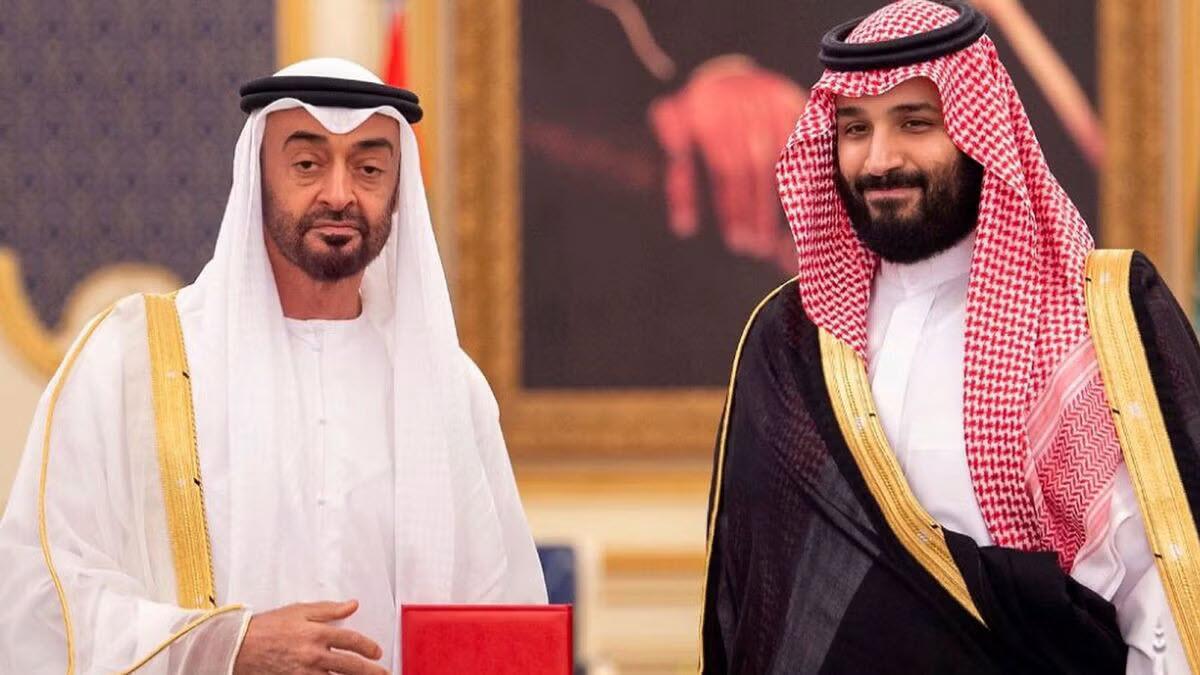
This may rub Saudi Arabia the wrong way given that the Kingdom vies with the UAE for influence in the region and the two have been at odds recently in Yemen. Media reports that Trump’s decision to pause Operation Freedom came after Saudi Arabia suspended permission for the US military to use its bases and airspace to support it. Was this decision by Saudi Arabia informed by deepening US ties with the UAE?
There is also the question of how Europe fits in with a post-war order. France is now moving the Charles de Gaulle aircraft carrier and its escorts towards the Middle East to support a Franco-British led mission to support freedom of movement through Hormuz. British PM Starmer, meanwhile, is in campaign mode for today’s round of UK local government elections, making the pitch that he kept Britain out of the war while his opponents from the Conservative Party and Reform were of a mind to support the Americans.
This reminds me of the story of the little red hen:
US: “Who will help me to ensure that Iran never acquires a nuclear weapon?”
“Not I!” said France. “Not I!” said Britain. “Not I!” said South Korea. “Not I!” said Australia.
US: “Fine. Then I will do it myself.”
US: “Who will help me to re-open the Strait of Hormuz?”
“Not I!” said France. “Not I!” said Britain. “Not I!” said South Korea. “Not I!” said Australia.
US: “Fine. Then I will do it myself.”
US: “Who will help me to consume the cheap energy from Venezuela, the US homeland, and the UAE?”
“I will!” said France. “I will!” said Britain. “I will!” said South Korea. “I will!” said Australia.
US: …you get the picture.
The point here is that the US is now in the business of securing physical supply chains and membership of the supply chain club brings not only privileges, but also responsibilities. Namely: the responsibility to meaningfully contribute to the attainment of common geopolitical goals. It doesn’t bear reminding that the US has been critical of NATO and the EU, and the latest US national security strategy openly questions whether political and demographic changes might mean that Western countries won’t be US allies at all in a few years’ time. One need only look at the political preferences of Gen Zs in those countries to understand the concern.
There are diverging reactions to this across the rest of the West. Canada under Mark Carney and – to a certain extent – France under Emmanuel Macron have taken up the mantle of official leaders of the opposition to Trumpism and the breaking of the liberal world order to remake the global settlement in a way that allows the US to respond to Chinese production and supply chain dominance. Israel, the UAE and Argentina are “all the way with Donald J”, Japan and Australia (who has just announced an 82% tariff against Chinese steel) are increasingly leaning that way as defense and economic ties deepen and geographical realities overrule the luxury of preference.
Which way various countries choose to jump will inform market access, investment decisions, supply chain access, cost of credit and all sorts of other important variables in the future. Choose wisely, dear reader.
Tyler Durden
Thu, 05/07/2026 – 10:55