Home Refi Activity Plummets As Mortgage Rates Hit 9-Month Highs
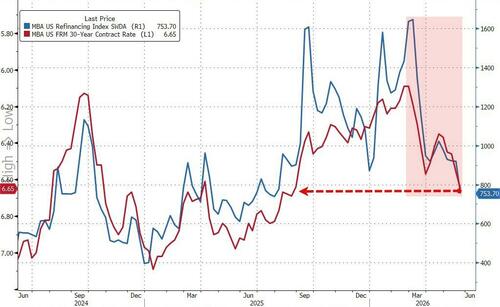
Refinancing activity in the U.S. housing market plummeted last week as mortgage rates hit their highest level in nine months, new industry data released on May 27 show.
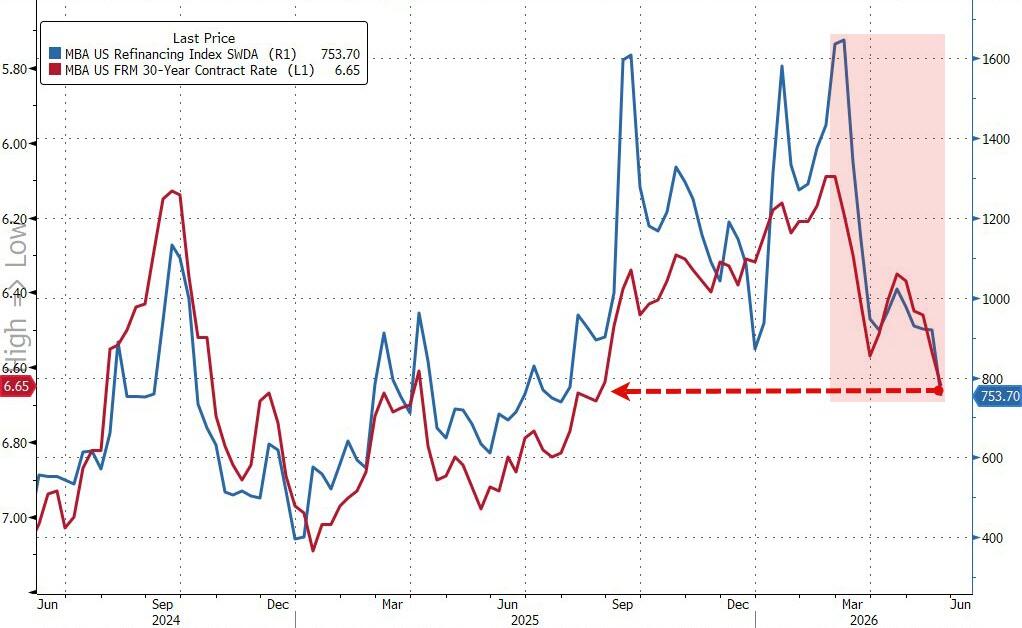
Refinancing decreased by 18 percent for the week ending May 22 and is up by 19 percent from the same time a year ago, according to the Mortgage Bankers Association.
“Many borrowers understandably backed away from refinancing last week,” Joel Kan, the firm’s vice president and deputy chief economist, said in a statement.
The decline was largely driven by the 30-year fixed-rate mortgage rising by 30 basis points over the past five weeks to 6.65 percent – the highest level since August 2025.

As Andrew Moran reports for The Epoch Times, activity to refinance home loans was spread across the board. Conventional refinance applications fell by 14 percent, Federal Housing Agency applications dropped 18 percent, and Veterans’ Affairs applications tumbled 34 percent.
Overall, refinance loans accounted for 38 percent of all mortgage applications, the smallest share in nearly a year.
But purchase applications also slipped from the previous week, sliding by almost 9 percent.
“Purchase applications were slightly lower across all loan types but still ran at a stronger pace than last year’s pace,” Kan said.
“The average loan size for a purchase application reached another survey high at $473,600, as borrowers with smaller loan sizes were less active given the higher rate environment and its negative impact on their purchasing power.”
Meanwhile, the Federal Housing Finance Agency reported on May 26 that single-family home prices backed by Fannie Mae and Freddie Mac rose by 0.1 percent in March, up from a downwardly revised 0.1 percent drop in February.
‘Sensitive to Headlines’
Mortgage rates, which generally track long-dated U.S. Treasury yields, have accelerated since the war in Iran began in late February, driven by renewed war-driven inflation risks.
The main benchmark 10-year yield reached a one-year high of 4.66 percent last week. The 30-year climbed to 5.18 percent, its highest level since the global financial crisis.
Modest relief could be on the way amid increasing optimism that the United States and Iran are inching closer to establishing a peace deal.
Yields have eased by approximately 20 basis points over the past week, translating into lower rates for homeowners and prospective homebuyers.
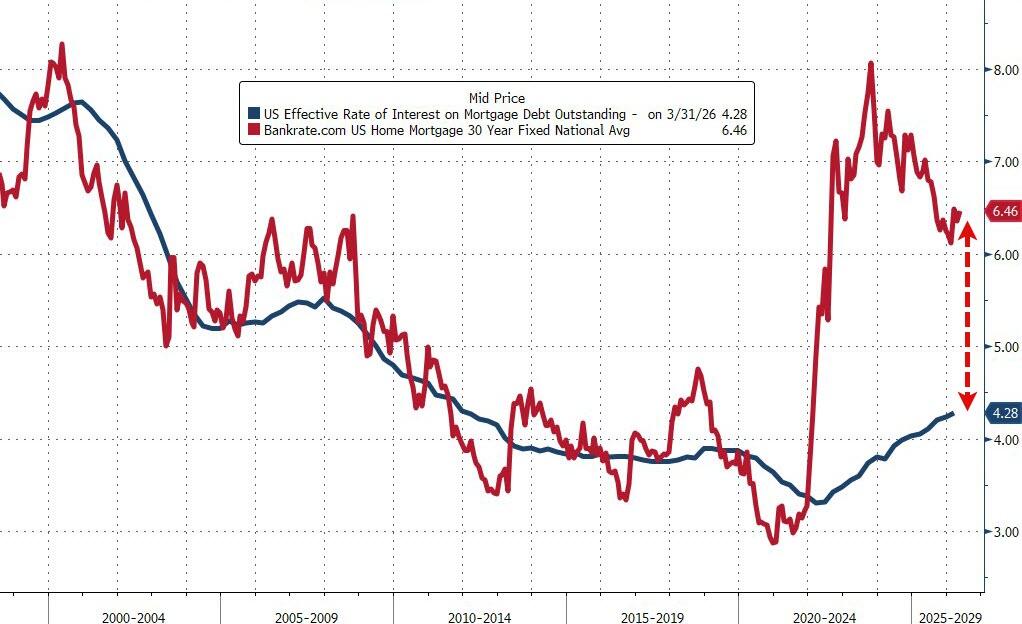
As of May 27, the 30-year fixed-rate mortgage dipped to 6.61 percent, but the gap between current rates and the effective (aggregate) rates that Americans are currently carrying on their homes remains vast…
How long this trend lasts depends on what happens between Washington and Tehran, says Jeff DerGurahian, head economist at loanDepot.
“But with geopolitical tensions still front and center and inflation expectations starting to pick back up, the outlook remains uncertain,” DerGurahian said in a note emailed to The Epoch Times.
“Until there’s more clarity, rates are likely to stay sensitive to headlines, with the direction from here tied closely to how events unfold overseas.”
Inflation data could also play a role in both the broader financial markets and monetary policy.
A de-escalation in the three-month-old Middle East conflict could help mitigate medium- and long-term inflation pressures. But the length of persistent inflation could hang over the Federal Reserve.

Federal Reserve Chairman Kevin Warsh at the White House in Washington on May 22, 2026. Madalina Kilroy/The Epoch Times
Traders have recently made an interest rate hike over the next year their base case scenario.
The 2-year yield, which follows expectations for Fed policy, remains above 4 percent. Futures market data suggest a quarter-point increase in March.
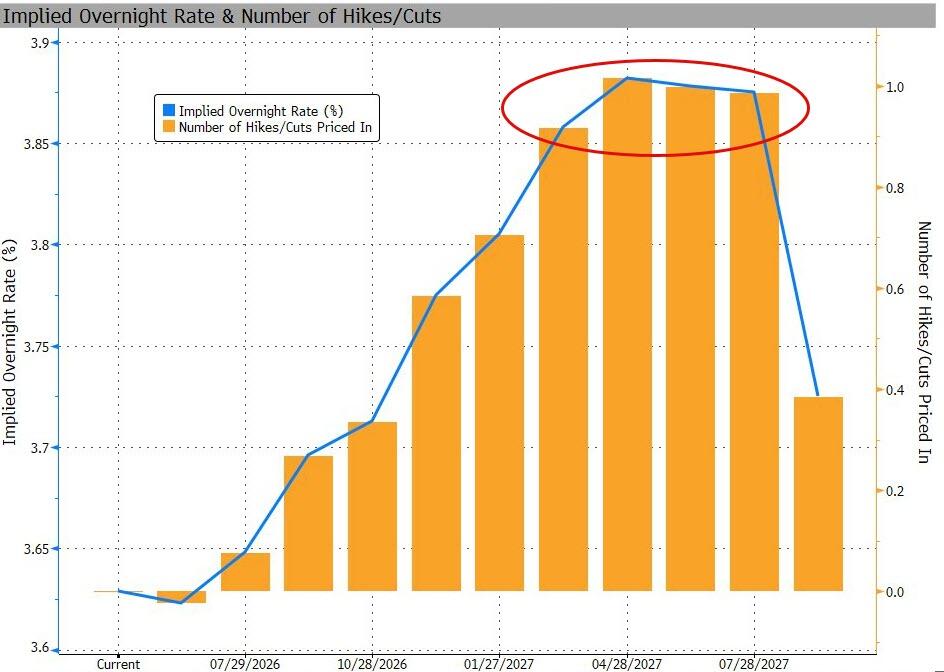
Market watchers, however, say the criteria for following through on a rate hike are high.
“From a policy standpoint, the expectation is that the Fed will likely stay on hold for a while,” DerGurahian said.
“The bigger question is how inflation plays out over the next few months, especially if higher energy prices start to show up more broadly across the economy.”
May’s annual consumer inflation rate is expected to reach 4.2 percent, according to the Cleveland Fed Nowcasting Model. If accurate, it would be the highest level of inflation since May 2023.
Ignoring Interest Rates
Despite President Donald Trump’s calls for lower interest rates to support his economic agenda, the data suggest the economy has been indifferent to elevated rates.
Recent growth has been fueled by consumer spending and business investment, mainly artificial intelligence-driven capital expenditures.
Even with markets pricing in higher rates, capex spending plans continue to be adjusted higher.
“It doesn’t matter what the Fed does. There is FOMO [fear of missing out] among hyperscalers, and AI spending is not sensitive to higher interest rates,” Torsten Slok, chief economist at Apollo Global Management, said in an emailed note to The Epoch Times.
“In fact, despite the move higher in rates in recent months, the consensus forecast for capex in 2027 continues to rise.”
If Fed officials tighten policy, it might combat inflation but do little to harm the growth prospects.
Tyler Durden
Thu, 05/28/2026 – 06:55