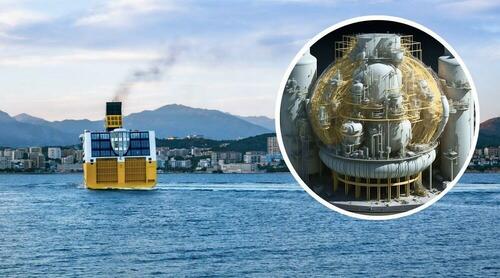
Miniature Floating Nuclear Plants Could Supply Clean Power To Greek Islands
Authored by Prabhat Ranjan Mishra via Interesting Engineering,
Miniature floating nuclear power plants (FNPP) could help Greek islands by supplying power, according to a new study. Such plants could also help decarbonize Greece’s non-interconnected islands, according to the study by the Deon Policy Institute, ABS, Core Power, and Athlos Energy.
The concept of floating nuclear power plants is not new. (Representational image)
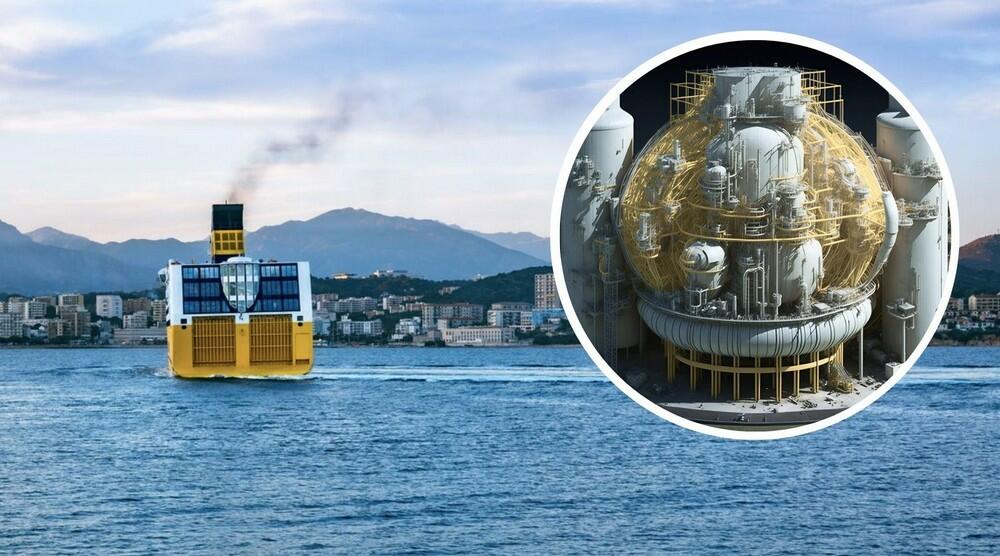
A floating nuclear power plant is a nuclear installation in which one or more reactors are integrated into a floating platform or vessel, designed to generate electricity, heat, and, in some cases, potable water through desalination. They are powered by Small Modular Reactors – smaller-capacity reactors designed to be manufactured as standardized units in factory settings and transported to their deployment sites, according to the study.
Floating Nuclear Power Plants’ Deployment
Deon also highlighted that Greece’s extensive coastline and archipelagic geography favor floating deployment, enabling generation near demand without permanent land use or competition with renewables, agriculture, or housing.
It’s also claimed that FNPPs can replace oil-fired units on non-interconnected islands, support port electrification and coastal hubs without straining the grid, and offer relocation flexibility that limits long-term infrastructure lock-in.
Deon also emphasized that, as the world’s leading maritime power, Greece has a unique comparative advantage. FNPPs leverage shipyard capacity and regulatory expertise, with approximately 75% of total value added associated with the Balance of Plant – areas where the Greek maritime-industrial base already possesses relevant capabilities.
The concept of floating nuclear power plants is not new – the Russian FNPP Akademik Lomonosov has been in commercial operation since 2019, and the sector shares a common technological and regulatory foundation with decades of naval nuclear propulsion experience in military submarines and surface vessels.
No Institutional Barriers Were Identified
“This study shows that FNPPs are not a distant or purely theoretical option for Greece. No fundamental technical or institutional barriers were identified. The real challenge is building the policy, regulatory, financial and social foundations needed for responsible assessment,” said George Laskaris, president of the Deon Policy Institute.
It’s also claimed that Greece’s potential deployment of Floating Nuclear Power Plants (FNPPs) is increasingly viable but remains constrained more by institutional preparedness and political continuity than by technology.
The study claimed that the FNPP technology is considered mature and commercially credible rather than experimental. It also revealed that no major legal or regulatory barriers were identified, and low emissions and limited land use are significant but remain undercommunicated in public discourse.
“Initial findings shed important light on how FNPPs can be assessed and integrated within existing frameworks, a critical question as the industry moves toward practical deployment. The real challenge before us is integration into policy and regulatory frameworks, and ABS is committed to helping the industry navigate that path,” said Patrick Ryan, ABS Senior Vice President and Chief Technology Officer, in a statement ahead of next week’s Posidonia conference in Athens.
Regulatory work remains to be done, and public acceptance must be secured, but otherwise, a floating nuclear plant could be in operation in Greece by 2035-40, according to Maritime Executive.
Tyler Durden
Fri, 05/29/2026 – 06:30