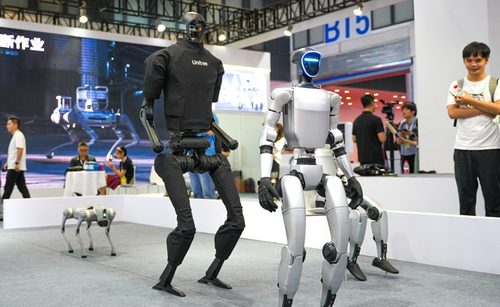
China’s Unitree Robotics IPO 5,526 Times Oversubscribed By Retail Investors
Unitree Robotics’ initial public offering was heavily oversubscribed (5,526 times) by retail investors as China’s first publicly traded humanoid robotics company prepares to enter the public markets. The IPO will help usher in physical AI to the equity market.
The Hangzhou-based humanoid robot maker raised about 6.1 billion yuan, or $904 million, after selling 40.4 million shares at 150.8 yuan each, according to Bloomberg.
The offering values Unitree at roughly 61 billion yuan, or $9 billion, ahead of its expected STAR Market debut this month. The IPO will make the firm China’s first publicly traded humanoid robot manufacturer.
Top investors soaked up about 20% of the offering, including AI startup DeepSeek, a Tencent-affiliated investment vehicle, and investment arms linked to CNPC, China Southern Power Grid, and China Telecom. DeepSeek was allocated a 2.31% stake.
China Dominates The Humanoid Robot Race. Can Trump Close The Gap?
It should surprise no one that new data from Smart Analytics Global, cited by Bloomberg, shows that Chinese humanoid robot makers accounted for a staggering 97% of global shipments in the first half of 2026.
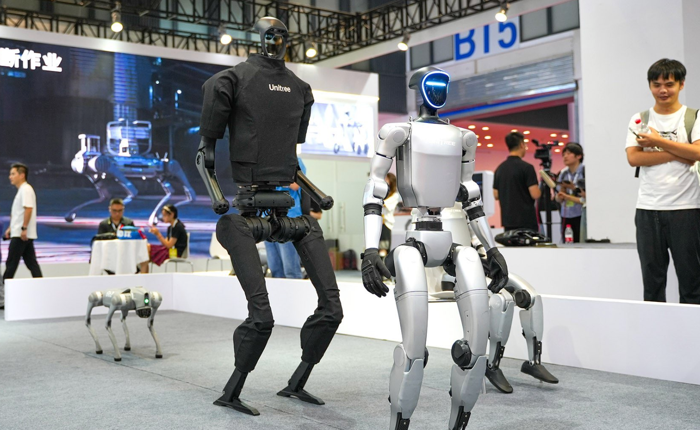
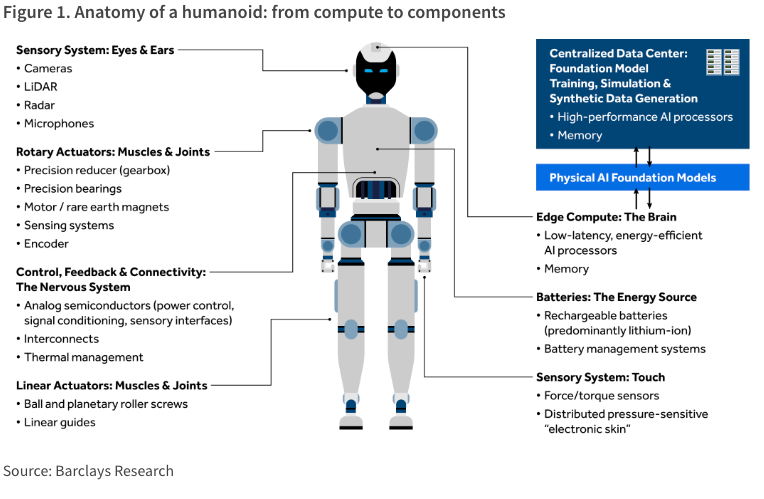
The figures come as the Trump administration increasingly recognizes that humanoids will be critical to the emerging physical AI era, creating an urgent need to build out America’s robot supply chain, including motors, actuators, sensors, batteries, and AI models.
via Barclays.
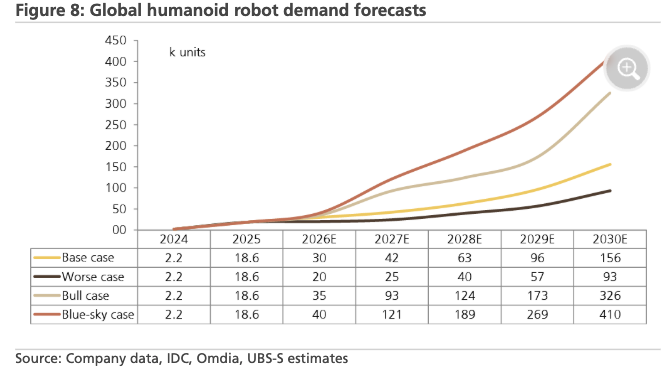
Smart Analytics Global said global humanoid shipments tripled to 19,100 units in the first half from 5,100 a year earlier. The research firm expects deliveries to reach roughly 60,000 this year and climb to 500,000 by 2030.
The estimates are similar to those from major institutional research desks, including UBS, whose most bullish forecast projects nearly 400,000 global deliveries by the end of the decade.
via UBS.
Our latest notes dissecting the humanoid robot value chain and examining how to profit from the key companies that manufacture critical components, such as motors and actuators, find that many of these companies are based in Asia, more specifically in China.
Physical AI Faces One Critical Chokepoint, And Here’s How To Profit
Digging Deeper Inside Physical AI’s Hardware Stack Powering Humanoids
China’s dominance on humanoids reflects years of policy support and government funding aimed at accelerating robotics, drones, electric vehicles, and much more. The country’s progress was on display at the World AI Conference in Shanghai last month, where dozens of companies demonstrated rapid advances in dexterity, speed, and autonomous capabilities.
The US recently banned imports of new Chinese humanoid and quadruped robots, as well as certain components, citing national security concerns and cybersecurity risks to AI infrastructure.
The Trump administration has yet to release a standalone executive order specifically aimed at supercharging the domestic humanoid robotics industry, but we expect that could be coming.
Tyler Durden
Tue, 08/11/2026 – 06:55