Iran Rejects US Pressure, Enters ‘Survival Economy’ As Mediators Cite ‘Absolutely No Progress’
It has become beyond obvious that there is no broader peace process and that things are in a stalemated situation amid what’s broadly seen as a Washington retreat from military confrontation, leaving Iran to press its own vision of management over the Strait of Hormuz with Oman.
While President Trump has settled into a waiting game which once again bets on sanctions and economic warfare to eventually force Tehran to bend, Iranian military leaders are declaring that “victory is on our side”.
Prior file image via Asia Sentinel
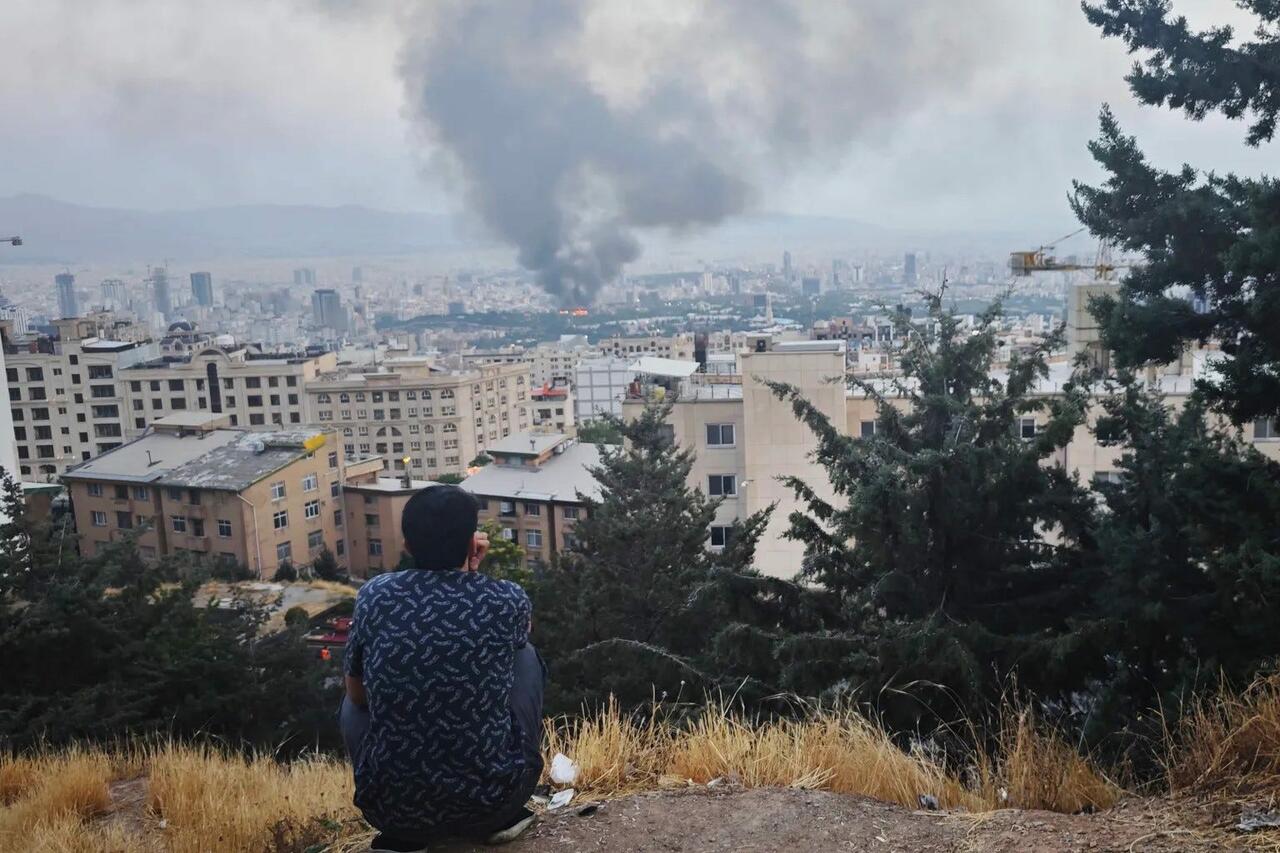
The Wall Street Journal has noted that the Islamic Republic has entered a ‘survival economy’ with the country’s rulers “taking time-tested steps to keep their chronically battered economy functioning just enough to resist a drawn-out campaign.”
There’s no doubt that infrastructure along with various key industries and the Iranian currency has been severely tested and battered, but the WSJ outlines strategies of this survival mode as follows:
Tehran is rationing scarce goods, limiting access to foreign currency, slashing investment and shifting more of the burden onto households while preserving strategic imports and the essential machinery of the state, analysts say. The result will be a deepening economic malaise that leads to rising poverty and dysfunction, but also more room for Iran’s leaders to stall talks with the U.S.
That leaves Trump’s strategy resting on a risky assumption that Iran will crack before Washington does. Mediators have warned their U.S. counterparts that Iran has been living under sanctions for years and betting that Tehran will compromise because of economic pressure won’t likely yield results. Instead, Iran will likely continue to escalate attacks to raise the price for Washington and its allies.
Such a ‘risky assumption’ was on display from even the very start of Operation Epic Fury nearly six months ago and nothing has fundamentally changed in terms of the Iranian system ‘cracking’. Within merely the first two weeks of war back in early March, we highlighted some of Washington’s persisting false assumptions in: Escalation Trap: Misreading Iran’s Internal Power Dynamics.
Meanwhile, Gulf and regional mediators are still clinging to hope that some form of ceasefire can limp along and be put back in full force, also with efforts to get the US and Iran talking again. As a Wednesday, per Bloomberg:
Pakistan said the 60-day deadline for a US-Iran MoU may be extended, but the larger peace process has stalled. Earlier, Donald Trump said the US “totally” controls the Strait of Hormuz. Oil wavered.
Neither of these things are true – at this point the MoU is dead with Iran weeks ago having already pulled out while declaring in null. Also, if the US military ‘totally’ controlled the strait then there would be no crisis that must be ‘resolved’ and global oil would be transiting at full tilt again.
🇮🇷 “Certainly, victory is on our side.”
In an interview with PBS, senior IRGC adviser Mohammad Reza Naqdi said Iran has thwarted Washington’s objectives, learned how to fight the U.S. military and may prolong the war until the next American presidency to impose sustained costs… pic.twitter.com/K5cXNPRgQL
— Drop Site (@DropSiteNews) August 12, 2026
The latest from Reuters further observes that “The US and Yemen’s Iran-aligned Houthis reported separate attacks on shipping as prospects for ending the Iran war appeared to dim, with Tehran saying the Strait of Hormuz would remain closed unless Washington accepts its conditions.”
Mohsen Rezaee, the newly appointed head of Iran’s Supreme National Security Council, has informed China’s ambassador to Tehran, Cong Peiwu: “As long as America does not change its behaviour and does not accept Iran’s conditions, the Strait of Hormuz will not be opened.“
But so far on Wednesday there’s been an uneasy quiet, so at least the bombs have fallen silent. But on Wednesday Reuters while citing mediators has painted a grim picture: “There has been absolutely no progress on this issue,” the [Pakistani government] source added…
“There is no talk of an extension because, from Iran’s perspective, there is no period that began and therefore nothing to extend. The United States violated the interim agreement 48 hours after it was reached and withdrew from it a few days later,” the source told Reuters.
In the agreement, the 60-day period refers to an extendable timeframe within which Iran and the U.S. were expected to reach a final deal limiting Tehran’s nuclear program and lifting U.S. sanctions.
“One of the issues that is being discussed via mediators is the U.S. returning to the interim agreement and defining a timeframe for implementing the commitments. There has been absolutely no progress on this issue,” the source added.”https://t.co/pqc9L848BC
— Jason Brodsky (@JasonMBrodsky) August 12, 2026
Overnight Developments
US President Trump said they totally control the Strait of Hormuz, while he said regarding the flight change during the return trip from Turkey in early July that he was following what the Secret Service said and the plane he flew on was at greater risk. Furthermore, Trump said that he doesn’t trust Iran.
Pakistan’s Foreign Ministry said it continues to activate direct and indirect diplomatic channels between the US and Iran and that they are working to bring both sides to the negotiating table in Islamabad. The Ministry added that they remain optimistic and not discouraged by escalations. Furthermore, the Ministry added that with the 60-day MoU deadline approaching, the deadline can be extended.
Pakistani Interior Minister is said to have given an important message to Iran.
Iranian Army official said Iran intends to maintain control and oversight of the Strait of Hormuz as a key source of its geopolitical power, Mehr News reported.
Iran’s IRGC said that if a threat against Iran occurs again, “hundreds of thousands of miles of energy transmission lines, thousands of power plants, all US and non-US systems, and even global infrastructure connected to the Internet are at risk,” Sepah reported.
Japanese PM Takaichi held a phone call with the Iranian President, on de-escalation of tensions in the Middle East and the security of maritime transit, Kyodo reported, citing sources.
Yemeni Deputy Foreign Minister said there has been no direct or indirect negotiations with the Houthis, Al ArabyTV reported.
Israel conducted airstrikes in southern Lebanon, according to IRIB.
Tyler Durden
Wed, 08/12/2026 – 08:50