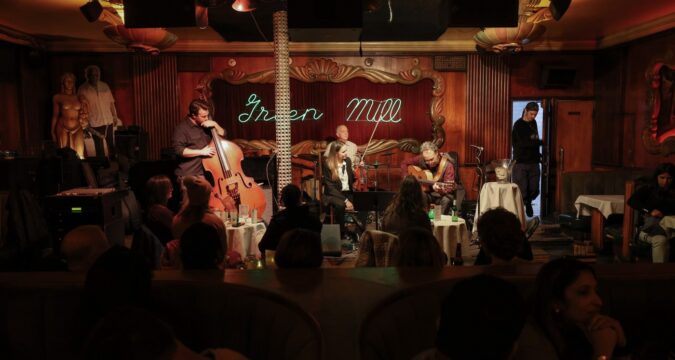
Where you see a concert matters. For that reason alone, be grateful we’re in an area teeming with superb options and savvy talent bookers that help make Chicago an anchor point for live music.
Granted, the venue may not be the first thing on your mind when an artist announces dates, but the place shapes how you experience a show. Sight lines, sound systems, seating, accessibility, lighting and acoustics play pivotal roles. Ditto history, reputation, atmosphere, friendliness and focus.
Since the start of the 21st century, the local music scene has undergone immense changes. Double Door, Abbey Pub, Fireside Bowl, Elbo Room, Lounge Ax, HotHouse and the Congress Theater all shuttered. The Promontory in Hyde Park will join that list when it closes in December. Venerable rooms that once had packed schedules hang on, yet often stay dark or settle for lesser draws.
Turnover isn’t limited to clubs. Big outdoor concerts pivoted from the widely despised amphitheater in Tinley Park to Wrigley Field and Soldier Field. Chicago’s busy festival slate — think Lollapalooza, Riot Fest, North Coast, Lyrical Lemonade Summer Smash and the bygone Pitchfork Music Festival — further altered the landscape.
Another major reason for the evolution is fierce competition, a sign of healthy demand. City Winery, Reggies, the Salt Shed, Thalia Hall, Concord Music Hall, Lincoln Hall, Sleeping Village, Radius, Winter’s Jazz Club, Ramova Theatre, Garcia’s Chicago, Outset, Huntington Bank Pavilion at Northerly Island, Wintrust Arena, Bookclub, the CheckOut and a relocated Bottom Lounge are among spots that opened within the past two decades.
All of which makes identifying Chicago’s finest live establishments a good problem to have — and for a critic who’s reviewed music for the Tribune for 25 years, a chance to take stock of what has changed.
With no disrespect to our suburban neighbors or locations not included here, these venues (in alphabetical order) rise above when it comes to delivering on overall experience and presenting first-rate concerts.
The Chicago Theatre
Audience members watch Nap Eyes open for Fleet Foxes at the Chicago Theatre in 2017. (Armando L. Sanchez/Chicago Tribune)
In an ironic twist of fate, the New York-based Madison Square Garden Entertainment owns the venue distinguished with the landmark “Chicago” marquee. That doesn’t take away from the ornate accents, excellent sightlines and warm acoustics at a theater that the entrepreneurs Balaban and Katz used as their flagship in the early 20th century.
Incredibly, the French Baroque gem nearly met the wrecking ball before a local organization and the city rescued it in the mid ‘80s. The triumphant lobby — adorned with a street-facing stained-glass window, palatial staircase modeled after one in the Paris Opera House, and wide promenades — transports you to an era in which every detail mattered. Appointed with lavish ceiling murals, crystal chandeliers, bronze fixtures, artisanal plaster work and regal red seats, the stage level envelops you in majesty. As you pass underneath the mezzanine overhang and absorb the expanse, the room produces a liberating sensation of moving from a small-to-grand space that Frank Lloyd Wright might have admired. Though the 3,600-capacity venue serves as a multi-purpose facility, we wouldn’t mind if it were a music-only space.
175 N. State St.; msg.com/the-chicago-theatre
Constellation
Bassist Christian McBride plays at Constellation, with his quartet New Jawn, March 23, 2023. (Victor Hilitski/for the Chicago Tribune)
Most venues don’t have a mission statement that reads like a thesis summary. Then again, most venues aren’t Constellation, whose “programming fosters collaborations between disparate musical communities, helping to enrich and enhance a broader understanding of how these traditions have developed and intersected.”
Launched in 2013 by Chicago drummer and presenter Mike Reed, Constellation immediately became a vital hub for progressive music. It remains true to its focus on nurturing local talent and booking jazz, contemporary classical and experimental composers. To achieve his goals, Reed surrounded himself with like-minded creatives and established a nonprofit arm. Constellation’s form-follows-function room fosters artist-audience kinship. A combination of folding chairs and risers lets you watch in comfort, and the compact setup means you see everything up close.
3111 N. Western Ave.; constellation-chicago.com
The Empty Bottle
People watch Mia Joy perform at the Empty Bottle, Oct. 21, 2025, in Chicago. (Armando L. Sanchez/Chicago Tribune)
Club owner Bruce Finkelman tapped every cent of his $923 in savings to open Empty Bottle in a nondescript bar in 1992. Space limitations and a landlord irked about him hosting live shows prompted a move up Western Avenue in fall 1993. Ever since, the homey dive currently celebrating its “33⅓ anniversary” has held firm to the principles that put it on the radar of music aficionados everywhere: cheap drinks, inexpensive tickets, adventurous bookings, friendly employees and the chance to experience bands on the pocket-size stage as you belly up to the bar. Brick walls, graffitied bathrooms, a tin ceiling, pool table, photo booth, mangled police car door and awning that trumpets “MUSIC FRIENDLY DANCING” give the 350-capacity Ukrainian Village staple a shabby-chic atmosphere that countless places have imitated.
Sold-out shows get crowded, and peeking over your neighbor’s head might be difficult. But there’s no replicating the vibe or forgetting the joy of calling in sick the next morning after spending a late night (headliners typically plug in at around 11 p.m.) at one of America’s definitive “I saw them back when” hole-in-the-wall treasures.
1035 N. Western Ave.; emptybottle.com
Green Mill
Green Mill manager Nicole Berg steps out before the evening crowd, Oct. 22, 2025, in Chicago. (John J. Kim/Chicago Tribune)
Immediately recognizable from the street via the glow of its vintage neon sign, the Green Mill casts a magical spell once you step through its front door. Entering feels like a trip back in time and a gateway to the coolest jazz lounge on the planet. Sure, there’s the lure of the complicated history that stretches back to the turn of the 20th century and the lore includes when it was the Green Mill Gardens, destructive fire in the 1930s, Al Capone and the Prohibition Era. Plenty of movies and television shows have filmed here. But the Uptown joint that owner Dave Jemilo rescued from dilapidation in 1986 never disappoints.
Consider the plaster-encased light fixtures and thick-framed murals hovering above booths that wink to the Jazz Age. The affordable cover charges and “quiet-during-performance” rules. The dim lighting, wood-paneled walls, discreet stage and relaxed, stay-awhile vibes. The caliber of music on display. Decorated during the 1930s and last structurally altered in 1942, the Green Mill is the most seductive, distinctive and charming room in Chicago. Arrive early to secure a seat to a national act. Or stop by for a local residency or dance to vintage jazz during the week. And hope nothing ever changes.
4802 N. Broadway Ave.; greenmilljazz.com
Metro
The Smashing Pumpkins performs at Metro in Chicago on Sept. 20, 2022. (Chris Sweda/Chicago Tribune)
For a stretch that began in the mid ‘80s and persisted for two decades or so, Metro asserted itself as the foremost Midwestern spot that any burgeoning band needed to play. Starting with R.E.M. in September 1982 (admission: $6), the list of names that used the stage in the former Swedish community center as a launching pad to greater success runs into the hundreds. And for good reason.
The 1,100-capacity Metro — which dropped “Cabaret” from its name in the early ‘90s and celebrated its 40th anniversary under taste-maker and local legend Joe Shanahan’s direction in 2022 — affords the sweat-soaked physical proximity and high decibel levels that go hand-in-hand with the rock, industrial and punk with which it claims a vast history. You sense that connection when you enter the lobby and ascend stairs en route to the main floor, smiled upon by high ceilings and a multi-textured proscenium arch that makes it seem as if the artists perform in a giant picture frame that could border a priceless painting in a world-class museum. The allure of the downstairs dance club Smart Bar — an ideal after-show haunt — adds incentive to frequent one of the last non-suburbanized establishments orbiting Wrigley Field.
3730 N. Clark St.; metrochicago.com
Maurer Concert Hall at Old Town School of Folk Music
The audience waits for Cat Power to perform at Maurer Concert Hall at Old Town School of Folk Music in 2013, in Chicago. (John J. Kim/Chicago Tribune)
If you’re not a tycoon who can offer millions of dollars to artists to play a private show for you and your dearest pals, your next best bet is seeing a show in Maurer Concert Hall at the Old Town School of Folk Music. Performances lean toward singer-songwriter, roots, gospel and international fare. The farthest seat is 45 feet from the stage, balcony included. The dollhouse-like arrangement means you will basically hear every note and easily discern the difference between a pick and a finger hitting guitar strings. These advantages explain why Brandi Carlile accomplished the seemingly impossible in 2014 when she and her support duo performed without needing a single amplifier or microphone. In short, the hall in the former Hild Regional Library is as close as you’ll probably come to experiencing a concert in your living room.
4544 N. Lincoln Ave.; oldtownschool.org
Orchestra Hall at Symphony Center
Orchestra members warm up on Jan. 23, 2022, before the Chicago Symphony Orchestra performs “Sleeping Beauty & Swan Lake” at Symphony Center. (Brian Cassella/Chicago Tribune)
Designed for a site once occupied by a livery stable by the architect who instructed Chicago “to make no little plans,” Daniel Burnham’s home for the Chicago Symphony Orchestra exudes magnificence. Suggesting the weight, fanfare and magnificence that should accompany classical music, its Beaux Arts auditorium projects acoustics to the unobstructed regions with a naturalism, balance and tonality that reward those on the floor and stair-climbers in the Flynn Gallery with sensational sound.
Orchestra Hall has undergone multiple renovations since its 1904 debut, most recently in the mid ‘90s via a project that created Symphony Center. Yet the National Historic Landmark holds tight to black-tie elegance and formal etiquette. Witness the nattily dressed ushers or dispensers stocked with free cough drops. Also, don’t miss the one element here that flies in the face of convention: terrace seating behind the stage. It offers a cheaper price of admission and viewing perspective hard to find elsewhere.
220 S. Michigan Ave.; cso.org
The Salt Shed
Lee Fields opens for the Alabama Shakes at the Salt Shed’s outdoor space the Fairgrounds, July 15, 2025. (Armando L. Sanchez/Chicago Tribune)
Slightly more than two and a half years after opening most of its interior in the wake of its $50 million transformation, Salt Shed already ranks amid the area’s premier venues. Complementing the inside and outside concert spaces with retail stores, food vendors, offices and the Elston Electric barcade, the old Morton Salt plant encourages you to arrive well before shows begin and linger after. Goose Island operates a pub on the campus, giving you another excuse to go on days when stages stay dark.
But you’ll want to see music here. The immense, 3,500-capacity indoor space pairs original architectural features — industrial tubes, rods, planks and trusses; towering A-frame roof; reinforced-concrete walls — with modern amenities such as grandstand seating, a premium balcony section, sweeping lobby and high-end bars. A top-notch L-Acoustics sound system tames issues that normally plague cavernous sites. Outside on the 5,500-capacity Fairgrounds, Salt Shed proves equally up to the task with an expansive communal area, various vendors and solid sonics. Those who splurge can venture up to rooftop platforms, a balcony or the Three Top Lounge for awe-inspiring views of the stage, Chicago River and skyline. If recent news (first reported by Crain’s Chicago Business) about the Salt Shed purchasing an adjacent five-acre site for a future outdoor venue that will accommodate 15,000 people is true, the scope of this destination will be limited only by imagination.
1357 N. Elston Ave.; saltshedchicago.com
Schubas
Taja Cheek, aka L’Rain, center, performs at Schubas on Jan. 19, 2024, in Chicago. (John J. Kim/Chicago Tribune)
One of the last Schlitz Brewery “tied houses” functioning as a tavern, Schubas exudes class and intimacy. Defined by bold arches, patterned brick, patina copper trim and a tall sign that doubles as a Lakeview beacon, the exterior of the neo-gothic building hints at the delights you encounter inside. A mahogany bar and paneling garnish a front bar that leads to the rear, where up-and-comers whose work spans pop to Americana and hip hop build their case for a larger audience.
Since opening in 1989, Schubas has presented shows most nights of the week and often been the first Chicago space many acts play. For certain generations of listeners who correlate staying power and worthiness with artists who pay their dues, the common sight of a van or U-Haul trailer parked outside the side door on Belmont Avenue speaks volumes about the musicians who usually walk through the crowd on the way to the no-frills stage. Reasonable prices, tasty libations and a down-to-earth atmosphere make rolling the dice on predominantly unknown names a no-risk proposition.
3159 N. Southport Ave.; lh-st.com
Thalia Hall
Shawn Colvin and Steve Earle perform at Thalia Hall in Chicago, June 6, 2014. (Andrew A. Nelles/for the Chicago Tribune)
Inspired by the Prague State Opera House and constructed in 1892 to showcase Bohemian entertainment, Thalia Hall sat vacant for five decades before local hospitality collective 16 on Center set about transforming the castle-like edifice into a mixed-use property for events, dining and more. Designated a Chicago cultural landmark, the 900-capacity Pilsen venue sports crown molding, matching sets of opera boxes and a wrap-around balcony with graduated seating. Patrons who stand on the wood floor enjoy elbow room absent at other standing-dominant venues. Smartly positioned bars let you grab refreshments without missing the show or interfering with nearby fans. No matter where you watch, the sound is clear and resonant.
As a rule, artists who perform here for the first time enthusiastically comment about the space. Plenty get the opportunity. Embracing an eclectic cross-section of genres, Thalia Hall is increasingly busy, netting tours that used to route through older North Side venues.
1807 S. Allport St.; thaliahallchicago.com
Plus a handful of other venues we had to mention:
Auditorium Theatre
Walk into this 1889 Adler and Sullivan palace, gaze at the gorgeous ornamentation, ogle the 24-karat gold-leafed arches and savor the extraordinary acoustics. 50 E. Ida B. Wells Drive; auditoriumtheatre.org
Hideout
In an aptly secluded location, this blue-collar joint in a modest balloon-frame house combines a shot-and-a-beer watering hole in front and performance/community space in back. 1354 W. Wabansia Ave.; hideoutchicago.com
Jazz Showcase
Described by former Tribune jazz critic Howard Reich as “a jewel box of a room,” Chicago’s longest-running jazz club will celebrate its 80th birthday in 2027. 806 S. Plymouth Ct.; jazzshowcase.com
Lincoln Hall
Small-scale environs, dynamic sonics, multi-tier viewing options, easy transportation access and an audio assist from Wilco cover the key bases at Schubas’ sister venue. 2424 N. Lincoln Ave.; lh-st.com
Martyrs’
Its windows often plastered with handbills and posters, this three-decades-old establishment oozes coziness and consistently surprises with diverse, roots-oriented bookings. 3855 N. Lincoln Ave.; martyrslive.com
Rosa’s Lounge
Got the blues? So does this friendly, unpretentious Logan Square favorite that has catered to locals and kept it real since 1984. 3420 W. Armitage Ave.; rosaslounge.com
United Center
Yes, it’s monstrous. But in terms of presenting cutting-edge spectacle, flexible staging and high-res visuals, the UC stands alone. 1901 W. Madison St.; unitedcenter.com
The Vic Theatre
Head to the balcony of this 1400-capacity Lakeview staple built in 1912, grab a seat and enjoy clear views of the stage and flanking loge boxes. 3145 N. Sheffield Ave.; jamusa.com/venues/the-vic
Bob Gendron is a freelance critic.
https://www.chicagotribune.com/2025/11/06/best-music-venues-chicago/