There was a time in sports — and in life — when the worst thing you could be accused of was cheating. The stain mattered. Integrity mattered. And the people who stood up and said, “This isn’t right,” were usually the ones applauded, not mocked.
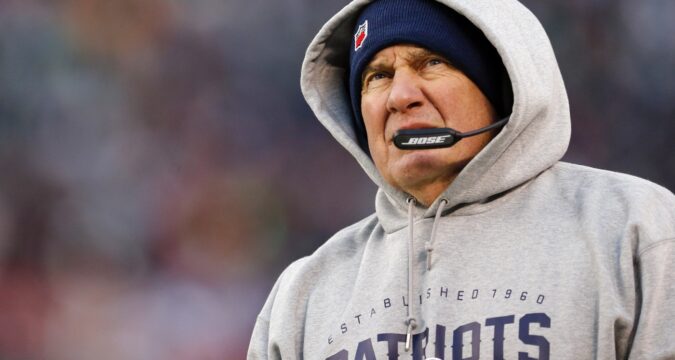
Which is why the reaction to Clemson coach Dabo Swinney blowing the whistle on Ole Miss coach Pete Golding for alleged tampering feels so wrong. And why, at the same time, the Pro Football Hall of Fame committee’s decision to keep Bill Belichick out on the first ballot — perhaps because of his role in Spygate and Deflategate — has the sports media and fans losing their minds.
Put the two together and you start to see a disturbing pattern: Cheaters are defended, rationalized and even celebrated while those who take a stand against cheating are labeled whiny, antiquated or out of touch.
That’s not just a sports problem. That’s a societal epidemic.
Let’s start with Dabo Swinney. According to Clemson, Ole Miss staff had contact with Clemson transfer Luke Ferrelli after he signed an NIL contract with the Tigers, was enrolled in Clemson and attending classes. If that’s true, it’s textbook tampering. Not a gray area, but clearly against the rules.
Swinney didn’t whisper it behind closed doors or pretend it didn’t happen. He said it publicly and, yes, he used the old-school phrase: “We’re going to turn you in.”
And for that, he was ridiculed.
The reaction of ESPN college football analyst Paul Finebaum, perhaps the most powerful opinion-maker in the sport, was telling and troubling. Finebaum didn’t argue that Swinney was wrong on the facts. He didn’t defend the alleged behavior. Instead, he mocked the idea of accountability itself. Turning someone in, Finebaum said on an Alabama radio show, is an outdated concept in modern college football. It makes Dabo look “whiny,” “out of touch,” even “antediluvian.”
Read between the lines and the message is clear: the problem isn’t the cheating; it’s the guy who won’t shut up about it.
Finebaum even argued that Swinney’s stance “emboldens Ole Miss people,” framing rule-breaking as evidence of nose-to-the-grindstone hustle.
“Our guy is working hard,” as Finebaum put it, “whether it’s, in theory, legal or not.”
That’s an astonishing thing to say out loud. It reframes cheating not as a failure of ethics but as proof of competitiveness. The rules become optional, enforcement becomes embarrassing, and the moral high ground becomes a punchline.
Now let’s zoom out to the NFL and Bill Belichick.
No one seriously disputes Belichick’s résumé as a Hall of Famer. Six Super Bowls as a head coach and two more as an assistant. He choreographed the most sustained dynasty the league has ever seen. And yet, when the Hall of Fame Committee decided he wouldn’t be a first-ballot inductee — not barred, mind you, but just making him wait a year — the reaction was nuclear:
“How is this possible?”
“Insane.”
“Egregious.”
“Disrespectful.”
Some even demanded the names of the voters who dared to hold him back.
But here’s the thing no one wants to sit with: Spygate and Deflategate actually happened. They weren’t “fake news” media inventions. They weren’t rival sour grapes. They were real scandals that resulted in real punishments. Draft picks were taken. Fines were levied. Suspensions were served.
The Hall of Fame voters didn’t say Belichick doesn’t belong. They didn’t erase his accomplishments. They didn’t ban him like Pete Rose. They simply said: maybe not on the first ballot and maybe the totality of Belichick’s career — including the cheating — matters when we decide how quickly to immortalize him.
And for that measured stance, they’re getting torched.
Never mind that other great coaches — Vince Lombardi (the guy the trophy is named after), Bill Walsh and Joe Gibbs — didn’t get in on the first ballot even without the stain of cheating. Then again, those coaches weren’t voted upon in a world where every Tom, Dick and Dan Orlovsky has a podcast, a Twitter account and a spot on an ESPN debate-show panel.
Allow me to ask this uncomfortable question: Why is it acceptable — even fashionable — to excuse cheating at the highest levels while scorning those who insist on accountability? And is this attitude limited just to sports?
Now allow me to answer my first question: Because we live in a society now where principles are negotiable, civility is optional and decorum is treated like a relic.
After all, five years later, there is still a serious debate in this country about whether people who stormed the nation’s capital were justified. Public spaces are routinely polluted by blaring music packed with profanity and racial slurs, and no one thinks twice about it. Retailers openly admit they don’t bother stopping shoplifters anymore because the math doesn’t work.
In other words, lying, cheating, stealing and public f-bombs and n-words aren’t just tolerated; they’re often explained away as “the world we live in today.”
College athletics is no different. NIL money, the transfer portal and the NCAA’s neutered enforcement staff have created anarchy. Everyone knows tampering happens. Everyone knows rules are broken. And everyone knows very little is done about it.
UCF coach Scott Frost has been outspoken about the issues but said earlier this week that he has muzzled himself because of the criticism he gets when he points out what a colossal mess college football has become.
Who can blame Frost for keeping his mouth shut when he sees one of the sport’s most successful coaches — Dabo Swinney — insist that the rules should still matter but is treated as the problem and not the solution.
That’s the inversion that should bother all of us. It’s the same inversion that shows up in the Belichick debate. The outrage isn’t that cheating occurred; it’s that someone dared to factor it into their Hall of Fame vote. The idea that achievement doesn’t automatically absolve misconduct feels offensive to many people now.
What’s truly alarming isn’t that people disagree on these cases. Reasonable minds can argue context, severity and intent. What’s alarming is how reflexively we defend rule-breakers and attack rule-enforcers with phrases like “fake news” … “witch hunt” … and “everybody’s doing it.”
Swinney is not perfect and Belichick will ultimately get his gold jacket, but the broader question will linger long after these headlines fade:
What kind of society are we building when malfeasance is applauded as savvy and integrity is ridiculed as weakness?
.
If the answer is “this is just how things are now,” then maybe the real out-of-touch people aren’t Dabo or those Hall of Fame voters at all.
When calling out cheating is considered worse than the cheating itself, it’s not just the scoreboard that’s broken; it’s the deteriorating culture we have created.
Email me at mbianchi@orlandosentinel.com. Hit me up on social media @BianchiWrites and listen to my new radio show “Game On” every weekday from 3 to 6 p.m. on FM 96.9, AM 740 and 969TheGame.com/listen