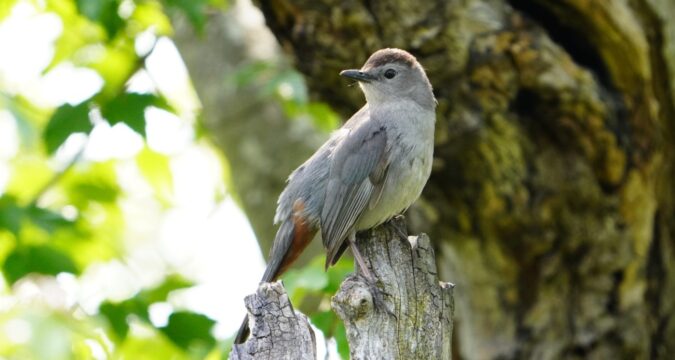
The living birds are classified into about 45 groups of related species called “orders.” Orders are broken down further into families.
A particular family will usually contain several genera (plural for genus) and numerous species. For example, one of the oldest orders, the Anseriformes, contains three families of waterfowl, the screamers of South America, the magpie geese of Australia, and the ducks, geese and swans found everywhere. Ducks geese and swans are all more closely related to one another than to any other birds, being the descendants of one common ancestor species. They are placed in one large family called Anatidae, containing about 50 genera and over 150 species. The other families in the order are smaller, with just three species of screamers and only one magpie goose still with us.
The first birds evolved about 100 million years ago from already-feathered dinosaurs, and then diversified into swans, flamingoes, ostriches, hummingbirds, penguins, eagles, owls and many types no longer living, including 10-foot-tall elephant birds and condors with 25-foot wingspans. Despite their many adaptations, such as keen eyesight, efficient breathing, brilliant colors and the ability to fly backward, none of these birds was able to sing.
About 50 million years ago (recent in evolutionary terms, but well before the ancestors of the humans and great apes had split from other primates), an ancestor of today’s songbirds, probably resembling a parrot or falcon, emerged in what was to become the Australian continent. This lineage evolved the ability to sing, and with that came a burst of evolutionary change that continues today, with almost 5,000 species of songbirds still on Earth and many more already extinct. These true songbirds have since spread across the globe to occupy deserts, forests and grasslands from the Arctic to the frigid tip of South America. They employ a range of plumage colors and feeding techniques and have even learned tool-use. But we appreciate them most for their music.
When someone thinks of a bird, they often imagine a songbird: small, nervous, fast, good flier, abundant at bird feeders, colorful, a songster. Almost half of all living bird species are songbirds, including robins, sparrows, finches, starlings, crows, jays, orioles, flycatchers, mockingbirds, thrushes, warblers and canaries. There were no songbirds until about 100 million years after the first recognizable birds appear among the dinosaurs in the fossil record.
Their ancestral lineage underwent mutations that led them to eventually evolve a more complex voice box (called a “syrinx”) with more sets of muscles providing finer vocal control and enabling singing. Early songbirds evolved complex brain circuitry and the ability to learn songs from their parents. They also developed a unique foot structure with one toe in back and three in front, along with a jagged tendon that keeps their feet locked tight to a branch while they sleep.
Songbirds (formally known as the order Passeriformes) are the newest order of birds to evolve. They have been extremely successful at diversifying into new species occupying new habitats as they radiated out of Australia and swept across the globe over the past 30-40 million years. Songs and bright colors may have been the key to their success.
Dan Cristol teaches in the biology department at William & Mary and can be contacted at dacris@wm.edu. To discover local birding opportunities visit williamsburgbirdclub.org.
https://www.dailypress.com/2025/10/24/birding-what-is-a-songbird/