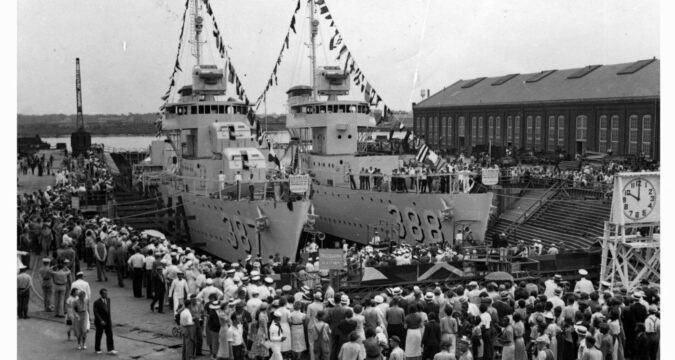
Recently, Navy Secretary John Phelan withdrew the seagoing service from an agreement with the District of Columbia for a land swap that would have established a new and more publicly accessible home for the Navy Museum near its current location, behind the restricted brick walls of the Navy Yard.
Downtown Norfolk should be considered for the future home of the Navy Museum. For more than two centuries, Norfolk has been inextricably linked to the U.S. Navy as the epicenter of major historic naval milestones in southeastern Virginia.
The relationship started back in 1797 with shipbuilding at the Gosport Shipyard, now known as Norfolk Naval Shipyard in Portsmouth. There, the Navy built one of the first six frigates authorized by President George Washington — the USS Chesapeake. During the Civil War, confederate forces rebuilt the former USS Merrimac, creating the ironclad CSS Virginia, which made history fighting the federal ironclad USS Monitor. They fought at the convergence of the James, Nansemond and Elizabeth rivers — the roadstead better known as Hampton Roads. The battle was a tactical stalemate, but marked the sunset of the age of sail and the dawn of steel ships.
In 1907, Theodore Roosevelt’s Great White Fleet of 16 battleships weighed anchor and sailed out of the same waters with a fresh coat of white paint and a mission to project America’s naval power around the world. Fourteen months, six continents and countless international headlines later, Norfolk welcomed them home.
In 1910, the waterway was the scene of yet another major Navy milestone when civilian pilot Eugene Ely flew an aircraft off the cruiser USS Birmingham’s temporary flight deck, marking the birth of naval aviation.
After the United States entered World War I in 1917, the Navy chose the site of Norfolk’s 1907 Jamestown Exposition at Sewell’s Point to build the Navy Operating Base (NOB) with piers and an airfield to project naval power “over there.” The Navy never left. America’s entry into World War II brought a human tsunami of sailors, civil servants, and shipyard workers moving to Norfolk. They needed housing — and Norfolk built it.
Today, Naval Station Norfolk, the home of the Atlantic Fleet, is the largest navy installation in the world.
No other large city in America has the depth of Navy history as Norfolk does — the quintessential Navy town. But the biggest tangible benefit of moving the museum here would be tourism.
Throughout the country there are generations of proud Navy veterans and their families who would visit a fully accessible public Navy Museum, especially when complemented by other nearby historic attractions such as Nauticus, the battleship USS Wisconsin, Fort Norfolk, the MacArthur Memorial and the Peninsula’s historic triangle. As the Field of Dreams quote goes: If we build it, they will come.
The biggest hurdle in moving the museum to Norfolk would be the region’s vulnerability to sea-level rise. A mitigation plan would require building a flood-resistant structure large enough to house more than 250 years of Navy artifacts — synchronized with current city resilience planning. Tourism taxes could help fund it.
Since 2023, Norfolk has owned the MacArthur Center and its surrounding 26 acres — an ideal location. Moving the Navy Museum there would be an economic boon and cement Norfolk’s reputation as a history-lover’s destination. Opportunities such as this are rare, and it would take the vision, leadership and determination of public servants at the state and city levels.
On New Year’s Day in 1776, Virginia’s last royal governor, Lord Dunmore, ordered the bombardment of Norfolk. British troops landed and set fire to the waterfront. Later, Patriot militia burned the remainder of the Tory-populated city, blaming the British while fanning the flames of colonial outrage. In the end, the city rose like a Phoenix from literal ashes.
Norfolk is a survivor — and its story would be impossible to tell without the Navy. As America approaches its 250th anniversary, it’s time to bring the Navy Museum home to Norfolk.
Michael Crockett of Norfolk is a retired naval officer and a board member of the Norfolk Historical Society.
https://www.pilotonline.com/2025/11/22/column-lets-bring-the-navy-museum-home-to-norfolk/