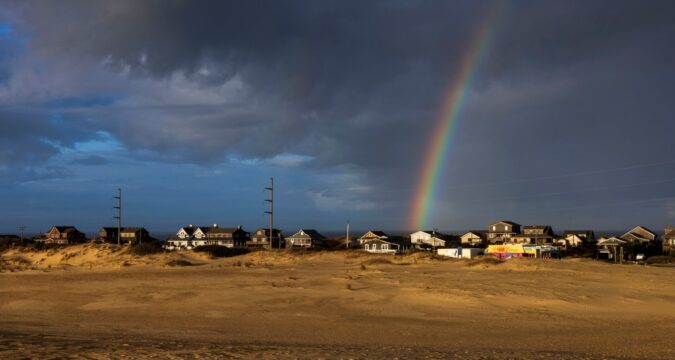
It can be easy to think about North Carolina’s vibrant visitor economy as something occurring entirely within the boundaries of our southern neighbor and as a result not a topic of conversation in Virginia. Whether it’s the $100 million a day visitor economy, top rankings as a good state to do business in, or the remarkable visitor financial impacts in all 100 North Carolina counties, the good news keeps coming for the Tar Heel State.
While it can be tempting to see those outcomes as a net loss for Virginia, I believe the opposite is true — those outcomes are great news for Virginians and particularly for the Hampton Roads economic ecosystem. The Outer Banks region remains a vibrant and nationally recognized drive-to destination featuring a multi-billion dollar annual visitor economy. The great majority of visitors to the Outer Banks are driving to get there, and the great majority of those visitors are driving several hours through Virginia.
That growing number of visitors are booking hotel rooms in places such as Richmond, Williamsburg, Suffolk and Norfolk. They’re eating in restaurants all along the way — on both U.S. 460 and Interstate 64. They are happily buying fuel and retail items just about every time they stop, and they all enjoy Virginia both on their way down and their way back home to places such as Washington, D.C., Pennsylvania and the northeast. They’re flying in, too, with some percentage of Norfolk International Airport’s record travel in July headed south via a rental car. Over time, they’ve done so in an increasing way. For example, in 2002, lodging tax receipts in North Carolina were $89 million. Last year, they were $450 million.
There remain a host of good examples of our regional visitor ecosystem — labor and housing markets easily flow across state borders. Look no further than Moyock in Currituck County as a burgeoning community that has emerged as, in reality, an extension of southern Chesapeake and a real testament to Currituck County being statistically included in the Hampton Roads MSA. Look at Dare County, along the Outer Banks, with a controversial 67% increase in its property tax base over the past six years alone as an example of the sheer number of people visiting the area (keeping in mind the more than 20,000 rental homes in the area with home prices a reflection in some cases of operating rental income).
The argument could be made that all those transient visitors simply moving through the state is somehow a bad thing. Some might even argue it’s a potential loss of tourism dollars. David Mildenburg of Business North Carolina recently described tourism dollars as “friction” dollars due to their positive and negative impacts. Without argument, there is some truth to that argument in cases like housing affordability, but let’s remember the great Churchillian line about problems in that “good problems, while more agreeable than bad problems, are no less difficult to solve.” The truth — the good problem — is that having a great visitor destination to the immediate south creates significant economic benefits for Hampton Roads as well.
We are used to thinking about jet noise as not only the sound of freedom but the sound of a stable economic impact — jobs and spending — over the long term. In our transient traveler population, we are also reminded that traffic — those happy visitors — are paying a lot of bills, a lot of taxes, and building a lot of businesses in their travels.
Thank you to those who are kind to our welcome visitors and here’s to a hopeful recognition that we are fortunate as a two-state region to be host to so many in search of a family experience in either state.
Clark Twiddy of Duck, N.C., has lived and worked in the visitor economy along the Outer Banks for more than 20 years. Born in Virginia Beach, he is the author of two books on the development of the Outer Banks area.