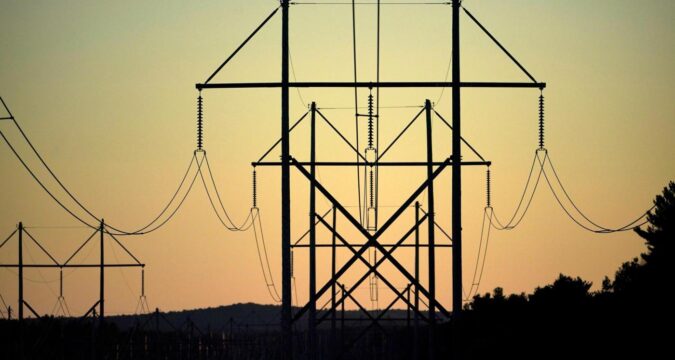
Virginians are on track for rising energy bills, service disruptions and a faltering economy due to the unprecedented growth of energy-intensive data centers and other high-tech industries putting a strain on Virginia’s grid.
This is why permitting reform — the process of streamlining and speeding up government approval for clean energy projects and infrastructure — is essential to address our emerging electricity demand crisis in Virginia.
The energy sector is a permit-rich environment. From siting a new electricity generation facility, to long-distance transmission lines and local distribution networks, permits play a key role at every stage. It can take a decade or more for energy projects to move from start of construction to full operation and the permit process is a large part of that. The need to alleviate these bottlenecks is why I and others with Citizens’ Climate Lobby are asking Congress to pass bipartisan permitting reform.
Such reform measures must balance environmental protection with economic growth by setting a reasonable statute of limitations for judicial review under the National Environmental Policy Act. Reform should streamline interstate transmission permits while giving states the initial authority with the federal government intervening if the states need assistance in the permitting process. Accelerating the process for rejected as well as accepted projects means that time and resources are not wasted on projects that are ultimately rejected.
All this can be facilitated by early community input and full transparency. This is especially true for communities that do not directly benefit from infrastructure such as transmission lines but that would be affected by their construction and operation. Permits for simple updates or low-impact projects should be considered under categorical exclusions that allow for a simpler, streamlined process.
Permitting reform is deeply connected to our effort to solve the climate change threat. Virginians who live in the western mountains and the Tidewater region have experienced the effects of a changing climate through flash floods in the west and sea level rise in the east. Extreme weather events result in higher food prices and insurance rates for automobiles and homes. According to the U.S. National Oceanic and Atmospheric Administration, from 1970 to 2025 Virginia’s cooling degree days — when extra energy is needed for air conditioning — increased by 47%, slightly less than 1% per year. While climate change helps drive summer cooling demand, most of the projects slowed by permitting obstacles involve cheaper clean energy. Getting these sources of energy on the grid faster will reduce our need for heat-trapping fossil fuels and contribute to price stability.
Electricity prices in Virginia have risen substantially. Historical data from the U.S. Energy Information Administration (EIA) indicates that between 2000 and 2024 Virginia residential electricity prices almost doubled (92%) or more than 2.5% per year. In 2023, according to EIA, Virginia was the top importer of electricity from other states. Also, between 2019 and 2023, Virginia’s commercial sector had the largest growth in electricity demand of any state, largely due to data centers. All this makes Virginia particularly vulnerable to the permitting process in place and is a real threat to sustained economic growth.
There is positive bipartisan support for permitting reform. The Congressional Problem Solvers Caucus has proposed a framework for moving forward and the National Governors Association has written a letter supporting action. Gov.-elect Abigail Spanberger and the incoming General Assembly will work on the data center issues, but Congress has authority on permitting that they lack.
Sens. Tim Kaine and Mark Warner have a history of bipartisanship. Although these are partisan times, it is my hope that Virginia’s members of Congress will negotiate in good faith to control rising costs and bring new clean energy sources and technologies to consumers. Our leaders have the power to keep Virginia economically competitive — and power outages at bay.
Perry Lindstrom of Arlington is retired from the U.S. Energy Information Administration, where he was team lead for renewable energy modeling and lead subject matter expert on carbon dioxide emissions. He volunteers for the Citizens’ Climate Lobby.