It’s not that I don’t understand challenging books in the public schools. I once refused to sign a permission slip to let my 12-year-old watch “Mississippi Burning” in class. But it wasn’t a book.
Democracy and education both absolutely rely on not just free speech but the right to hear that speech — the right to read. Both rely on a broad array of voices. (I would use the word diverse voices here except a number of government agencies, federal and state, currently consider that word a red flag. But I digress. Or do I?)
The best ideas, the greatest art, the remarkable thinkers, have all broken the mold that previously confined them. The great thinkers and writers have listened to a broad range of ideas, have travelled outside the narrow confines that no one home, family, church, could ever provide them with.
The point of great literature is not to inculcate us with the things we already know or to tell us about the life we already know. It’s to expose us to other humans, other conditions, other histories, other religions, other kinds of people. You can’t be said to really choose anything — politics, religion, ethics — if you have never had a choice.
Book banning strips us of choice. It strips us of that (oooh, I’m going to say it) diversity of voices, that range of experience that can broaden our world-view, increase our compassion and empathy, and sometimes transform our thinking, our politics, our ethics. This, my friends, is democracy.
Stephen King — who just became the most banned writer in the United States — says that students should seek out books that are banned. What is it, he wonders, that they don’t want you to know or hear? He also warns citizens that if somebody wants to ban a book from a library — keeping it away from everybody’s child, not just their own dear one — they should have to fight for it. As members of the community, we must put up an argument. Make the would-be book-banners articulate the reasons. Make them explain themselves.
Because no book, presumably chosen by a trained educator, should be banned from a public-school library lightly. Banned books often lead us to doubt, to think, to be troubled. And while limiting the thoughts one is allowed, the books they can read, makes sense in a totalitarian nation, it is not consistent with democracy. As Beatty says in “Fahrenheit 451,” “If you don’t want a man unhappy politically, don’t give him two sides to a question to worry him; give him one. Better yet, give him none.”
Authoritarians don’t want you to think for yourself.
As for educators: this is a very hard moment to be a teacher. It’s a chilling climate. Florida teachers are told they should only teach history that puts forth a view and a tone that the state government likes; we should not teach slavery in a way that causes discomfort to students. Well, I find the buying and selling of human beings — in our own democracy — a bit unsettling and would not know how to teach it in a way that is both factually honest and perkily cheerful.
This is how you shut down free speech. Threaten and fire librarians and teachers, make speaking up uncomfortable, ban books, shut down dialogue and disagreement. Let’s not allow it.
I iwll end on two quotes — which I tell students never to do — but since I’m proposing that we should hear more voices, I will highlight them here.
“Reading does not necessarily lead to direct political action, but it fosters a mindset that questions and doubts; that is not content with the establishment or the established. Fiction arouses our curiosity, and it is this curiosity, this restlessness, this desire to know that makes writing and reading so dangerous.” — Azar Nafisi
“Those who ban books seem to want to circumscribe empathy, reserving it for a limited circle closer to the kind of people they perceive themselves to be … I believe in the possibility and necessity of expanding empathy — and the essential role that books … play in that. — Viet Than Ngyuen
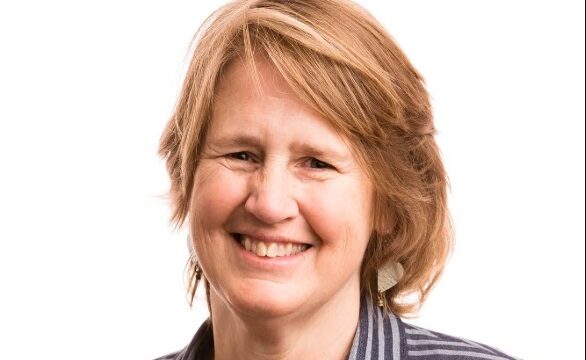
Jill Jones is an English professor at Rollins College.