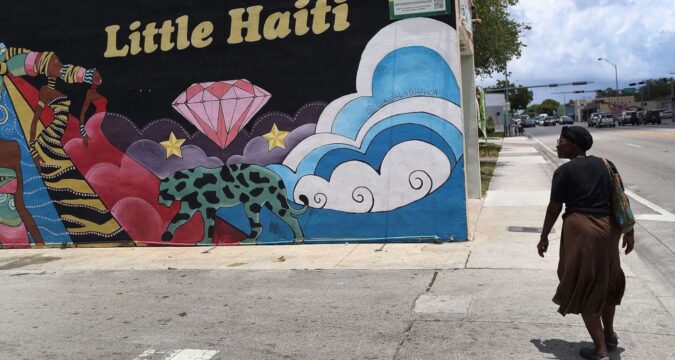
While many of us are settling in to resolutions and looking forward to the new year, hundreds of thousands of Haitian families are starting it with fear and uncertainty. On Nov. 28, with just a few lines buried in the Federal Register, the Department of Homeland Security terminated Temporary Protected Status (TPS) for Haitians. TPS for Haiti is set to end on Feb. 3, 2026, plunging families, workplaces and communities across the country into limbo.
For many Americans, TPS is just another acronym in an endless immigration debate. But TPS is not abstract. It has a face, a name, a family and a history woven into the fabric of this country.
Vanessa Joseph is chair-elect of the National Haitian American Elected Officials Network. (courtesy, Vanessa Joseph)
Haiti was first designated for TPS after the devastating 2010 earthquake. Fifteen years later, the country has endured compounding crises, natural disasters, political instability, economic collapse and escalating violence. Armed groups control key neighborhoods and major roads. Families flee gunfire and burning homes, often carrying nothing but the clothes on their backs. Over a million people have been displaced inside the country, and millions more face severe food insecurity. Hospitals and schools struggle to function, and basic services have collapsed under relentless pressure.
Yet ending TPS means that a country no longer faces “extraordinary and temporary conditions” preventing safe return. Anyone paying attention knows that, in the case of Haiti, this is false. The United States warns its own citizens not to travel to Haiti. Humanitarian organizations describe the situation as catastrophic. Haitian families in the U.S. speak daily with loved ones hiding from violence, skipping meals or unsure if they will survive the week. And still, when it comes to immigration policy, it is as if this danger does not exist.
TPS exists for moments like this, to ensure that when countries are devastated by war, disaster or political collapse, people are not forced back into life-threatening conditions. Whatever limited progress Haiti may have made in pockets of the country has not created a stable or humane environment for mass return. Forcing people back now would not be orderly or safe. It would be reckless.
As we look ahead in this new year, we must also be honest about the consequences of this decision for all of us. Ending TPS will deepen workforce shortages and strain hospitals, nursing homes, hotels, airports and construction sites. It will tear at the social fabric of places like Florida, Boston and New York City, where Haitian TPS holders are deeply woven into local economies, congregations and communities.
As an immigration attorney, what I see is quiet survival. TPS holders are keeping jobs and businesses afloat, keeping children in school, and keeping roofs over their heads while the ground shifts beneath them yet again. They have followed the law, renewed work permits, paid taxes and contributed to the economy. They have done everything this country has asked.
Ending TPS is not a neutral policy adjustment. It is a deliberate choice to uproot families, destabilize communities and send people into danger. That choice can still be reversed. TPS for Haiti must be redesignated. There is ample evidence that mass return is unsafe and would further destabilize the country. Keeping TPS in place is not charity. It is pragmatic, humane and life-saving.
The new year must also bring action from Congress. TPS holders need more than 18-month reprieves and rolling extensions. They need a legislative solution that offers a path to lawful permanent residency for people who have lived, worked and contributed here for many years. A life lived from one deadline to the next is not a life lived in dignity.
Local and state officials should pass resolutions opposing TPS termination. Faith communities, business leaders and labor unions should demand that representatives protect parishioners, employees and members. The Haitian diaspora must organize, speak out and insist that our neighbors are not sacrificed to political theater.
As this new year unfolds, the choice before us is both moral and economic. Do we safeguard lives and families or risk uprooting communities and weakening the institutions they sustain?
As a Haitian American, a public servant and an immigration attorney, I believe the answer is clear. The new year calls for resolve, not retreat. We must choose humanity. We must keep Haitian families with TPS safe. And we must act now, before a bureaucratic decision becomes a lasting human tragedy.
Vanessa Joseph is chair-elect of the National Haitian American Elected Officials Network and an immigration attorney with Catholic Legal Services.