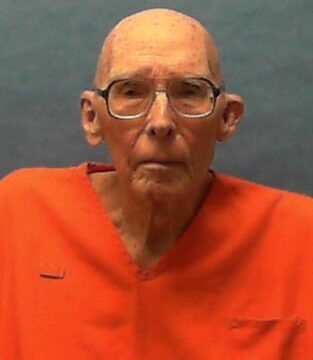
My attention was first arrested by the case of Tommy Zeigler in 1986. I’d read an article about the case, in which Zeigler was convicted for a 1975 murder where Zeigler’s wife, in-laws and a customer were killed on Christmas Eve that year at his family’s Winter Garden furniture store. The article posited several questions that began to haunt me, including — why was a trial attorney still working at his own expense to free a client who had received the death penalty 10 years before?
The following year I read an exhaustive article in the Atlanta Constitution dealing largely with new evidence in the case. I formed new questions that messed with my conservative, pro-death penalty mindset.
I interviewed a couple who’d been close to Zeigler and his wife. They firmly believed in Zeigler’s innocence and often visited him at Florida State Prison. I read more than 30 depositions testifying to the sacrificial friendship and charity of Zeigler, but the judge wouldn’t allow them at trial.
I interviewed jurors who didn’t seem at all convinced that Zeigler was guilty but had been influenced by the judge’s negative demeanor. They said if there is new evidence, they “hoped he’d get a new trial.” I interviewed Zeigler and met guards and a prison official who told me they knew which inmates were guilty, and Zeigler wasn’t one of them.
I wrote my own news stories that spawned the first of many television documentaries in 1989.
Meanwhile, a former Orlando Sentinel editor took note of the case and suggested to investigative journalist Phillip Finch that he write a book. (“Fatal Flaw” was published in 1992.)
I began meeting other journalists who, as Finch expressed it to me, started out to simply tell the story but found themselves “sucked in.”
Death row inmate Tommy Zeigler wins new hearing
Journalists are not supposed to be advocates. Yet, several have made the tough decision to speak out publicly.
Finch wrote to the clemency board in 2003 saying that after his intense research, he concluded that Zeigler was unjustly convicted and that the DNA testing had not only reinforced his conclusion but that he (now) believed to a moral certainty that Zeigler is innocent and urged a full pardon.
Many wrote to various Florida governors, detailing the facts of the case. One of them, producer Gail Freedman, wrote to Gov. Jeb Bush:
“As long-time journalists with years of experience at CBS News and 60 Minutes, at ABC’s 20/20 and at PBS’ documentary units, we take our professional responsibilities… very seriously. We have spent literally decades building reputations for fairness and objectivity, for not taking sides in the stories we develop. So it is with great caution and even reluctance that we come forward…. We would be derelict as journalists and as citizens if we did not come to Tommy Zeigler’s defense, given the information that we and others have developed over the years.”
Another journalist who made a bold appeal to Bush was former Orlando Sentinel editor (1981-85) Dave Burgin.
“Now that the scientific blood evidence is in and says what many of us figured out long ago — that Tommy is innocent of all charges — I hope that justice in his behalf finally will be done,” wrote Burgin, who died in 2014. “This terrible outrage must end…. I beseech you, sir, to set Mr. Zeigler free because he is innocent.”
Jean Gonzalez, an editor/director at Florida Catholic Media, recently explained why she “can’t walk away” from the case that she’s covered since 2000.
“I feel obligated, because I don’t think he did it. It’s a matter of justice.”
What so disturbs these reporters and others that they have willingly put their careers on the line?
Like me, they all believe that there is no credible scenario of Zeigler’s guilt.
Said Finch, “I found that the logic of his innocence is far more straightforward and compelling than that of his guilt.”
Taken all together, the evidence, both old and new, is startling — enough to plague journalists and induce a governor to pursue clemency.
“They made the mistake of arresting Tommy when very little evidence was in,” Finch said. “…Over the years, most of those who have come into contact with the case have tended to be overwhelmed by the complexities, and cling to the state’s case as a convenient mental lifesaver despite its convoluted logic.”
A hearing the first week in December will review the latest DNA results and other new evidence that was never seen by a jury. I believe if there will ever be justice for Tommy Zeigler, he will be freed.
Gail Hollenbeck of Inverness is a retired journalist and a former intelligence analyst.
https://www.orlandosentinel.com/2025/11/16/commentary-zeigler-case-continues-to-haunt-journalists/