It is not easy to tell the world you are a survivor of domestic violence.
That fact out of the way, Eugene Z. Bertrand has told the world in a very big way: in a novel that, while fiction, tells the story of a survivor.
“I had to make sense of that trauma,” said Bertrand, a Connecticut native who at 22 is master of social work candidate at Columbia University.
“I wrote it because I am survivor of domestic violence,” Bertrand said. “Writing became one of my lifelines.”
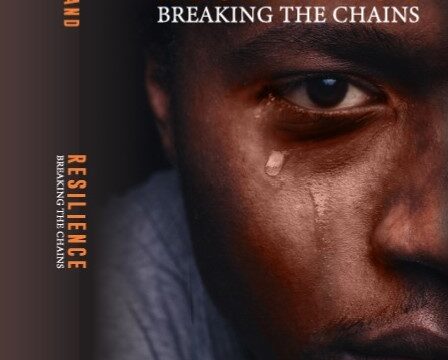
The book, “Resilience: Breaking the Chains,” tells the story of a fictional young man who faces the terror of domestic violence, what that violence creates in a household and physical and emotional scars that are so often hidden from world. The recently-released book already is among Amazon best sellers in the category of domestic partner abuse.
Eugene Z. Bertrand, a Connecticut native who at 22 is master of social work candidate at Columbia University, wrote the book, “Resilience: Breaking the Chains.” (Courtesy)
While more than 38,000 people received help last year from the member agencies of the Connecticut Coalition Against Domestic Violence, the agency is careful also to note that the number only represents “those victims who sought services at our member agencies and do not represent the total number of individuals victimized by domestic violence in Connecticut.”
In an example of just one Connecticut service provider, Interval House, which serves 24 towns and cities in the Greater Hartford area, helps 4,500 to 6,000 annually with as many as 36,000 sessions of service in 2024, its leader has said.
The coalition also notes abuse can be emotional, psychological, physical, financial, sexual and could include litigation.
Domestic violence, according to the coalition, is “the result of a person’s feeling of entitlement to have power and control over their partner or family member and their choice to use abusive behaviors to gain and maintain that power and control.”
Bertrand’s book is filled with such examples, that while fictional, expound on the terror many victims feel living with domestic violence.
“When Richard finally came home from his latest business trip, the house felt as though it had caught its breath and were holding it tight — as if every surface was waiting, bracing for impact. The air was heavier, thick with years of silence screaming beneath the surface,” Bertrand wrote.
The book character named Richard hides the reality from most people, becoming a well-liked figure in the community, seen as “magnetic” and a successful man with “a disarming charm.”
This is far from the reality within the household of the characters Bertrand created.
For example, the behind-closed-doors scenes revealed Richard: “His fists were clenched. His chest heaved. His shirt was ripped open, and his mouth was twisted into something both feral and eerily calm. He was smiling. As if he’d won something,” Bertrand wrote.
In another part of the book he wrote, “Months of fear coiled inside them like a second skin. Every slammed door, every muffled cry, every bruise hidden beneath a sleeve — it all sat with them in that courtroom, like ghosts in the pews.”
As Bertrand notes, the fictional character, in many ways personifying the “textbook attributes of an abuser” — working to gain trust and mask that control and abuse, gaslighting victims as he brings them under his dominating control. The level of violence grows as the story proceeds and the main character tries to protect his mother.
“I really wanted to be very careful, very intentional (depicting) cruel and controlling behind closed doors,” Bertrand said.
He said the intent, though fiction, was to capture and navigate the psychological pattern of control that abusers can use, and also to “process trauma safely” in a story “rooted in a real emotion and real experience” of domestic violence survivors.
Bertrand said while his story is “just one of many,” he was very deliberate in writing about the fact that men can be survivors of domestic violence, though many men do not share their stories because of ongoing societal stigma about the issue.
For many men the mantra is “be strong, stay silent,” he said, but “their stories matter too. It is a really heavy topic and it is not talked about enough.”
“It is really just became my way of reclaiming my voice,” Bertrand said, of writing the book, “I wanted to be part of the solution to break those societal chains.”
“My book is saying you can be vulnerable and break those,” he said. “I was able challenge that through my writing.”
Bertrand said he is an advocate for trauma-informed mental health care and also has “heartfelt dedication to amplifying marginalized voices.”
He said he knows that the stigma issue that can keep men from discussing domestic violence is very real for Black men and he was “willing to open my wound if it can help others.” Domestic violence “doesn’t discriminate,” he said.
“It meant ripping open my own experience so … another man, another Black man, could see himself reflected,” Bertrand said. “Silence does not make you strong — being vulnerable, healing does.”
“My hope is that it gives other men permission to speak to heal … that their voice really matter,” he said. “As a Black man it is a gift to the community.”
“I want them to see themselves not just as men but people deserving of protection …,” he said.
Bertrand said he hopes his advocacy, storytelling, and community engagement help to foster awareness, empathy, and systemic change so individuals and communities can heal. He said social work gives him an opportunity to advocate, and “It feels good that it is helping people.”
For help and resources: helpguide.org/relationships/domestic-abuse/domestic-violence-against-men