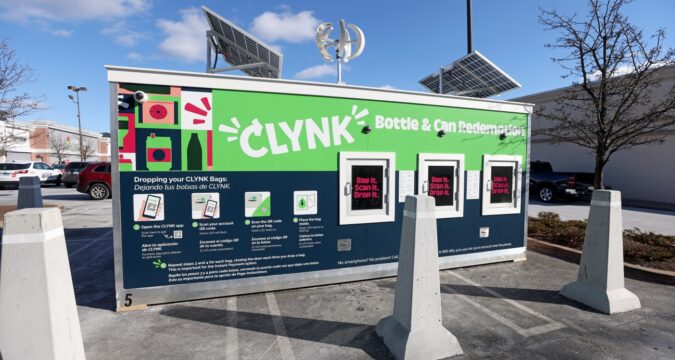
Stop & Shop, Connecticut’s largest grocery store chain, and CLYNK, a technology-based bottle and can return system, combined this year for a five-store trial to increase recycling access and sustainability efforts across the state. Due to a significant increase in recycling rates at those stores, the two have expanded their partnership.
The five-store trial began in January at two Bristol locations and one each in Simsbury, Southington and Windsor. Numbers were up across the board, but the stores in Bristol and Southington each had particularly strong numbers. According to Stop & Shop, on average recycling rates have increased 20% at the stores with CLYNK redemption centers installed.
CLYNK will be installed at all 81 Connecticut Stop & Shop locations by the end of 2026. The expansion will be completed in phases beginning this fall and finishing by the end of next year, depending on local regulatory approvals.
Once installed in all 81 stores, CLYNK estimates it will recycle 368 million containers per year, enough to fill 23 million brown paper shopping bags and representing approximately 27% of all redeemable containers in Connecticut.
Paul Audette, manager of health and sustainability initiatives at Stop & Shop, said he was directly involved in initiating the pilot with CLYNK under a previous role with the grocery chain. He said the initial talks between CLYNK and Stop & Shop date back to 2017.
Audette said when Connecticut passed its most recent bottle deposit law that went into effect in 2023, Stop & Shop decided to revisit its talks with CLYNK about an expansion in the state.
The expansion has already started. Last week, the Granby store became the sixth CLYNK location in the state. Audette said Enfield is likely next, and the expansion will likely work it way south on Interstate 91. CLYNK takes about two weeks to install.
“If it were up to Stop & Shop and CLYNK, we would have them all open tomorrow but unfortunately, there’s a lot of legal red tape as far as there are some locations we have to deal with landlord approvals. There are zoning laws and permitting in some towns. The goal is to get CLYNK in every location across the state by the end of 2026,” Audette said.
“To get this out in your community, the towns have to agree to it and that seems to be the biggest red tape that we have,” he added.
Audette said the customer response in the five test sites were overwhelmingly positive and it was a factor in the state-wide expansion.
“We went into this with our fingers crossed,” Audette said. “We’ve been in five stores now and we’ve received two formal complaints through people who reached out to Connecticut DEEP that came back to us, which I think is amazing. Even internally at Stop & Shop there are fewer complaints and there’s no comparison from the old process to the new process. The CLYNK team is so easy to work with and with two weeks of onboarding, they will stand next to our bottle room and help the customers. It’s been an amazing partnership, and it’s been the easiest rollout I’ve done in my 14 years.”
According to a Container Recycling Institute report earlier this year, recycling in Connecticut went up 21% from 2023. In 2024, the jump went from 44% to 65% statewide.
Experts said the rise was due to the 2021 state law: Senate Bill 1037. Among the highlights in the bill were an increase for deposit refund from 5 cents to 10 cents. Another significant change included deposits on non-carbonated beverages like sports drinks as well as malt-based hard seltzers.
CT sees major increase in 2024 beverage container redemption rates after bottle bill upgrades
Connecticut is the third state that CLYNK operates in, though the company helped established the bag drop program in Oregon, as well as having a partnership with a redemption operator in Iowa.
CLYNK has more than 500,000 consumer accounts and has processed more than 2.5 billion containers.
Bridget O’Brien, the managing director of CLYNK, said the company was watching closely the changes in the modernization efforts in recycling and bottle bill in Connecticut.
“We feel we have a very strong value proposition for food retailers in that we take redemption out of the store and into the parking lot,” O’Brien said. “We started working with them and taking a look at how the modernization was creating more activity and more redemption in the stores, and we put together a proposal and worked with our key sponsors inside of the organization and we felt it was a better way for their shoppers to redeem.”
O’Brien said CLYNK was “incredibly pleased” with the results of the five test stores in Connecticut.
“CLYNK has always believed every modality should exist from reverse vending machines to traditional hand-count redemption centers because you need to meet the consumer where they are,” O’Brien said. “The backdrop solution is for those who want to do the right thing, and you want to make it as convenient as possible.
“With the pilot, we saw a much higher level of redemption activity as compared to the former modality,” O’Brien added. “I took a look when we launched in Maine and New York with Hannaford compared to Connecticut, our adoption velocity was huge. We had many more consumer signups for the Connecticut pilot period compared to the pilot periods in New York and Maine. That was gratifying to see that it was embraced from the beginning and will continue to be embraced as we cross the state.”
CLYNK has redemption sites in 100 Hannaford Supermarkets throughout Maine and Upstate New York, in addition to the six current Connecticut locations at Stop & Shop’s.
O’Brien said it’s the convenience and cleanliness of CLYNK’s process that has made it attractive to customers.
“You put all of your mixed redeemable in one bag or bags and you put your personalized sticker on the bag, so we know these containers belong to you and because of our sustainability locations are in the parking lot of Stop & Shop, it’s a common stop location,” O’Brien said. “The location and service are convenient. You scan your tag and you drop your bag. … Our whole value proposition is around clean, convenient, easy and fast redemption.”
The tag is scanned and the containers are processed through a high-speed camera array where a picture is taken of the bar code and its electronically remanded into the consumers CLYNK account. When the consumer is ready to withdrawal the funds, they go to the kiosk and print out a withdraw slip and that’s printed out at the cashier inside of the store. In addition to signing up for CLYNK in Stop & Shop kiosks, customers can also sign up online or on the CLYNK app.
O’Brien said she feels that CLYNK’s growing presence in Connecticut will help the state’s recycling rates improve even more.
“It’s about easy access and convenience, and the state of Connecticut did a really nice job modernizing their bottle bill and I suspect recycling rates will continue to rise and convenience access rolls out across the state,” O’Brien said.
“Stop & Shop should be given credit for wanting to contribute to this modernization effort of increasing recycling efforts so they can contribute to creating a solution that would be popular and make it easier for consumers in Connecticut to redeem,” she said. “It’s great what we are doing with Stop & Shop.”