About 180 Federal Emergency Management Agency workers on Monday sounded an ominous warning about the deteriorating state of disaster response under President Donald Trump and Secretary of Homeland Security Kristi Noem.
In a letter to Congress, they wrote that a lack of emergency experience among agency leadership, policies that hinder speedy decision making, and an erosion of resources will put affected communities in peril, including storm-threatened areas such as Hampton Roads.
Rather than take those concerns seriously or pause for even a moment of self-reflection, the White House moved on Wednesday to put many of the letter’s signatories on leave — a decision that will further diminish the agency at a time when a changing climate means more communities face the looming threat of disaster.
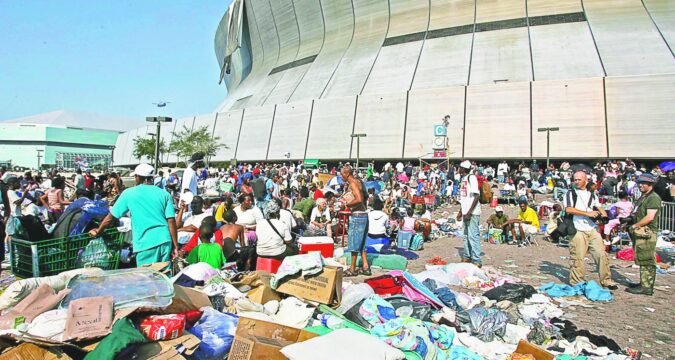
This week marks 20 years since one of the deadliest natural disasters in American history. Hurricane Katrina slammed into the Gulf coast near Grand Isle, Louisiana, on Aug. 28, 2005, as a powerful Category 3 storm, devastating everything in its path. More than 1,300 people died and an estimated 1.5 million were displaced, 61% of whom never returned to their affected communities.
Among the hardest hit was New Orleans, which depends on a network of federally built and maintained levees and pumping stations to keep the city dry. Many neighborhoods, including some of the poorest areas, sit below sea level and were demolished by the water when the levees failed and the city flooded.
Local and state officials deserved plenty of blame in the aftermath for not ordering an evacuation sooner and for not being prepared to relocate the most vulnerable — those needing medical assistance, those without access to transportation — to higher ground.
But FEMA earned a large measure of deserved criticism in how it responded — or, rather, failed to respond — to the disaster. A storm of that power and intensity poses a host of unique challenges, but the agency, then led by Administrator Mike Brown, was caught flat-footed by the size and scope of a quickly unfolding humanitarian crisis.
FEMA’s mission is to provide support to local and state relief and recovery efforts, offering resources, coordination, logistical support and other help in emergency situations. But after-action reports into Katrina concluded that a sluggish response by the feds, especially in its deployment of search-and-rescue teams as thousands of victims waited for assistance, contributed to the staggering death toll.
In the years since, far too many American communities have experienced natural disasters; there were 27 events in 2024 alone whose cost exceeded a billion dollars. There is a comfort in knowing that, despite its flaws and need for reform, FEMA will be there to help victims and ensure local authorities have the tools and resources they need.
That safety net is fraying, and the pathetic Texas flood response is the latest evidence. Two-thirds of calls for assistance went unanswered two days after the disaster because Noem did not renew a contract to keep the call center staffed. She was slow to direct search-and-rescue teams to central Texas, and Trump ordered a halt to door-to-door outreach efforts, which allowed the agency to establish contact with victims.
These are symptoms of a larger sickness — Trump’s stated desire to eliminate FEMA and put more responsibility for emergency response on state and local officials — and the target of Monday’s letter to Congress. FEMA staff warned that, without action, the question isn’t if the United States will endure another Katrina-like disaster, but when.
Trump and Noem don’t want to hear dissent from those experienced hands who devoted their careers to protecting the public and who are deeply concerned about FEMA’s precarious state. So rather than heed that constructive criticism and working to repair this vital agency, the White House has moved to push those staffers out.
Twenty years ago, the nation learned a brutal lesson about the value of a robust emergency response. Trump and Noem appear content to ignore it, which is to the detriment of coastal communities such as ours.