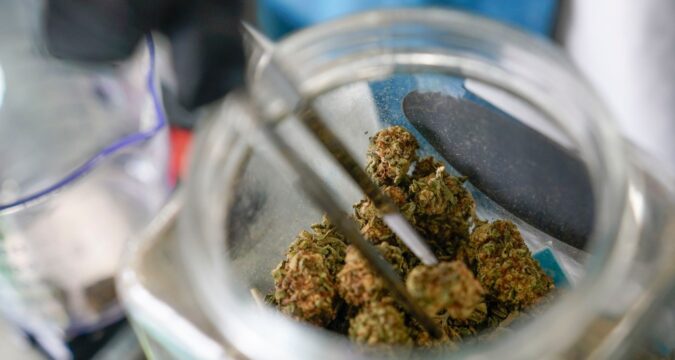
If you’ve attended any large public events lately — such as Orlando’s Come Out With Pride parade or last week’s Fiesta in the Park — there’s a good chance you were stopped by someone collecting signatures to put recreational marijuana back on the ballot in 2026. Maybe more than one someone: Signature-gatherers armed with clipboards and answers to common questions were out in force — and many people were signing, despite the requirement to provide significant personal information including a driver’s license number or the last four digits of their Social Security number.
Many of the people signing remembered that this issue had been on the ballot as Amendment 3 in 2024, when it fell short of the 60% needed for passage. They might not have known that Gov. Ron DeSantis and other state officials did everything within their power — including diverting money through a nonprofit charity affiliated with DeSantis’ wife into a No-on-3 campaign — to block the amendment from winning passage. A grand jury in Tallahassee is currently probing that sequence of events.
And they almost certainly don’t understand the governor’s current strategy, which — according to lawsuits filed by Smart and Safe, the group working to get recreational cannabis on the ballot — seems to be “the best election is the one that never happens.” The rights of Florida voters be damned.
The lawsuit filed last week accuses Cord Byrd, appointed by DeSantis to be Florida’s Secretary of State, of purposefully ignoring the fact that Smart and Safe has already turned in hundreds of thousands of signed petitions to elections supervisors across the state; of the 880,062 needed for ballot access, the group has collected more than 660,000 and will almost certainly meet the final goal by its February deadline.
The group reached the threshold to trigger an important step in July: Once 25% of the petitions needed to get an issue on the ballot are in, Byrd is supposed to initiate the process of submitting the ballot language for review by the Florida Supreme Court. It’s been three months since that threshold was met, and he hasn’t done that — in fact, he hasn’t done anything, other than issue a directive to county election supervisors that as many as 200,000 valid signatures should be discarded.
That decision is the subject of the first lawsuit, which was filed in mid-October: Byrd has ruled that because some petitions sent by mail (using a form that had already been approved by state elections officials) did not include the full text of the proposed amendment, they should be invalidated. But the petition mailings did include an easy-to-type web address that could be used to view the full text. State law does not require the full text to be printed with every petition, the lawsuit argues. It also says that signatures submitted before the 2025 legislative session should not be subject to a new law, signed by DeSantis in the spring, that requires petition sponsors to show voters a fiscal impact statement along with the full language of the proposed amendment when requesting their signature.
If Byrd and DeSantis are correct, the Legislature could thwart any ballot amendment by approving a form and then changing the rules to allow the petitions to be invalidated.
Put the two would-be barriers together, and the intent is clear: DeSantis and Byrd are scheming to keep voters from having a second chance to approve recreational marijuana, even after they’ve cleared all the barriers lawmakers have put in place to keep proposed amendments from reaching the ballot.
It’s bizarre to watch Florida’s top elections official work to undermine voters in such a blatant fashion. Scheming to rip the validity from signatures that had already been submitted is an ugly maneuver, but one Smart and Safe could potentially overcome — by working frantically to get enough extra signatures to make up for the ones that would be unfairly thrown away.
But Byrd and DeSantis seem to believe they can kill the entire initiative by simply ignoring their legal and constitutional duties until the clock runs out. Now it falls to the state Supreme Court to order the governor and secretary to stop stalling, and send them the proposed amendment so they can ensure that it is legally sufficient and honest with Florida voters about what it would do if passed. The state’s high court is likely to approve it, because the 2026 version is even more conservative than the 2024 language.
Then it will be up to voters — as it should be, without interference by state leaders who are letting their personal agendas cancel out the rights of Florida’s electorate. That stance should infuriate any Florida voter who values their rights, even those who voted against recreational pot before, and plan to do so again — if they get the chance.
The Orlando Sentinel Editorial Board cnsists of Opinion Editor Krys Fluker, Executive Editor Roger Simmons and Viewpoints Editor Jay Reddick. Use insight@orlandosentinel.com to contact us.