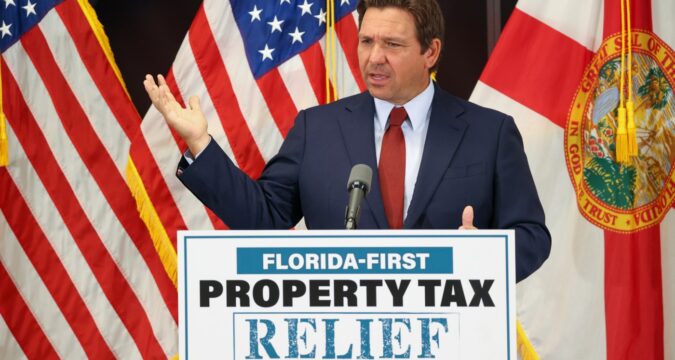
Hi there, property owner in the state of Florida. Would you like to see your property-tax bill dwindle, or even disappear? Of course you would! Don’t worry about the details; just vote “yes” when told to do so, and everything will be fine.
Really, you can trust us – much more than those free-spending idiots in county and city government. Just vote yes. It’ll be fine.
This is the ultimate feel-good ballot bait, masking a hidden agenda. It’s headed for your voting booth, in little more than a year. And though you might not realize it, the propaganda campaign has already started. It’s a multi-step plan: First, make local elected officials look like … well, free-spending idiots who recklessly hike taxes and lavish the resulting money on wasteful programs that are, by the far right’s standards, too “woke,” too green or too fussy about things like growth management that just get in the way of developers’ wishes.
Next, come up with the details of a property-tax conversion plan that sound as reasonable as possible, but carry a dark intention: A massive shift in power, away from city and county governments and local school boards into the hands of Tallahassee bureaucrats.
Then mount a “vote yes” campaign, funded by the wealthy interests with the most to gain from a massive shakeup in Florida’s governmental power structure. Last, expect voters to swallow the bait without asking inconvenient questions like “why are you doing this?” and “what’s likely to happen if this becomes law?”
We think Florida voters are smarter than that, if they’re armed with the right information to see through the snow job.
Even better, if enough Floridians speak out now, they may be able to nip this nonsense in the bud. That opportunity starts with hearings on Monday and Tuesday of this week of a House select committee on property tax. But they should realize that the bigger plan, the one intended to undermine voters’ respect for their local officials and make state leaders seem responsible in comparison, has been underway for months.
Undermining local leaders
The roots of this planned power grab go back even further. Over the past several years, state legislators have grown ever bolder in their attempts to squash city and county governments — including recent legislation that frankly overrode local voters’ wishes as expressed at the ballot box.
Orange County has seen multiple voter-approved measures struck down. The most recent challenge is aimed at a 2024 vote that would establish rural boundaries intended to reduce sprawl and irresponsible development. At the same time, Gov. Ron DeSantis was removing, or threatening to remove, local elected officials from office. Clearly, local voters’ wishes don’t matter to state leaders.
But the most insidious aggression may be the effort that spawned two new state government agencies: The Department of Governmental Efficiency, or DOGE — named after the federal trainwreck once headed by Elon Musk that has severely weakened federal government — and the Florida Agency for Fiscal Oversight, also set up to harass local governments over their spending. Nothing says “governmental efficiency” more effectively than the creation of two new bureaucracies with the same mission, right?
Neither department has taken a look at any state agency. Instead, they’ve been sicced on counties and cities, with DOGE creating fake “audits” of local government that are more driven by politics than fiscal responsibility, and the FAFO effort targeting local property-tax revenues in an attempt to make Floridians think they are overtaxed.
The latter effort hit Orange County last week when Chief Financial Officer Blaise Ingoglia accused the county of over-taxing and over-spending with precious little evidence to support his allegations. He hit Jacksonville on Wednesday with the same message. Broward County and the city of Gainesville can expect to be next.
The motives are painfully obvious: State leaders are trying to amass proof that local governments are routinely overspending on ridiculous priorities. The next step, obviously, is to take away their ability to set property tax rates.
That’s been the obvious destination from the start, and it is a straight path to disaster for Florida’s communities.
Road to a power grab
There appear to be multiple proposals on the table that would gut property taxes. The most moderate plan so far is a proposal by state Rep. Ryan Chamberlin, R-Belleview, that would handcuff cities, counties and school boards to the tax revenue they collected in 2022-23. Chamberlin is at least being honest about the flip side of his proposal — which would make up for the lost property-tax revenue with a plan to tack a 5% “fee” onto real estate transactions along with a 5% bump in hotels, rental cars and theme-park tickets. The final element: Another “fee” on retail sale that would add 2-3% to every transaction. Chamberlin stopped short of saying these were taxes. But of course they are.
Another proposal would vastly increase Florida’s homestead exemption to make homes worth up to $500,000 or even $1 million tax-free. And of course, some leaders say they want to do away with property taxes entirely. They aren’t being as forthcoming about where the replacement revenue would come from to fund local services, including police, fire, schools, growth management and other important duties of local government. But it seems clear that they intend any replacement revenue to run through the hands of state government before it reaches the local level.
That’s the power grab. Right now, local cities and counties are free to set their own tax rates, also known as millage. The state constitution limits these tax levels to $10 per $1,000 of taxable property values. Most local governments levy less than half that. But in each community, those spending priorities are set after lengthy hearings where local residents talk about their spending priorities and how much tax burden they’re willing to shoulder. Some counties opt for higher levies because they want the increased services that come along with that; others do everything they can to keep taxes low.
What would happen if a significant portion of that decision-making shifted to Tallahassee? The obvious, immediate answer: Local voters’ wishes would matter much less. And the state government would have much more control over local decisions, including increased ability to “punish” communities that don’t bow to the political whims of statewide leaders by withholding funding.
It could also rob city and county officials of the opportunity to make small spending shifts that result in big savings. Orlando Mayor Buddy Dyer offers one example: When the price of new vehicles started to climb, the city adjusted its replacement schedules to keep city-owned cars on the road longer. That decision wouldn’t be as easy if state bureaucrats were making one-size-fits-all adjustments.
State control would also erase the very large differences between tax collections in different counties. Orange County hosts up to 200,000 visitors every day who don’t pay property taxes, but still need taxpayer-funded services. Meanwhile, Seminole County relies on a tax base that includes many corporate headquarters and homes with above-average values — and residents who don’t mind extra taxes if they think they’re getting value for their dollar, as evidenced in the overwhelming approval to extend the county’s one-cent sales tax last November.
The bottom line is this: In any government, taxes equal power. And the current regime in Tallahassee wants to grab as much power as it can, with decisions made far away from the residents of counties, cities and towns who will be affected. It will become far easier to starve local governments of the resources they need, and much harder for cities and counties to adjust to the needs they see every day.
This is a massive upheaval of Floridians’ ability to have the kind of government they want, concealed in the chintzy cloak of promised tax relief. State residents need to make it clear: They won’t be bribed into approving a plan that holds such potential for disaster, knowing they’re likely to suffer for that decision in the long run.
The Orlando Sentinel Editorial Board consists of Opinion Editor Krys Fluker, Executive Editor Roger Simmons and Viewpoints Editor Jay Reddick. Contact us at insight@orlandosentinel.com.