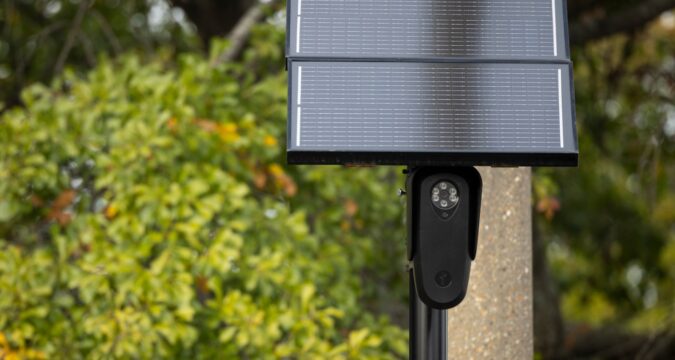
The Norfolk Police Department’s use of 176 automated license-plate readers does not violate constitutional protections against unreasonable searches, according to a recent federal court ruling. But a major caveat from the judge should not be ignored — the day could come when the cameras do infringe upon civil liberties and require the court’s intervention.
In a 51-page ruling dismissing a lawsuit by two local residents, U.S. District Judge Mark S. Davis provided a cogent explanation for why Flock Safety cameras — typically mounted on poles along public roadways — do not amount to a warrantless search. Across Hampton Roads, more than 700 such cameras are now in use.
Davis wrote that the evidence indicates that cameras, positioned in 75 clusters around Norfolk, do not “capture enough data to reveal the whole or virtual whole of their or other citizens’ movements.”
The cameras, the judge pointed out, record snapshots of a driver’s car at various points in the city but are not arranged in a way that would truly track an individual. Moreover, they don’t show where a person goes once he or she leaves the vehicle, Davis wrote.
In a 4 1/2-month stretch last year, two cars owned by plaintiffs Lee Schmidt of Norfolk and Crystal Arrington of Portsmouth were photographed hundreds of times a day traveling in the city, but photos were taken an average of three miles and 45 minutes apart — not sufficient to give a full picture of their movements.
However, Davis noted in his ruling, the number of cameras could reach a tipping point where they do “cross the line to an impermissible warrantless search” and violate the Constitution’s Fourth Amendment protections of privacy.
When the number of cameras would reach that point is unclear, the judge wrote, “but what is readily apparent to this Court is that, at least in Norfolk, Virginia, the answer is: not today.”
In a joint statement, Schmidt and Arrington said they will appeal the decision. The attention they’ve brought to the issue has been commendable because, regardless of the merits that law enforcement agencies see in the cameras, our nation must be on guard against the malignancy of a surveillance state.
According to Flock officials, more than 30 state and federal courts have now ruled that use of the cameras doesn’t infringe upon constitutional rights. At a City Council meeting the same day as Davis’s ruling, Norfolk Police Chief Mark Talbot said, “Flock cameras are a benefit to a neighborhood,” helping solve vehicle-based crimes such as auto theft.
But the cameras continue to stir controversy nationwide, with some cities such as Charlottesville deciding not to renew their contracts with Flock. Officials in Michigan and Wyoming, among other states, have raised concerns about where the collected license data could end up.
Opponents have raised alarms about law enforcement sharing data with Immigrations and Customs Enforcement for its controversial and increasingly violent activities. The Department of Homeland Security is exploring partnerships with Flock and other license-plate reader companies, according to the Associated Press.
Such a use is controversial on its own, but as Rachel Levinson-Waldman at the Brennan Center for Justice told the AP, the worries could easily spread beyond immigration enforcement. “We are developing these technologies for immigrant enforcement,” she said. “Are we also going to expand it or wield it against U.S. citizens who are engaging in entirely lawful or protest activity?”
In recent years, Virginia’s General Assembly passed important safeguards against the abuse of Flock data. In the current session, lawmakers are considering two bills regarding license-plate readers and artificial intelligence tools, including requiring the Department of Criminal Justice Services to draft model policy for localities.
Surveillance technology is rapidly evolving, and while it can benefit public safety, the risks of abuse are significant. State legislators, like their counterparts in Congress, need to remain vigilant. So too do our nation’s courts, as Davis’s ruling on the subject of AI is certain to be far from the last.