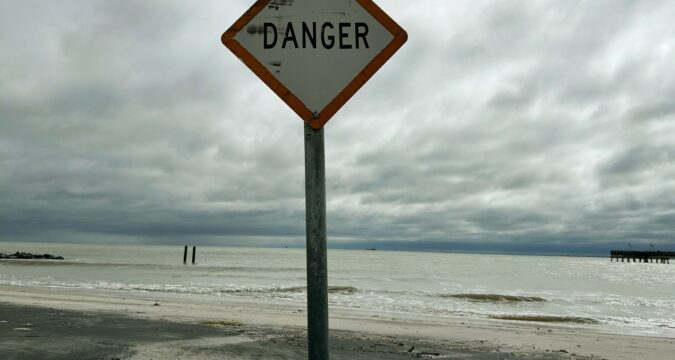
The storm that blew through the region this week wasn’t a tropical system or a hurricane, but it still managed to bring flooding to predictable places throughout the region. When added to the effects of the “King Tide,” one of the highest of the year, coastal residents had their hands full as water spilled into homes, businesses and streets.
The recent flooding is simply the latest reminder that plans to improve resilience and protect coastal communities cannot wait. The next governor and the incoming General Assembly must make these issues a priority in the coming year, recognizing that Hampton Roads residents need action, not more talk.
The nor’easter that rolled up the East Coast over the weekend delivered modest rainfall and some gusty winds to the region. It wasn’t a particularly powerful or well-organized system, but it caused considerable problems along the Outer Banks and throughout Hampton Roads.
Locally, the storm’s direction meant that water was pushed into low-lying coastal areas and held there, causing extended periods of flooding in locations throughout the region. That the system arrived during a King Tide was an unfortunate coincidence and resulted in some of the highest water levels Hampton Roads has seen in a while.
Neighborhoods such as Larchmont and Ocean View in Norfolk, parts of northern Virginia Beach along the coast and the Lynnhaven River, Grandview and Buckroe in Hampton, and numerous other places experienced prolonged flooding. Some school systems delayed or canceled classes and some businesses were forced to close, while others — including several restaurants along the coast — soldiered on.
Such is life in Hampton Roads these days, when a relatively weak coastal storm disrupts life for residents. Not that stormy weather is even a prerequisite; our region also experiences more common and more invasive flooding each year — even on sunny days — due to rising sea levels and land subsidence, which means water reaches more places than ever before during high tides.
These issues are well-traveled territory. Coastal flooding has been an enormous challenge for years, and Hampton Roads is second only to New Orleans for its vulnerability to recurrent flooding. Officials have worked to develop plans that will bolster resilience and protect neighborhoods, homes, businesses and critical infrastructure.
But while those plans are a necessary part of the process, this weekend offered the latest reminder that our region must move quickly to turn those plans into action.
Hampton Roads is estimated to need about $40 billion across the region to guard against flooding, a staggering sum that grows with every year. No individual city can afford to pay for the flood walls, tidal gates, shoreline improvements and other projects that would protect low-lying areas, meaning regional cooperation and funding from the state and federal governments are needed.
Under Gov. Glenn Youngkin, Virginia withdrew from the Regional Greenhouse Gas Initiative, a market-based, carbon cap-and-trade program that had provided the commonwealth more than $800 million for resilience and funding for energy efficiency efforts. That money has not been replaced despite its obvious need.
Norfolk is working to build a $2.6 billion network of flood-control systems but last year’s budget agreement reduced the funding expected from Richmond and arguments about the size and scope of the project have delayed its implementation. Virginia Beach voters approved a $567.5 million stormwater bond referendum in 2021, but rising material costs and a shortage of labor has increased the cost of that 10-year plan to $1 billion.
The list goes on, but it’s painfully evident that the urgency needed to tackle the region’s flooding problem is lacking. And as delays persist, our communities see more events such as this weekend, when even a relatively weak storm causes widespread problems.
As voters head to the polls in the coming weeks, the need to act on flooding should be foremost in their minds. Hampton Roads needs help, and quickly, or it will face a watery and destructive future.