RICHMOND — Former Gov. Glenn Youngkin prioritized tax cuts in his last budget proposal. But Democrats, who control the state legislature, propose largely scrapping those in favor spending that reacts to federal reductions to social programs.
The General Assembly money committees presented their respective budget amendments Sunday.
One notable difference: Senate’s approach includes over $1 billion in new revenue from letting the data center sales and use tax exemption expire in January 2027. That measure is absent from the House’s version.
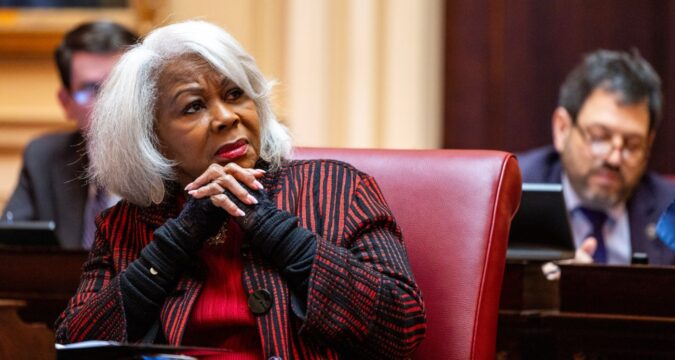
“For years, Virginia has been writing a blank check to some of the world’s most valuable corporations — a check that started at $1.54 million and has grown to $1.6 billion — while families struggle to pay for childcare, health insurance, and a place to live,” said Senate Finance and Appropriations Committee Chair Louise Lucas in a statement. “This budget takes more than a billion dollars that had been flowing out of our treasury unchecked and invests it in the education, health care, and opportunity that every Virginian deserves. That is what it means to govern responsibly.”
Related Articles
Spanberger signs bill that approves Congressional redistricting map
Collective bargaining, iGaming and cannabis bills differ in Virginia House, Senate
Spanberger to deliver State of the Union response from Colonial Williamsburg
Virginia lawmakers advance annual mental health screening bill for grades 6-12
‘Ghost gun’ bills advance in Virginia’s General Assembly
The budget bills, which advanced from the money committees Sunday afternoon, will head to the chamber floors for a full vote before moving to a conference committee to work through the differences. Asked whether there would be any movement on the data center sales and use tax exemption, House Appropriations Committee Chair Luke Torian, D-Dumfries, told reporters “We’ll see.”
Virginia is home to 35% of data centers worldwide. The tax exemption, in place since 2010, is credited with fueling the state’s data center boom. But Virginia’s Joint Legislative Audit and Review Commission estimates that over the past decade, data centers have been exempt from paying $2.7 billion.
“We’re going to move forward with our approach with the hope that they’ll understand that this is the better approach for all Virginians,” Lucas, D-Portsmouth, told reporters. “I think (data centers) will continue to build in Virginia, but I think they understand it’s going to be a different playing field.”
The Data Center Coalition described the Senate’s proposal as a self-inflicted hit to Virginia’s economy, saying it would “effectively halt investment” by an industry that has reaped economic benefits for the state.
“The data center industry supports tens of thousands of jobs around the state and generated more than $5 billion in state and local tax revenue in the last two years,” said Nicole Riley the coalition’s director of Virginia government affairs. “The state’s own studies say that data center investments, jobs, and tax revenues could stop, existing companies could leave, and the state and its localities could lose $1.3 billion in tax revenue with the elimination of Virginia’s tax exemption program.”
The Senate’s budget proposal totals $74.1 billion in general funding spending over fiscal 2027 and 2028, compared to the House’s $71.5 billion. Youngkin’s proposal had a general fund budget of $72 billion.
The Senate version projects a $159 million loss in revenue over the biennium from increasing the state’s standard deduction from $8,750 to $9,200 for single filers and $17,500 to $18,400 for joint filers. The Senate version would also provide a tax rebate of $100 for single filers and $200 for joint filers — Virginians would likely receive that money via check or direct deposit sometime in October. In addition to new revenue from the data center sales and tax exemption expiring, the Senate proposal assumes $169.4 million in tax revenue from a newly legalized retail cannabis market and a new 11% sales tax on firearms and ammunition.
The House version accounts for an additional $265 million in revenue from newly legalized internet gaming.
Both versions largely reject tax cuts proposed in Youngkin’s version that would conform state tax policy to federal tax cuts contained in the federal spending budget bill, HR1. Those measures include an elimination of tax on tips and car loan interest.
And both versions attempt to address federal cuts to programs like Medicaid and the Supplemental Nutrition Assistance Program. Both proposals set aside money for a potential new SNAP state matching requirement that could be triggered by Virginia’s payment error rate. Though both the House and Senate proposals included increased administrative funds to help reduce the error rate, if it doesn’t go down fast enough the state would be on the hook for $270 million per year at the current 15% match rate beginning in fiscal 2028. Youngkin’s budget had not included that funding on the assumption that Virginia could successfully reduce the error rate in time.
The Senate would appropriate $200 million, compared to the House’s more modest $79.1 million, to offset health insurance premiums that are going up as a result of the end of Affordable Care Act tax credits that expired at the end of 2025.
Introducing Capitol Brief, a weekly newsletter about Virginia politics
The Commonwealth Institute, a progressive think tank that analyzes fiscal policy in Virginia, praised both chambers for restoring $29.5 million to the prenatal program under Family Access to Medical Insurance Security, Virginia’s health insurance program for children in families who earn too much to qualify for Medicaid. That funding was absent in Youngkin’s proposed budget.
“This program provides prenatal, labor and delivery and 60 days postpartum coverage to certain immigrant groups and served more than 11,300 pregnant people in 2025 alone,” said Ashley Kenneth, president and CEO of TCI in a statement.
Kenneth also noted that both proposals allot an additional $10 million over the biennium to Virginia free and charitable clinics.
“These facilities provide essential care to people with no or inadequate coverage and are expected to face increased demand as federal changes push people out of coverage,” she said.
Kate Seltzer, 757-713-7881, kate.seltzer@virginiamedia.com
https://www.pilotonline.com/2026/02/22/virginia-democrats-budget/