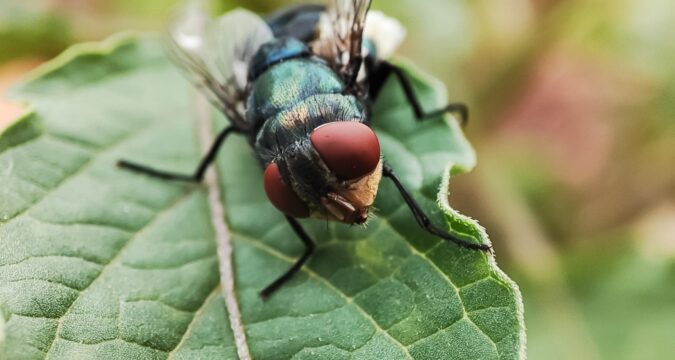
Federal officials confirmed a human case of a flesh-eating screwworm parasite in Maryland, the first in the United States in years.
The Department of Health and Human Services said the case involved a person who had traveled to the U.S. from El Salvador and was confirmed Aug. 4. The infected person’s condition is unknown.
A New World screwworm outbreak in Central America could threaten the cattle industry, according to experts.
“The risk to public health in the United States from this introduction is very low,” HHS spokesperson Andrew Nixon said in a statement.
The screwworm is a parasitic blowfly that burrow into open or untreated wounds on warm-blooded animals, including livestock and humans, and leave fly larvae, or maggots. Most U.S. infections — including the newest case — are contracted through travel to tropical and subtropical regions, the CDC says.
“When NWS fly larvae (maggots) burrow into the flesh of a living animal, they cause serious, often deadly damage to the animal,” the USDA says. “NWS can infest livestock, pets, wildlife, occasionally birds, and in rare cases, people.”
The key to treatment is prevention and quick removal.
Agriculture secretary Brooke Rollins has announced plans to eradicate the pest, including sterile fly production facility in South Texas that would prevent screwworms from reproducing.
Sterilized flies were used to “eradicate NWS fly populations” in the U.S. in 1966 and a small outbreak in the Florida Keys in 2017, according to the USDA.
https://www.nydailynews.com/2025/08/25/screwworm-maryland-flesh-eating-parasite/