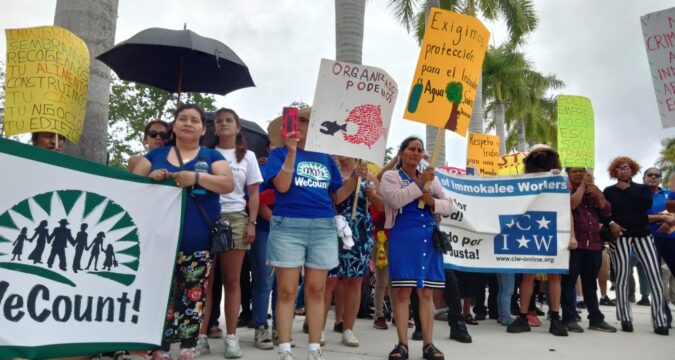
Immigration policies in Florida and under President Donald Trump’s administration have not only upended the lives of unauthorized immigrants, but have also deeply affected those with legal status, according to a new study by researchers at the University of South Florida.
The study from USF’s Im/migrant Well-Being Research Center was based on interviews with 53 people in central and west-central Florida that show how state laws and stricter federal policies affect daily life.
In 2023, Gov. Ron DeSantis signed SB 1718, a law designed to restrict the flow of illegal immigration. The law expanded the worker verification process and invalidated driver’s licenses from other states. It cut programs that provide ID cards for immigrants, and also required that hospitals accepting Medicaid collect information on patients’ legal status.
This year, Florida approved new laws, set aside millions for immigration enforcement and detention, and opened Alligator Alcatraz in the Everglades and a second facility in Baker County, known as Deportation Depot.
According to USF’s report, the impact extended beyond those who lack legal status. All groups said they experienced a climate of fear, distrust and constant vigilance.
“This report reveals that immigration enforcement affects all aspects of immigrants’ daily lives. This was the case regardless of immigrant legal status,” said Elizabeth Aranda, a sociology professor and director of the Im/migrant Well–Being Research Center. “Their fears were not unfounded as we found evidence of a U.S. citizen having been detained and assaulted in the process.”
A 45-year-old Mexican immigrant said her family stopped their seasonal migration work because driving north is too dangerous due to law enforcement.
Another immigrant, a pregnant U.S. citizen from Puerto Rico, was arrested along with her husband, who does not have legal status and was detained with her. She was accused of lying about her citizenship. Her husband and family believe what happened may have caused her to lose the pregnancy after she was released.
Families say they suffered financial harm, too. One 49-year-old Venezuelan seeking asylum said her relatives and others were among 200 workers scammed out of $400 each for jobs that never existed. A 53-year-old farmworker from Mexico without legal status said his son’s secondhand shop is falling apart because many immigrant customers are too scared to go out. A 39-year-old woman said she was afraid to drive even though she’s a permanent resident.
Rising rents and reduced mobility are leading families and their adult children to move in together and adopt self-protective isolation strategies, according to the study. Many avoid public spaces such as parks and restaurants or choose not to drive altogether. Fear of law enforcement and U.S. Immigration and Customs Enforcement is causing people to avoid police, the report found.
Traffic stops and local police presence in communities are now viewed as potential immigration encounters, according to the study, due to partnerships with Immigration and Customs Enforcement. These programs between federal immigration authorities and state or local police departments allow deputies to question and arrest people for violations of immigration laws.
Participants in the study who spent time in immigration detention and jails reported abuses and described having limited access to basic necessities such as food, sleep and showers. After release, many reported experiencing depression and post-traumatic stress disorder.
Last week, Amnesty International released a 61-page analysis describing inhumane conditions at Alligator Alcatraz and Krome North Service Processing Center, two detention facilities in South Florida.
USF’s report found immigrants experienced stress in the form of insomnia, appetite loss and anxiety. They skip doctors’ appointments and checkups because they could be exposed to immigration enforcement.
The study highlights that young people, many of whom are U.S. citizens, are stepping into adult roles to support their immigrant parents, such as by driving them to work. Some are postponing college plans because they choose to remain home, the report found.
At the community level, the networks established by churches, pastors and local organizations are still seen as sources of support and assistance by immigrants and their families, according to the study.
©2025 Tampa Bay Times. Visit tampabay.com. Distributed by Tribune Content Agency, LLC.