For most people, talking about taxes is only a little less boring than actually doing their taxes — unless, of course, you’re a CPA and a debt counselor, which I am both. I only wish we were having the correct conversation.
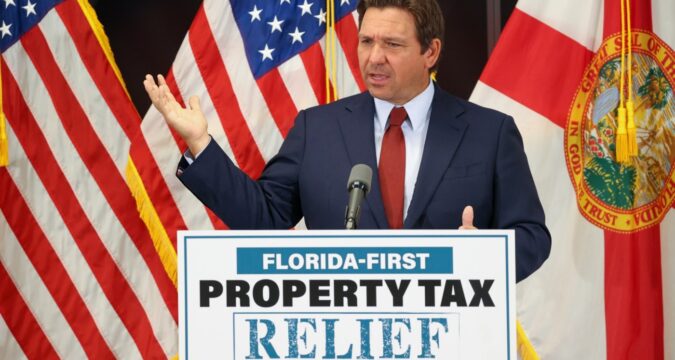
Right now, the conversations in Tallahassee are about abolishing property taxes. Gov. Ron DeSantis and other state Republican leaders have publicly floated the idea of eliminating the property tax and replacing it with a higher sales tax, which could double from 6% to 12%.
Howard Dvorkin is chairman of Debt.com. (courtesy, Howard Dvorkin, photography by Eduardo Schneider)
Whether you are a fan of the governor or not, he’s on the right track when it comes to real estate taxes for homeowners. However, there’s a big difference between eliminating a tax and reducing it. You must have a precise and concrete answer to this question: How is the loss of tax revenue at the county level going to be replaced?
Lawmakers are considering several variations of this concept, some less drastic than others. All of them, however, are aimed at the wrong tax. Neither Republicans nor Democrats are focused on the right tax.
Instead of eliminating or reducing property taxes and hiking the sales tax, lawmakers should be looking to reform the sales tax and increase the efficiency of our tax dollars.
Right now, counties can add a “discretionary sales surtax” on top of Florida’s 6% sales tax. Local voters must approve the added tax on themselves, which currently range from 0.5% 1.5%. There’s one other caveat: This extra sales tax can only apply to the first $5,000 of the sale price, although there are exceptions.
Right now, all but one of Florida’s 67 counties — the outlier is Collier County — have a discretionary sales surtax. These face far less scrutiny than they should. Frankly, this is the tax that should be eliminated. The surcharge simply covers up the inefficiencies of local governments.
Sales taxes are the blunt object of tax policy. Poor and rich alike need to eat and clothe themselves. They pay the same sales tax on the items they buy. But proportionally, lower-income earners pay a greater percentage of their income in sales tax than the wealthy do. The tax especially hurts the poor.
So scrutiny of the sales tax is a moral issue as well as a fiscal one. Now let’s look at the cost/benefit of discretionary sales surtaxes.
In 2018, Broward voters approved an extra 1% sales tax for the next 30 years. The money was earmarked for a program called MAP Broward. Governments love acronyms, and this one stands for “Mobility Advancement Program.”
MAP Broward was sold as “better roads, less congestion and more public transit.” As the Sun Sentinel reported, “A major controversy was over the $3.7 billion included in the plan for light rail projects.” Seven years later, where is that light rail? Do you feel the roads are better and less congested?
The Sun Sentinel also reported, “The increase in the sales tax is a penny – going from 6 cents to 7 cents on each dollar you spend – but the tax increase will cost you a lot more than one cent. Officials estimate the increase for the average Broward household will be about $174 a year.”
Does that $174 impact the wealthy? Of course not. Did the extra tax impact lower-income earners? Surely. That extra $174 could have been the cost of the family’s weekly food bill.
According to the Community Foundation of Broward, “50% of households in Broward are living on or below the poverty line.” That $174 really matters in those households. Yet the Legislature and the governor are talking about property taxes that have no impact on the people that need help the most. The poor don’t own homes, but they do pay proportionately more in sales taxes than the wealthy.
I won’t lie. I’d love to pay zero property tax on my home. But at what cost? If there’s going to be a property tax discussion, focus on realistic goals like raising the homestead exemption from $50,000 — set many years ago — to something more realistic, like $250,000.
Then focus that legislative brainpower on our truly regressive sales tax. Get rid of the county surtax, provide sales tax exemptions for healthy foods. Raise the sales tax on unhealthy foods such as snacks, sodas and vice purchases such as alcohol and other unhealthy products. Right now, we have a clumsy and costly system that needs some attention. Gov. DeSantis started the conversation. We should all participate, not forgetting those that don’t have a voice in the debate.
Howard Dvorkin is chairman of Debt.com. He resides in Parkland.
https://www.sun-sentinel.com/2025/10/14/floridians-are-talking-about-the-wrong-tax-opinion/