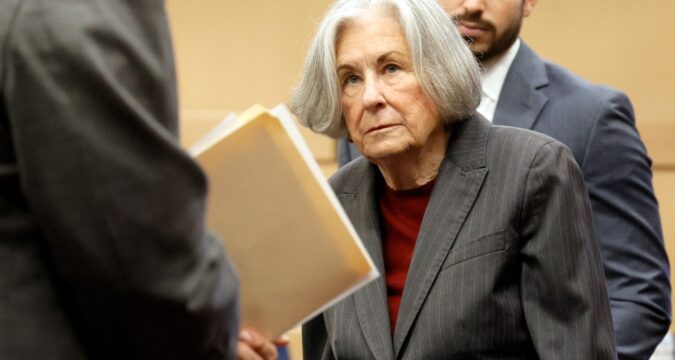
A statewide grand jury wrongly charged former Broward Schools lawyer Barbara Myrick with illegally disclosing confidential information, an appeals court has ruled, giving Myrick a major victory in a case that has dragged on for 4½ years.
The 2-1 decision by a panel of the 4th District Court of Appeal, issued Wednesday, overturns a trial court judge’s ruling that had rejected Myrick’s request to dismiss the case. The decision also nullifies a plea deal that Myrick entered into a year ago where she had been charged with a misdemeanor, her lawyer, David Bogenschutz, told the South Florida Sun Sentinel.
The Attorney General’s Office of Statewide Prosecution, which had asked a statewide grand jury to indict Myrick, still has several options for appeal. However, Bogenschutz said he doubts any such efforts would be successful.
“I really think that this is a dead issue at this point,” he said.
Richard Mantei, the lead prosecutor in the case, told the Sun Sentinel in an email, “We are discussing appeals. Have not decided yet.”
Myrick could not be reached for comment, despite attempts by phone and text.
Myrick, 76, had been charged under a felony statute that prohibits the disclosure of confidential grand jury information to anyone outside the grand jury room. State prosecutors had alleged that Myrick, in an effort to aid then-Superintendent Robert Runcie with his grand jury testimony, had revealed confidential information to Mary Coker, who was the district’s procurement director at the time.
However, even though the statewide grand jury statute makes such disclosures a crime, it doesn’t authorize the grand jury to issue the indictment, wrote Judge Robert Gross of the 4th District Court of Appeal. The statute specifically cites which types of crimes the grand jury can indict someone for, and unlawful disclosure isn’t one of them, the judge wrote.
“If the Legislature intended the statewide grand jury to have the power to indict” for this crime, it should amend the law, Gross wrote.
Bogenschutz said to charge someone with unlawful disclosure, statewide prosecutors would need to bring the case before a local grand jury or a local State Attorney’s Office.
One of the three judges, Bradley Harper, dissented, saying he believes the grand jury statute, when taken as a whole, does give the grand jury the authority to indict on this crime.
“To hold that a statewide grand jury cannot indict for violations of the very secrecy rules that protect its existence is to eviscerate the ‘Statewide Grand Jury Act’ framework,” Harper wrote in his dissent.
Myrick was one of three high-level Broward school administrators indicted on felony charges in 2021 by a statewide grand jury that Gov. Ron DeSantis empaneled in 2019 to review safety and management issues in school districts in the wake of the Parkland mass shooting.
Runcie was indicted on a perjury charge in April 2021 at the same time as Myrick, while former Chief Information Officer Tony Hunter was indicted on a bribery charge in January 2021.
Related Articles
State agrees to drop charge in ex-Broward schools chief Runcie’s perjury case
Former top Broward schools lawyer accepts plea deal in grand jury-related probe
Court allows case against former Broward superintendent Runcie to proceed, overturning judge
Statewide prosecutors have been unable to get any of the charges to stick. Prosecutors agreed to dismiss the charges against Runcie in June, after he agreed to make a statement admitting he had made some statements that were untrue. A judge dismissed the case against Hunter, citing jurisdictional issues, although the state still has an active appeal.
Bogenschutz had initially asked Circuit Judge Martin Fein to dismiss the case against Myrick, but he denied the request. The case was scheduled to be heard before a jury in November 2024, but Myrick agreed to a plea deal last October.
She pleaded no contest to attempted unlawful disclosure of grand jury proceedings, a first-degree misdemeanor. A no-contest plea meant the defendant accepts the outcome but doesn’t admit guilt. She was required to pay about $5,000 in prosecution fees.
However, as part of that plea deal, she was allowed to appeal Fein’s ruling not to dismiss the case.
“Nobody wants to have a client facing the potential of a felony conviction, if you can resolve it in a way that does not involve a felony conviction and still retains the ability to appeal that case,” Bogenschutz said.
Since she received a favorable outcome this week, the plea deal becomes null and she won’t have to pay the prosecution fees, payment of which were deferred until the appellate court ruled, Bogenschutz said.