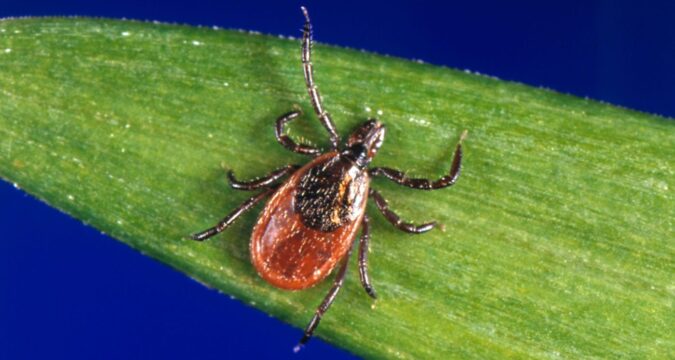
Now that the weather is less oppressive, Floridians will be spending more time outdoors. That can mean more exposure to ticks and tick-borne diseases. But a lot depends on where you live and what kind of ticks are around.
The most infamous tick-borne illness these days is Lyme disease, which, though more prevalent in the Northeast, does exist in Florida. But there are others. Alpha-gal disease, which causes people to have an allergic reaction to red meat, has been on the rise in the U.S. And ticks in Florida may spread spotted fever and ehrlichiosis, which dogs can catch, too.
Tick experts said that most of the 25 species of ticks in Florida are more common in the northern half of the state than in the south. No one really knows why.
“In South Florida, we don’t tend to have the high numbers you find elsewhere,” said the University of Florida’s Cynthia Lord, who studies how insects and other animals spread diseases. “That includes the Gulf Coast tick and the deer tick.”
Interstate 4 “makes a pretty good demarcation,” said University of Florida vector-borne disease expert Greg Glass in a recent article for the Emerging Pathologies Institute. The highway runs across the state from Tampa to Orlando to Daytona Beach.
Glass said ticks are less common south of I-4. “They exist, but they’re not especially abundant.”
Below, some of the ticks and diseases to be aware of this winter.
Alpha-gal
Alpha-gal syndrome is spread by the lone star tick, and causes an allergic reaction to red meat. Symptoms can include hives, nausea, severe stomach pain and diarrhea. It can also cause dangerous drops in blood pressure and difficulty breathing.
The allergy can dissipate, but can also be permanent, especially if people are repeatedly bitten by infected ticks. A man in New Jersey had a severe allergic reaction to meat recently and died.
Lord said lone star ticks can be found throughout Florida, but they’re more common in the northern half of the state.
The disease is on the rise nationally, particularly in a swath from eastern Kansas to eastern Tennessee, but it’s not widespread yet in Florida, despite the state’s high numbers of lone star ticks.
The CDC estimated that most counties have a rate of 11 or fewer suspected cases per 1 million people between 2017 and 2022. There were higher rates in northern Florida, with estimates between 11 and 87 cases per 1 million residents.
Related Articles
How the Everglades saved a tribe, and how the Miccosukee use science to save the Everglades
A warm Thanksgiving is ahead for South Florida, followed by a possible cooldown
All the reasons why the 2025 hurricane season will be remembered as downright ‘weird’
“I would say it’s here and it’s serious,” said Lord, “but we don’t have good case numbers on it because it is essentially an allergy, so people have different reactions to it.
University of Florida researchers recently found that lone star ticks survive 50% longer in areas dominated by cogongrass, an invasive grass common across the Southeast.
Spotted fever (Rickettsia parkeri)
The Gulf Coast tick, more common in the northern part of the state, spreads this disease. Though not as severe as Rocky Mountain spotted fever, the mild version causes a dry, dark scab at the bite site along with fever, headache, muscle aches, and a rash. If untreated it can lead to organ complications. Treated with the antibiotic doxycycline.
The disease is not dramatically widespread in humans, in part, because of the tick’s preferences. “The Gulf Coast tick can be abundant, but it prefers deer and cattle to humans,” said Lord.
A vile full of ticks collected from the field. (Courtesy University of Florida)
Lyme disease and lizards
Lyme disease can be nasty. It comes from a bacteria spread by the deer tick, also known as the blacklegged tick.
According to the Centers for Disease Control and Prevention, “typical symptoms include fever, headache, fatigue, and a characteristic skin rash called erythema migrans. If left untreated, infection can spread to joints, the heart, and the nervous system.
Lyme disease can be elusive, and even persist after antibiotic treatment, some people suffer “prolonged symptoms of fatigue, body aches, or difficulty thinking as a result of their infection,” said the CDC.
The good news is that Lyme disease, which has spread in the Northeast, is not as significant in Florida, in part because ticks love lizards, and lizards don’t spread the disease.
Deer ticks in Florida don’t carry the disease as much as they do in the Northeast.
According to University of North Florida’s Kerry Clark, who specializes in studying tick-borne diseases in the Southeast, deer ticks, the species that carries Lyme disease, have a relatively low rate (0% to 5%) of carrying the disease in Florida. While nearly half of adult deer ticks in the Northeast might carry the disease.
Lord said the low rate of Lyme disease happens for a few reasons. Cold winters force deer ticks into a two-year life cycle. Infected mid-age ticks (nymphs) emerge first in spring and infect white-footed mice. Young ticks (larva) emerge later and then feed on infected mice.
These immature ticks are the main source of infection for humans, Lord said.
Florida also has lizards that the immature ticks feed on. They tend to not spread the Lyme disease bacteria as well as the white-footed mice of the Northeast. The result is that the disease gets dampened.
There’s also a bit of a mystery afoot. “The immature ticks of the South are very uninterested in humans. If you go for a walk in the woods in the north, you’re going to get nymphal (deer ticks) all over you. I’ve never found one down here in Florida,” said Lord.
She said there are adult deer ticks active in winter, when people spend more time outdoors in Florida, but they’re not the main spreader of the disease. They’re less of a hazard because there are fewer of them, said Lord, and they’re easier to spot because they’re bigger and their reddish in color. The tick must be attached to you for 24 to 48 hours for successful transmission of the bacteria, and the larger red ticks are simply easier to spot.
Seasonal fears and some good news
The most pleasant months to venture into the woods in Florida happen to be when many of the ticks here are less active.
“A lot of our ticks are more active from spring through fall,” said Lord. “People should always be on the lookout for ticks … each one has different stages and they can be active at different times of the year, so it’s just something to be aware of and take precautions, and check yourself when you come back in.”
Pets
Dogs and cats are susceptible to some of the same diseases as we are, and some that humans don’t contract.
“We recommend year-round prevention for pets for fleas and ticks,” said veterinarian Cynthia Rogers of the Broward County Humane Society. She said the diseases to be concerned with include:
— Ehrlichiosis, a bacterial infection spread by both lone star ticks and blacklegged ticks. It leads to fever, lethargy, loss of appetite, and bleeding disorders. Early treatment with antibiotics is effective, but anemia and organ damage can occur in long-term cases.
— Anaplasmosis, which is spread by the deer tick. It causes fever, lethargy, loss of appetite, and joint pain.
— Cytauxzoon felis affects cats. It can only spread only through tick bites, usually from the lone star tick. Symptoms include lack of energy, lack of appetite, difficulty breathing, and pale gums.
Prevention
To avoid tick bites and diseases, the University of Florida suggests:
— Remove ticks from pets and people as soon as noticed
— In tick-infested areas, keep clothing buttoned and tucked in, including placing pants inside boots.
— Wear light-colored clothing to easily spot ticks.
— Apply repellents to uncovered skin.
— Avoid touching plants in tick-infested areas.
— Check for ticks after frequenting tick-infested areas.
— If you live in wooded areas, check for ticks daily.
— Clear brush along pathways and frequented areas
According to the Florida Department of Health, repellents containing DEET can be applied directly to the skin and can offer several hours of protection. Repellents containing permethrin can be applied to clothing and shoes and can last through several washings, the health department said.
To reduce your risk of being bitten by a tick, it’s best to shower within two hours of coming indoors.
If you find a tick on you or a pet, use tweezers to grab the tick as close to the skin as possible and pull it off. Make sure to wash your hands and the bite area afterward.
Some doctors may prescribe doxycycline after a tick bite to lower your risk of Lyme disease.