JAMESTOWN — Jamestown Rediscovery is looking back on the failed rebellion that led to the site’s burning nearly 350 years ago.
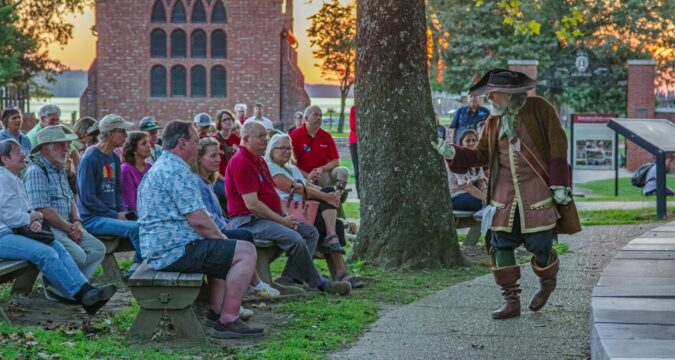
To reflect the history of Bacon’s Rebellion, which peaked on Sept. 19, 1676, Historic Jamestowne is hosting walking tours each Saturday at 2 p.m. throughout September. Hosted by public historian Mark Summers, Jamestown Rediscovery’s education director, tours will begin at the Pocahontas statue and run for about an hour. The guided tours will showcase sites where Nathaniel Bacon confronted Gov. William Berkeley while discussing Jamestown’s late 17th century politics.
Jamestown will host a day of programs on Sept. 20 further detailing the historic rebellion, including a lecture by Summers at 11 a.m. on the England and Virginia events leading to the conflict and a walking tour at noon.
At 3 p.m., the program concludes with the interrogation of Berkeley’s wife, who is confronted to defend the actions of her late husband.
Summers said in his tours, he will discuss how England’s politics led to the rebellion, how Berkeley became the governor and how the tensions that led to violence were decades in the making. He said he deliberately looks at different sides of the rebellion during the tour.
“In the end, when we get to the burning of Jamestown and the fact that both Berkeley and Bacon ended up dead before the whole thing was over, that it’s a civil war where it’s hard to know who really won,” Summers said.
According to Historic Jamestowne, Bacon’s Rebellion started as a fall 1675 dispute between settlers and Native Americans on the Virginia-Maryland border. During the late 1600s, Virginia elite planters used indentured servant labor, who moved away from the Tidewater region after their service ended. This caused conflict with Native Americans as they moved into the Piedmont. Settlers, who were fearful of raids and had issues of high taxes and low tobacco prices, began to gather around Bacon to drive Native Americans out of Virginia and acquire more land.
This led to an escalation of violence amongst settlers and tribes, which led further into a full scale rebellion by Bacon against Berkeley and his government. On Sept. 19, Bacon and his followers marched into the capital of Jamestown and burned it down, with Berkeley fleeing. Bacon died from dysentery the following month while Berkeley died on July 9, 1677.
Summers said the event came with many complexities, ranging from enslaved Africans and white indentured servants joining the rebellion for their freedom, Native American lives and land being threatened and wealthy people seeing the opportunity to seize power.
“What I think makes this story interesting is that every ethic group, gender, social class in Colonial Virginia is involved,” Summers said. “It’s perhaps the most diverse story in Colonial Virginia history where everyone is affected, and it’s just a 16-month period that transforms Virginia into what it becomes in the 18th century.”
Summers noted the similarities of Bacon’s Rebellion issues with today’s issues, such as representation, social class and property rights. He also said he hopes people will see how the rebellion connects Jamestown and Williamsburg together.
“Bacon’s Rebellion will help to make that transition easier for people. How the 17th century becomes the 18th,” he said.
The Sept. 20 programs and walking tour are included with admission to Preservation Virginia’s portions of Historic Jamestowne. For more information, visit historicjamestowne.org/visit/calendar.
James W. Robinson, 757-799-0621, james.robinson@virginiamedia.com