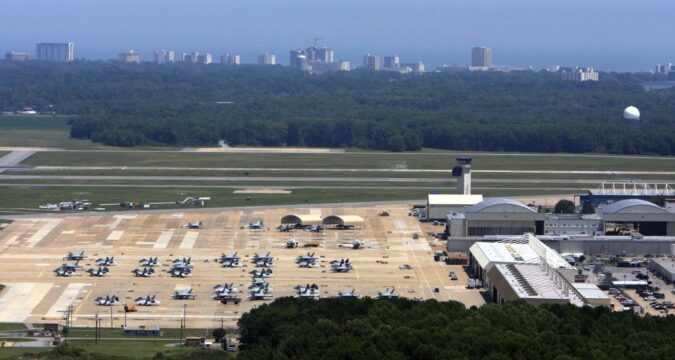
The transition
The Navy is preparing an environmental impact study anticipating the transition of seven FA-18E/F squadrons to F-35C Lightning II Joint Strike Fighter squadrons at Naval Air Station Oceana or Naval Air Station Lemoore in California between 2028-2039. The EIS will examine the transition’s potential impacts on topics delineating natural/manmade resources, air/water quality, public health and safety.
The EIS is federally mandated. Relevance depends on the degree transition infrastructure would alter the environmental status quo at each base and its surrounding area. F-35C aircrafts initially arrived at NAS Lemoore in early 2017. Additional infrastructure is not likely to have substantial environmental impacts since the base is remote and the area is sparsely populated. Presumably, the Oceana EIS will evaluate transition requirements employing the existing F-18 infrastructure. New and marginal changes may not collectively cause environmental concerns for the base or the surrounding highly developed urban area.
The study’s outcome will recognize transition requirements at the bases and ensure both are compliant with federal standards. Operational considerations that least affect the Navy’s strike fighter modernization program’s East or West Coast growth and flexibility objectives would, ultimately, sway the transition decision. Encroachment at Oceana could be problematic, indicating the necessity for political collaboration.
U.S. Rep. Jen Kiggans introduced H Res 572 in July, urging the Navy to send F-35Cs to Oceana. Virginia Sens. Mark Warner and Tim Kaine should work with the congresswoman. New-York Daily Tribune publisher Horace Greeley once advised a young newspaper correspondent to “Go West.” Absent timely and effective bipartisanship on behalf of NAS Oceana and Virginia, the F-35C squadrons could, indeed, go west as well.
Herb Kline, Virginia Beach
Elections matter
Elections can decide whether a nation is free or not, whether there is consent to govern or not and whether the government is free or arbitrary. There’s a reason some states are high tax and others low, one has ordered liberty (constitutional republic) and another has open borders and sanctuary cities (arbitrary). One is for “life, liberty and the pursuit of happiness” and the other is for unelected/unlimited regulatory and judicial control, court packing and late-term abortions.
This week the Virginia legislature is moving to put state constitutional amendments on the ballot in November. One amendment is the right to dictate the human right to life based solely on dependence, location, age and whim.
How can so many fine Americans vote for this? It starts with ideologically driven education. Late-term abortions violate the Tao, a sort of universal objective ecology of morality. Will our Virginia representatives in Richmond vote their conscience?
Peter G. Wales, Virginia Beach
Maduro’s fate
The question of accountability for Venezuela’s prolonged suffering deserves careful and inclusive public discussion. As international debate continues over whether deposed President Nicolás Maduro should face proceedings before the International Criminal Court, it is also worth asking whether U.S. courts, or other international legal mechanisms, have a role to play. For years, the Venezuelan people have endured economic collapse, shortages of food and medicine, political repression and widespread human rights violations. Millions were forced to flee the country, leaving behind families, careers and a sense of home. Their voices, shaped by exile and loss, are essential in determining whether international or U.S.-based judicial action is appropriate and what justice should look like.
At the same time, balance requires listening to Venezuelans who never left. Those who remained live daily with scarcity, fear and uncertainty, often without the option of escape. Their perspective, formed through endurance rather than displacement, is equally vital to any serious discussion of accountability.
Before deciding Maduro’s fate, the international community should first ask Venezuelans what justice, accountability and healing mean to them.
Jeannie Belgrave, Hampton