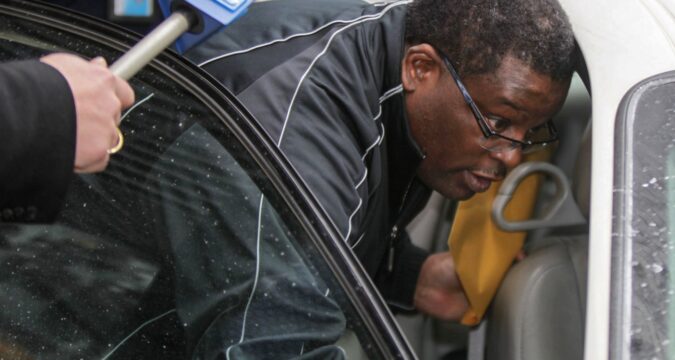
I can’t express in words the anger and frustration I felt after reading about the proposed $90 million settlement that Chicago taxpayers are on the hook for regarding corrupt former police Sgt. Ronald Watts. I know for sure most of my past colleagues and the present members of the department have those same feelings. Nobody hates bad cops more than good cops.
Watts and his subordinate Kallatt Mohammed were convicted of shaking down a drug dealer, for what was described as a low-level crime. To be sure, when a cop is convicted of a felony such as that, the corruption is by no means “low level.” Selling out the integrity of the oath not only affects the community but also the thousands of good cops who strive to uphold our laws with integrity.
Watts and Mohammed went to prison, but the stain of what they did will linger for decades. One burning question will always remain. Has the chain of command been scrutinized? Who was Watts’ supervisor? Leadership starts at the top. Far too often, rank-and-file cops are caught and face discipline while supervision goes on unscathed.
More than 175 lawsuits are being settled. That only two cops, a sergeant and his subordinate, were involved is astonishing to me.
When supervisors are not held accountable, more corruption always follows.
— Bob Angone, retired Chicago police lieutenant, Austin, Texas
Grocery tax remarks
In a Thursday editorial (“Downstate mayor bucks local grocery tax. Bravo”), Mayor Matt Wigginton of Peoria Heights was somewhat incorrect when he said that his city lived without the grocery tax before, when Gov. JB Pritzker and the General Assembly suspended the state grocery tax for a year during the COVID-19 pandemic. While the city did not have the grocery tax in place, it did not lose any revenues from the suspension.
During that suspension, the state of Illinois reimbursed all municipalities for the grocery tax revenues they would have received if the tax had not been suspended. A separate fund, the Grocery Tax Replacement Fund, was established in the state Treasury to reimburse municipalities for the suspended grocery tax. Thus, all municipalities received the revenues they would have received if the tax had not been suspended.
The difference was that the monies to municipalities were coming from state coffers and not the grocery tax.
— David Harris, director, Illinois Department of Revenue
A union labor question
The trade unions support many elected officials on both sides of the aisle. It’s no secret, though, that here in Illinois, they tend to support more Democrats (governors, mayors, aldermen) than Republicans. They spend millions of dollars in campaign contributions getting individuals elected to be their voice on issues important to them. One of those top issues is the protection and expansion of union labor.
The debate over illegal immigration is at an all-time high across the nation. Many of these immigrants provide non-union labor, usually for cash. Where do the trade unions come in on this debate? Where is their voice?
Many of our elected officials, including Gov. JB Pritzker, Chicago Mayor Brandon Johnson and Rockford Mayor Tom McNamara have received grassroots union support and campaign contributions. Their support of sanctuary laws appears to support non-union workers.
I grew up in a union household and have many friends and family in the trade unions, active and retired. The unions have never been shy or quiet when picketing “scab labor” with their large inflatables like Scabby the Rat. Is there not a double standard to be questioned? Non-union labor, by citizen or not, is still done by people taking a job from a skilled union worker. That used to mean everything to the trade unions. Their voice has been silent on this national issue, and it’s a question I have not seen asked but would like to see answered.
The trade unions should not only provide an answer but also look to a solution, one in which they come out stronger in the end. Leveraging the roster of federal elected officials on their donor list, why can’t we get federal legislation in the pipeline? Provide individuals who has skills from their home country a path to an apprenticeship program in the parts of the country in need of skilled labor. This would help immigrants get into a skilled work program that would lead to citizenship. This would fill the need for more skilled builders, strengthen union numbers and provide what could be a pilot program to be used to create a long-term solution to a decades-old problem.
— Jason C. Leviskas, Rockford
Mirrored by a machine
I’ve done this before. I asked ChatGPT to write me a story once, and it made me cry.
So naturally, I tried again. This time lazily, hoping to churn out something — anything — I could maybe monetize. I figured it’d give me a generic story, maybe a few laughs.
What actually happened? I saw me. Like, literally. The characters, the details, even the quirks — it was uncanny. Artificial intelligence somehow built a portrait of me: the way I hesitate, the way I try to figure out my place in the world, the little habits I barely notice in myself. I wasn’t expecting that. And honestly, I didn’t know whether to laugh or freak out.
It made me realize something: I, like a lot of people, am stumbling through life without a guidebook. Somehow, an AI — just lines of code — picked up on that. How? How does it know?
The kicker: It wasn’t about the story or the monetization at all. It was about seeing myself from a perspective I rarely get. Sometimes, even when we’re just asking machines for help, they end up reflecting truths we already carry but haven’t noticed yet.
And now? I kind of want to ask AI for life advice. But maybe I’ll stick with a professional.
— Sheri Brenner, Evanston
Scott Stantis’ cartoons
I don’t always agree with the viewpoint in Scott Stantis’ political cartoons, but he reliably delivers thoughtful commentary on local and national issues. One of his latest works showing tents in the Georges Seurat painting “A Sunday Afternoon on the Island of Grande Jatte” is a brilliant example.
For this and other examples of his illustrated reporting and commentary, I hope the Tribune nominates Stantis for a 2025 Pulitzer Prize.
— Jerry Levy, Deerfield
Submit a letter, of no more than 400 words, to the editor here or email letters@chicagotribune.com.
https://www.chicagotribune.com/2025/09/20/letters-092025-cpd-lawsuits/