This past weekend, I read two news stories that, at first glance, had little to do with each other. One was about a DUI arrest in the Florida Keys. The other was an in-depth look at the troubled history of a road-building contractor Florida has long employed.
But the more I thought about the two stories, the more I realized they combined to paint a pretty ugly picture about immigration issues in this state.
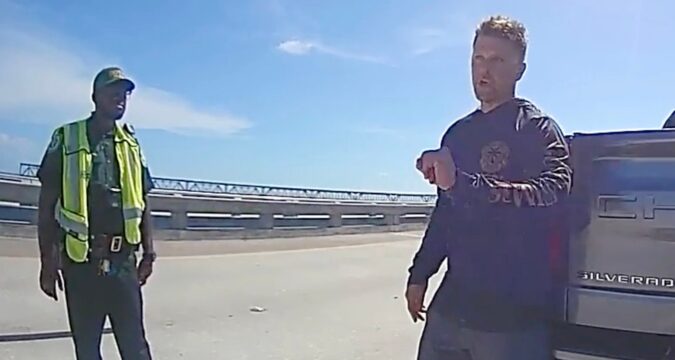
In the first story, an ICE agent was arrested for driving under the influence with his two sons in the car. Those facts alone were unsettling. But it was what the agent said and did during the traffic stop that thrust the story into the national spotlight.
After realizing that his pleas to avoid arrest weren’t going to work, the Washington Post reported that immigration officer Scott Deiseroth started making threats to one of the arresting deputies, who is Black and speaks with a Caribbean accent.
“Are you Haitian?” the immigration agent asked the deputy who was just doing his job, responding to a call from another motorist who’d spotted the erratic driving.
After the Monroe County sheriff’s deputy said that race had nothing to do with the arrest, Deisoroth responded: “It does.” He then addressed the deputy’s partner, saying: “Your boy, he’s Haitian, right?” and vowed “to run some checks” on him and have him deported if things didn’t check out.
Deisoroth pleaded not guilty to the DUI charge and later, through his attorney, apologized for his behavior during the stop.
Still, there seems to be a pretty obvious problem here — a person in a position of power whose first instinct is to try to wield that power in an unethical way.
But beyond that, the other thing that struck me was that the only reason the story got out was because the arresting deputies were wearing body cameras that recorded the interaction. That’s how it should always be. Yet, as I wrote just last month, the agency Gov. Ron DeSantis has tapped to assist in immigration enforcement in this state — the Florida Highway Patrol — has decided not to use body cameras. They instead rely on dashboard cams, which are often far removed from the action and sometimes don’t capture everything that happens during a stop.
Well, this recent incident involving the threat-making immigration officer shows pretty clearly why officers who do everything right would want everything captured on body cameras — and shows just as clearly why those who aren’t operating by the book are relieved when the cameras are MIA.
Maxwell: Florida Highway Patrol lacks body cameras, a rarity in 2025
Deaths on the job
In the other story, the Tampa Bay Times examined Florida’s history of relying on undocumented workers to carry out state construction projects, even as the state’s GOP politicians demonize those same workers who fill those jobs and put their lives at risk.
“Undocumented workers built Florida’s roads — and died in the process,” the Times found, going on to say: “Gov. Ron DeSantis has said undocumented immigrants pose threats. But prominent state highway projects relied on them.”
Undocumented workers built Florida’s roads — and died in the process
One of the featured, grisly anecdotes involved the deaths of two undocumented immigrants from Honduras. The Times reported they were working for one of the state’s go-to contractors — one with a shoddy workplace-safety record — when a trench collapsed and “crushed their organs and split their spines in two.”
Do you remember that story making statewide news when it happened? I don’t. In fact, when I went searching for news coverage from the time, one of the few reports I found was a six-paragraph blurb from a local TV station that told viewers “express lanes will be closed until further notice” before it even mentioned the victims’ names.
Which brings us to a big missing piece of the story about the state’s supposedly serious crack down on immigration — the companies that profit off illegal labor.
We read weekly reports about undocumented immigrants being swept off work sites and the streets. Yet how many reports have you read about arrests of the people who made the illegal hires and profited off the labor?
If you don’t understand the problem, imagine a human-trafficking crackdown where the only people being prosecuted were those being trafficked.
In no other criminal arena do politicians give the law-breakers such blanket passes — often because the law-breaking employers work for industries that cut big campaign checks.
As proof, consider the immigration law lawmakers passed just two years ago. The law allegedly cracked down on companies that don’t use the federal government’s E-Verify database to first vet their hires. But a close reading revealed that the companies caught breaking the law would only be punished if they’re caught breaking it three times — and after they’re given 30 days to fix their law-breaking ways. No other laws work like that. This was a law designed to give the profiteers a pass.
So now put everything you just read together, and you see a state that relies on the very people it disparages, portraying them as threats to society, even while relying on them to do literally back-breaking work at sub-market wages. And then targets them with an agency unwilling to show the public everything that happens during an arrest.
I submit all these seemingly separate stories combine to paint a truly macabre picture. And the only people who can’t see it are those who aren’t looking.