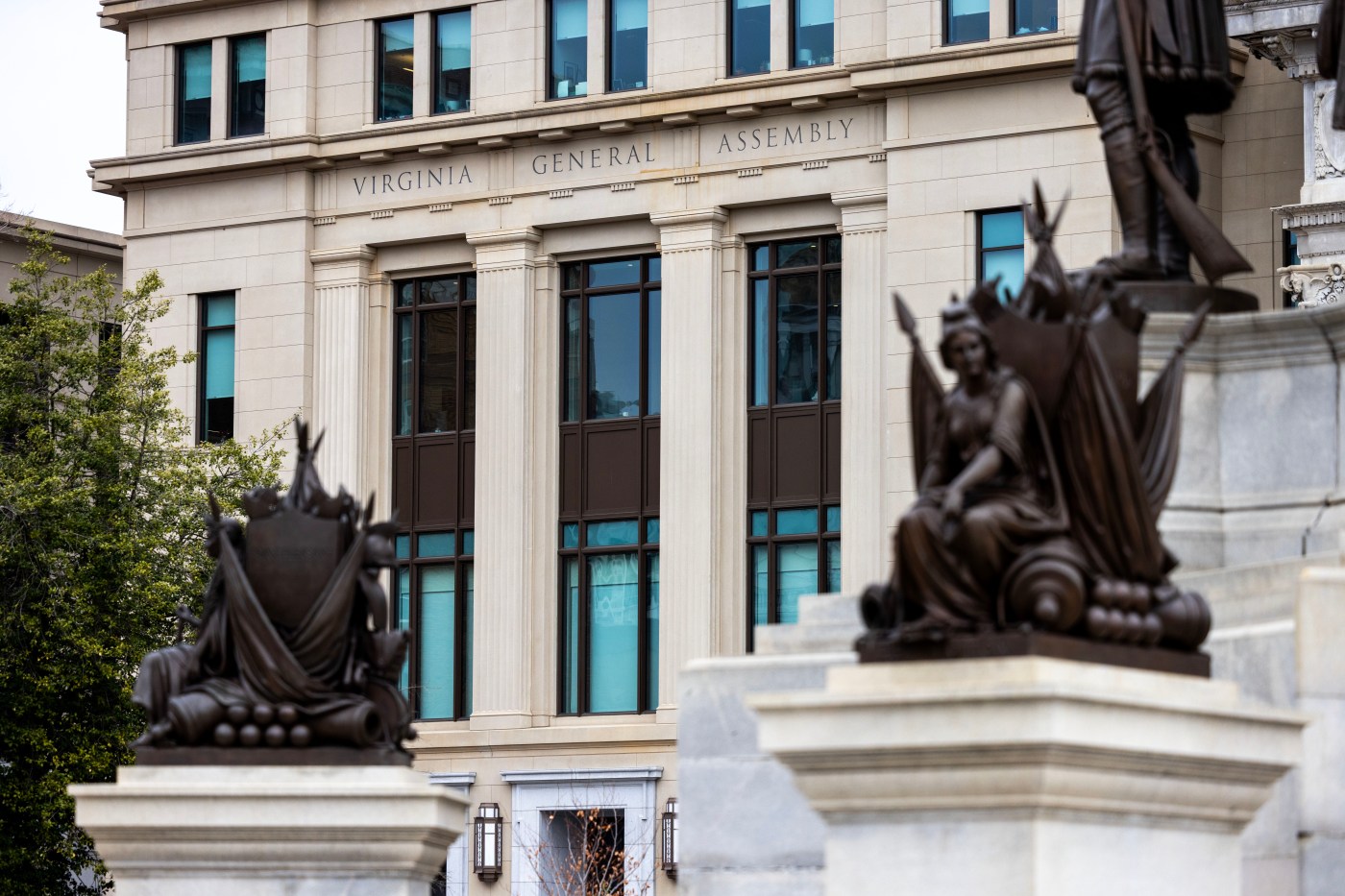
RICHMOND — Earlier this week marked crossover, where bills passed from one chamber of the General Assembly to the other. The House of Delegates sent 841 bills to the Senate, and the Senate sent 496 bills to the House. A higher percentage of legislation is alive now than at the same point last year, according to the Virginia Public Access Project.
But that means nearly 1,000 bills between the two chambers are dead for the year. Here are some of the bills that are buried in the 2026 legislative graveyard.
Elections and government
One bill would have moved all primaries in presidential election years to the same time as presidential primaries. Another, carried by Del. Rob Bloxom, R-Accomack, would have let localities move their elections to months outside November.
Others unsuccessfully attempted to rein in Virginia’s lax campaign finance laws. One bill would have required the Department of Elections to develop a campaign finance database where users could search for and sort campaign contributions and spending. Another would have required federal political action committees that make large contributions to statewide and local elections to report their contributors and contribution amounts.
A bill proposed by Del. Mark Downey, D-York, would have amended the Newport News charter to form a citizen compensation committee to conduct a review before the City Council could approve raising salaries. The council voted in 2024 to nearly double members’ salaries.
Transportation
A number of transportation-related bills died this session. HB 269 would have established a new class of vehicle for e-bikes and other electric mobility devices that could be licensed by localities. That has been continued to 2027.
“It was a bit of a mess in how they tried to do it,” Virginia Beach Director of Legislative Affairs Brent McKenzie said at Tuesday’s City Council meeting. “It basically created some new classes of e-bikes without taking out the old classes.”
Virginia Beach has been looking at ways to promote safe e-bike usage, particularly at the Oceanfront.
The issue will be studied further. HB 1120 directs the Department of Motor Vehicles to convene a work group to examine and make recommendations for options and measures for improving the safety of electric power-assisted bicycles. That bill passed the House 97-0.
Another bill introduced by Del. Jackie Glass, D-Norfolk, would have established a Hampton Roads highway fund to help pay for transportation infrastructure. It was left in committee.
A Senate bill that would have gotten rid of local mandatory parking minimums was left in committee. However in the House, a similar bill advanced.
Bills that pass just one chamber have a shot at survival, but they will ultimately have to win approval in the same chamber where they already failed.
Sealing criminal complaints
A Courts of Justice subcommittee killed off a bill that would have allowed judges to seal criminal complaint affidavits — at least temporarily — at prosecutors’ requests. Under current law, the affidavits are publicly filed with arrest warrants after an arrest is made.
The Virginia Association of Commonwealth’s Attorneys contended the ability to seal the affidavits was needed to protect witnesses and other information in sensitive investigations. But the Virginia Coalition for Open Government and the Virginia Press Association pushed back, saying the affidavits provided the public with crucial information about crime.
The bill’s sponsor, Del. Wendell S. Walker, R-Lynchburg, offered to add a time limit for affidavits to be sealed. But lawmakers didn’t take him up on the offer. A motion to kill the bill carried on a 7-3 party-line vote on Feb. 9, with Democrats in favor and Republicans opposed.
Land use
Legislation failed in the House and Senate that would have made it more difficult for development to happen in Virginia Beach below the Blue Line, a rural dividing line that marks where city water and sewer services end.
Artificial intelligence
Other bills would have created guardrails around the use of artificial intelligence, like one prohibiting the use of AI to provide therapy or counseling services. That bill would have permitted AI in administrative use in therapy practices. Another failed House bill would have prevented AI chatbot operators from allowing chatbots to have human-like relationships with minors. However, the Senate passed a bill that would not only restrict chatbot usage among minors, but also proposes additional chatbot regulations for adult uses, was passed.
Health
SB193 would have required unregulated pregnancy clinics, sometimes called crisis pregnancy centers, to have a qualified medical provider on the premises. And SB359 would have allowed adults with a terminal disease to request a prescription for a self-administered aid in dying medication. A House bill allowing similar end of life medication access was continued until 2027.
Reporters Stacy Parker and Peter Dujardin contributed to this report.
Kate Seltzer, 757-713-7881, kate.seltzer@virginiamedia.com
https://www.dailypress.com/2026/02/20/bills-died-virginia-general-assembly/