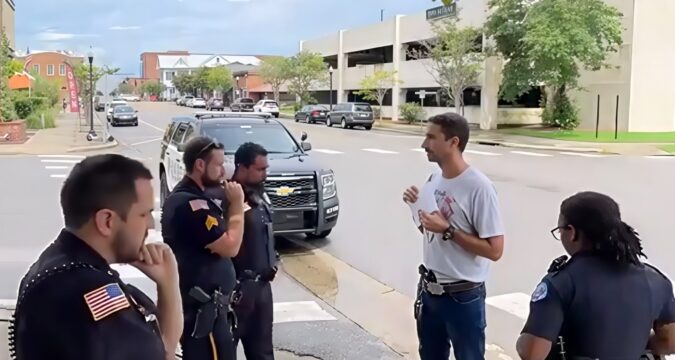
The Florida appeals court ruling that struck down the state’s 40-year ban on open carry has thrown the state into a period of uncertainty and confusion. As a veteran detective who has spent nearly two decades on the ground in South Florida, I can tell you that this decision, while celebrated by some, presents significant and complex challenges for law enforcement and communities.
The immediate fallout is a lack of consistent, statewide guidance. While Attorney General James Uthmeier has declared open carry “the law of the state,” the reality for officers on the street is far from simple. Some sheriffs, like Pinellas County’s Bob Gualtieri, have publicly expressed caution and concern, stating that open carry is not “totally unrestricted.” This uneven response creates a confusing and potentially dangerous patchwork of rules. An armed citizen traveling from one county to another may not know what is permissible, and an officer may not know what their department’s policy is at a given moment.
Christopher Carita
Open carry also introduces new challenges to established law enforcement protocols. In my time as a hostage/crisis negotiator, I’ve seen firsthand how the presence of a firearm can escalate a situation. When a weapon is visible, it changes the dynamic of an interaction — both for the officer and the public. Officers must now make split-second decisions about a person’s intent, adding a layer of risk and ambiguity to routine interactions. A gun on a person’s hip, even if legally carried, can be perceived as a threat by others, leading to an increase in calls to 911 and a greater demand on law enforcement resources.
The ruling also creates a public perception problem. For many, the sight of a firearm in a public space, such as a grocery store, a park or a restaurant, is unsettling. Walt Disney World, for example, has a policy against firearms and is one of the places where people will not see open carry, but the rest of the state is now different. A 2022 survey from John Hopkins University found that a majority of U.S. adults (54%) support prohibiting open carry at demonstrations and rallies. This divergence in perception between those who see it as a right and those who see it as a threat can erode community trust and create an environment of unease.
While Uthmeier has clarified that the decision does not permit individuals to “menace others with firearms,” the line between legally carrying a weapon and exhibiting it in a “rude or careless” manner can be subjective and difficult to enforce. This ambiguity places a heavy burden on officers to de-escalate situations and make judgment calls in real-time, all while public safety hangs in the balance.
As a public health professional specializing in violence prevention, I know that clear, consistent policies are essential for community safety. The open carry ruling, which came through judicial interpretation rather than a legislative process, has left many key details unsettled.
Moving forward, policymakers, law enforcement and communities must work together to create clarity. We need:
Clear communication to the public about where open carry is permitted and, just as importantly, where it is not.
Statewide consistency to ensure that an individual’s rights and responsibilities are the same regardless of which Florida county they are in.
Continued dialogue among all stakeholders to develop practical and effective guardrails that balance constitutional rights with the fundamental need for public safety.
This moment underscores that responsible gun policy is not just about rights or restrictions — it is about clarity, trust and a shared commitment to public safety.
Christopher Carita is a retired South Florida detective who is the law enforcement advisor to 97percent, a group working to end gun violence.