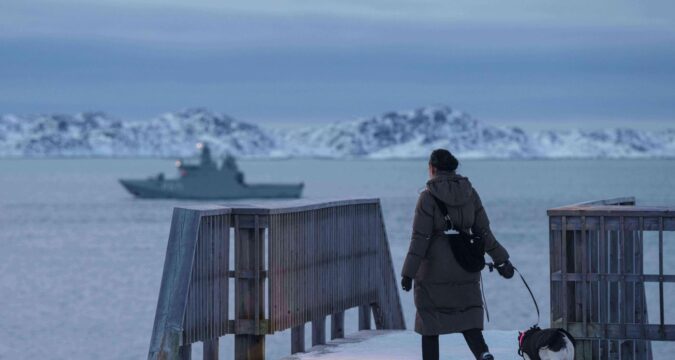
Europe’s recent victory in Greenland is an insightful, teachable moment. European counter-punches have been effective and instructive, and those who opposes Donald Trump’s policies at home and abroad need to understand why. What did Europe get right?
An essential first step was to distinguish between Trump’s actions that were truly unacceptable and those simply annoying distractions. Ceding European territory to Trump was a non-starter. Full stop. The Europeans refused to accept the prospect of any country seizing its land and knew that compromise on this red line risked immediate, intolerable repercussions.
Neil Young’s gift to Greenland: Free access to his entire music catalog
The second strategic move went beyond saying no to Trump. Europe’s leaders stated why, forcefully and in terms that the rest of the world could understand and support. Europe left no doubt that Trump’s threatened land grab violated basic, core values of self-determination, respect for sovereignty and rejection of invasion or forced occupation no matter how strong the aggressor or how intense the desire.
One year ago, they were America’s convictions, as well.
Those values lie at the heart of the post-World War II international rules-based order of which the United States was the principal architect, and notably are at the heart of the North Atlantic Treaty Organization (NATO). Today, Europe understands – and is rightfully alarmed – that Trump’s blustering and threats toward Greenland constitute aggression toward a fellow ally, thereby posing the risk of armed conflict and/or the dissolution of the alliance.
The third part of Europe’s strategy was to understand the adversary. Trump is not one who ensures that permissions are in order and procedures are legal before taking action. This behavior was on full display from the start. His record in tearing down buildings in New York and breaking ground to start construction often reflected a “sue me if you don’t like it,” attitude. One need only pay attention to the ballroom underway at the “people’s house” or the snarky, infantile plaques that now accompany portraits of our former presidents at the White House.
Far more ominous, Trump’s deploying the U.S. military in U.S. cities and capturing President Nicholas Maduro of Venezuela underscore why anyone paying attention takes his threats seriously. Europe is paying attention. His announced plans to make Greenland part of the United States invoked fear in Denmark and throughout NATO. They know this is no joke. They believe they could wake up one morning and find U.S. military forces occupying Greenland.
The Europeans also remember and benefitted from the lesson of the pre-emptive, U.S.-led action in Berlin after World War II. With Russia threatening to seize the city of Berlin, the U.S., France and United Kingdom reinforced deployments with a few thousand troops each. They set a convincing tripwire.
Now, in response to Trump, Europe is taking no chances. Eight NATO countries, including its major powers, and strikingly the United Kingdom, sent token forces to Greenland in order to demonstrate that NATO took seriously Greenland’s defense. This virtually inconceivable state of affairs had NATO forces in-country, prepared as a tripwire, to defend against the United States of America.
It is also critical to note that the European gambit included this insight: in a Trump-ordered clash of allies, the prospect of American forces suffering casualties or inflicting them on our allies would be too high a price for Trump to pay.
Appeals court rules Trump administration unlawfully ended TPS for Venezuelans
And so, the final strategic move was to stand firm and stand united. The message was loud and clear: Greenland is neither for sale nor defenseless. Thus, Trump’s two possible moves were blocked. Europe won this tactical encounter.
Unfortunately, the victory is more one of relief than celebration in Europe. NATO is in trouble.
Trump stepped back but quickly followed up by denigrating the contributions of NATO countries to U.S.-led military operations in Iraq and Afghanistan, saying the U.S. “never needed” their support and that they stayed “a little off the front lines.”
Our allied leaders, their veterans and families of solders who died supporting the United States were quick to denounce Trump’s words. Denmark was a full partner supporting us in both operations and has the casualties to prove it. Fighting with the United States constituted the United Kingdom’s deadliest engagements since the 1950s. Prime Minister Keir Starmer, in unusually harsh language, demanded a Trump apology and condemned his statements as “insulting and frankly appalling.”
It is stunning that our president would seriously entertain invading an ally and acts derisively and disrespectfully toward our closest friends, to the extent that its members now question the viability and integrity of NATO.
The Greenland situation is but one of several Trump initiatives that break with American normalcy in the national security realm. We are leaving international organizations that serve our interests, using tariffs as commercial bribes and weapons in foreign policy disputes and relinquishing leadership in the international order we put in place.
Still, this remote, self-governing territory of Denmark, home to just 56,500 people, presents a remarkably important notice to Trump: Europe’s got your number. Pay attention.
American leaders who favor predictable, positive U.S. leadership around the world based on alliance solidarity, and who seek to alter Trump’s domestic agenda, should also be paying attention to the European tactical victory in Greenland.
Opposition needs to be driven by explicit core values, unequivocal red lines, willingness to act, and the guts to confront the bully. You can’t win alone; gather allies, form a phalanx and do not mince words.
Europe has demonstrated insight in how to confront Trump effectively. Allies can help each other in unexpected ways.
Arthur House is an adjunct professor at the University of Connecticut. He lives in Simsbury.
https://www.courant.com/2026/02/02/opinion-greenland-the-little-confrontation-that-could/