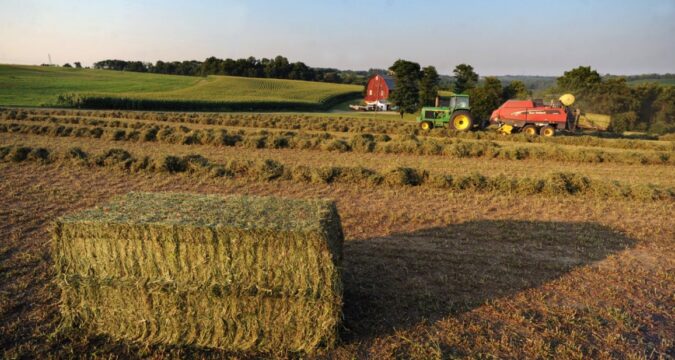
The phrase “saved from development” has always unsettled me. It suggests that development is something dangerous — something we must rush to stop. But is it always a threat? And if not, why do we treat it that way?
On Aug. 22, 2025, The Morning Call ran a story titled, “9 More Lehigh Valley Farms Saved from Development. Find Out Where.” But the article never explained why these properties were preserved. That’s an important omission. As a real estate broker and professional planner, I support strategic land acquisition for open space. I served four years on a county open space committee in New Jersey, chairing it in my final year. One thing I brought to that role was the willingness to ask a tough but essential question: Why this land?
When towns requested funding to preserve parcels, we evaluated whether the land fit into a broader agricultural or open space plan, offered environmental benefits, or held scenic or aesthetic value. But if the only reason was that a developer wanted to build something — within the bounds of zoning and the master plan — I couldn’t support it.
That’s why The Morning Call’s framing gave me pause. The article said the land was purchased to “protect it from future residential or commercial development,” and to “preserve farmland to ensure it is available to farm for future generations.” That sounds noble — but it lacks substance. What made these parcels worth preserving? What public benefit did the acquisition fulfill?
To be clear: I’m not judging any individual purchase. I’m suggesting the public deserves more clarity about why land is preserved — and whether it supports a broader vision.
Meanwhile, the Lehigh Valley faces a growing housing crisis. According to a Lehigh Valley Planning Commission report, (“Data Tool Provides Housing Analysis for Every Valley Community,” April 3, 2025) the region is short 9,000 housing units — a gap projected to exceed 50,000 without intervention.
At the same time, Pennsylvania still has more than 7.1 million acres of farmland (U.S. Department of Agriculture, news release, Feb. 16, 2024). Farmland is important and worth protecting — but so are homes for working families, and spaces for jobs, shopping, and recreation. Balanced growth matters.
Government shouldn’t block development just for the sake of it. Nor should farmland be preserved purely out of nostalgia. We need to ask better questions: Why this land? What public goal does this serve? The answers should come from comprehensive planning — not fear of change.
Comprehensive planning is how a community decides how it wants to grow. It looks at infrastructure, roads, housing needs, natural resources and more. It defines where to preserve open space, build homes, support business and attract industry. It’s a public, participatory process involving residents, stakeholders and elected officials.
Once adopted, the comprehensive plan leads to zoning. Zoning turns vision into law. It protects public health, safety and welfare; reduces land-use conflicts; supports economic growth; and helps preserve community character. In Pennsylvania, this process is governed by the Municipal Planning Code (Act 247 of 1968). Zoning is the rulebook for responsible growth.
The Lehigh Valley is growing. And like electricity, growth can be transformative when managed well. It can power homes, drive the economy and connect communities. But unmanaged, it can be destructive.
That’s why thoughtful planning matters. It helps us decide what land should be preserved — and what land should support housing, jobs or services. So when a newspaper says land was “saved from development,” I want to know: Was that decision consistent with the comprehensive plan? Was it part of a long-term strategy — or just a reflex?
The Morning Call owes readers more than feel-good headlines. It should explore whether preservation decisions align with sound planning. At the same time, municipalities must support their planners. When growth decisions follow adopted plans and zoning, planners shouldn’t be left to defend them alone.
We need farms. We need homes. We need places to work, shop and gather. Striking that balance requires thoughtful, informed planning — not emotional reactions.
Let’s stop treating every halted project as a win — and start asking smarter questions about the future we’re building.
This is a contributed opinion column. Matt Sprung is an associate broker with NAI Summit and principal of the Sprung Planning & Real Estate Consulting Company. He is a resident of Forks Township wherehe sits on the Planning Commission. The views expressed in this piece are those of its individual author, and should not be interpreted as reflecting the views of this publication. Do you have a perspective to share? Learn more about how we handle guest opinion submissions at themorningcall.com/opinions.