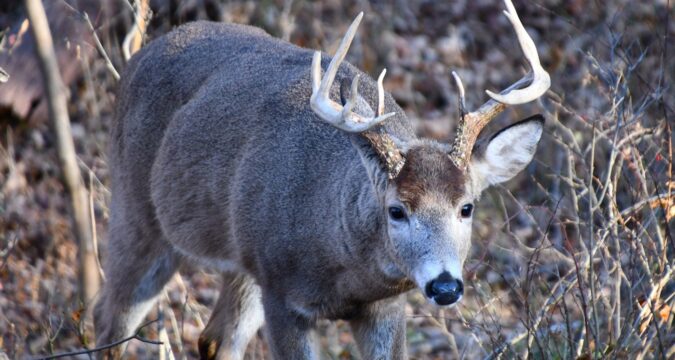
For those of us here in the southeastern corner of the Pennsylvania archery deer season is set to open this Saturday. That gives archers here a two-week head-start on a season that won’t open statewide until Oct. 4. Bowhunters in a section near Pittsburgh also get that extra two weeks.
While that additional bowhunting time afield might seem like a nice gift from the Pennsylvania Game Commission (PGC), there are a number of drawbacks to those early weeks. For one thing it’s likely to be muggy and buggy. After all, when that opening weekend hits town it’s still summer with autumn not kicking in until Monday, Sept. 22. Even then conditions for stalking whitetails will be less than ideal.
Hunters breaking a sweat on their way to their stands are more likely to be detected by the deer’s sensitive nose, so a cover scent is a good idea. Bug repellent applied to ward off black flies, chiggers, and mosquitoes might also ward off that trophy buck. Early season heat and humidity definitely requires any arrowed deer to be recovered as soon as possible before the venison can spoil which doesn’t take long on those balmy early season days and nights.
Other early season conditions give an advantage to deer. The thick summer foliage severely limits visibility which makes deer harder to see. And the fact that there’s no crunchy leaf cover on the ground also makes them harder to hear. Fast forward to mid-November with naked trees and ground cover thick with crispy dry leaves and the advantage shifts from buck to bowhunter.
Meanwhile there’s a growing concern about epizootic hemorrhagic disease, which is spread to deer when they are bitten by infected midges, small insects often called “no-see-ums.” Because EHD is spread by midges, it emerges in late summer and remains a threat to deer until temperatures drop and the midges die off, usually at the first hard frost. But in local areas where EHD is present, deer mortality can be severe.
EHD, a viral disease that’s often fatal to white-tailed deer, has hit some parts of the country extremely hard this year, especially in parts of southeastern Ohio and West Virginia.
Many opening day archers will be opting for crossbows like this one. The season opens Saturday, Sept. 20. (Photo courtesy of Tom Tatum)
In Pennsylvania, EHD has been confirmed in a handful of counties in the northwestern part of the state. But the Pennsylvania Game Commission also has investigated reports of dead deer in southwestern and southeastern Pennsylvania, where test results are pending.
The public is encouraged to report sick or dead deer, especially if several are found dead in the same area and the cause of death is not apparent. The Pennsylvania Game Commission can be contacted, round the clock, at 1-833-742-9453.
Public reports allow the Game Commission to further investigate and track EHD outbreaks. So far this year, EHD has been detected in Butler County, Muddy Creek Township; Erie County, Mill Creek Township; Lawrence County, Slippery Rock Township; Mercer County, Liberty and Shenango townships.
EHD is one of two viruses spread by biting midges that cause hemorrhagic disease in Pennsylvania deer. The related bluetongue virus (BT), which historically has been less common in Pennsylvania, has similar impacts. Infected deer often develop clinical signs about seven days after infection and die soon after. Signs include swelling of the face or neck, loss of appetite, lethargy, weakness, lameness, respiratory distress, fever and excessive salivation. Some deer survive the initial infection and can develop chronic signs like hoof cracks or overgrowth.
There is currently no treatment for EHD or BT infections in wild deer, and for diseases spread by insects, wildlife management options are limited. However, local deer populations often rebound within two to three years following an outbreak.
Neither EHD or BT has been detected in Pennsylvania elk, and elk are considered less susceptible to infection. Both EHD and BT virus can infect domestic livestock. Reports of sick livestock should be directed to the Pennsylvania Department of Agriculture at 717-772-2852.
For bowhunters who plan to be afield on opening day, a few days remain to scout your hunting grounds and practice shooting that bow or crossbow. With the rut not coming into play until late October, best bets for scoring on early season bucks and does is hunting acorn and beechnut mast crops, food plots, bait piles (where legal), bedding areas, or pinch points leading from feeding areas to bedding areas. Our regular archery season here in Wildlife Management Units 5C and 5D runs through Nov. 28 with the statewide season ending on Nov. 21.
By the way, Pennsylvania’s archery season on black bear also opens in WMUs 2B, 5C, and 5D on Sept. 20 and runs through Nov. 28. The brief statewide archery season on bears doesn’t open until Oct. 18 running through Oct. 25.
Tom Tatum is the outdoors columnist for the MediaNews Group. You can reach him at tatumt2@yahoo.com.