A selection of summaries from The New York Times Book Review:
Nonfiction
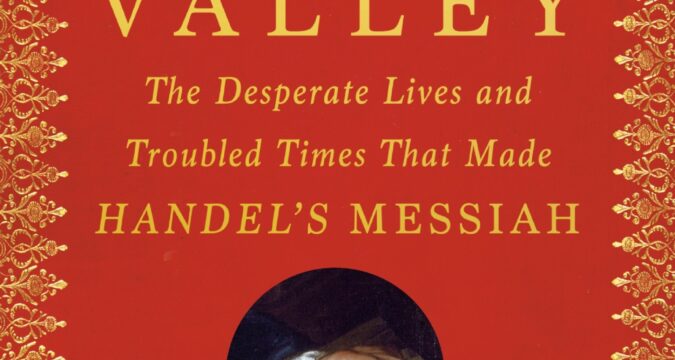
Charles King puts the making of Handel’s “Messiah” into its historical and personal contexts, and considers the nature of creativity. (Courtesy/Vintage)
“Every Valley: The Desperate Lives and Troubled Times That Made Handel’s Messiah,” by Charles King. (Vintage. 368 pp. $20.) King’s narrative retelling of the making of Handel’s 18th-century masterpiece “Messiah,” which he describes as “the greatest piece of participatory art ever created,” is not a work of academic musicology. Rather, it is a wide-ranging exploration of Britain’s Age of Enlightenment, the messy lives of Handel and his contemporaries, and the nature of creativity. — Laura Thompson
“Cult of the Dead Cow: How the Original Hacking Supergroup Might Just Save the World,” by Joseph Menn. (PublicAffairs. 288 pp. $18.99.) Menn, a longtime tech reporter, pulls back the curtain on the Cult of the Dead Cow, a secretive ’90s hacking collective whose members grew from a gaggle of teen pranksters to some of the country’s leading cybersecurity experts. This revised edition offers new updates on the group and its acolytes, who continue to battle political misinformation, online surveillance and more. — Laura Thompson
“The Forbidden Garden: The Botanists of Besieged Leningrad and Their Impossible Choice,” by Simon Parkin. (Scribner. 384 pp. $20.) Facing years under Nazi siege, mass starvation and 750,000 casualties, would you risk your life for the sake of biodiversity? Parkin ably grapples with this moral quandary in his journalistic eulogy for the Russian scientists who opted to preserve 120 tons of edible seeds during the darkest days of World War II, in the hopes that they would one day feed a better world. — Laura Thompson
___
Fiction
“The Brothers Karamazov,” by Fyodor Dostoyevsky. Translated by Richard Pevear and Larissa Volokhonsky. (Picador. 880 pp. $22.) This translation of Dostoyevsky’s last novel — now reissued with a foreword by Karl Ove Knausgaard — was a revelation when it was first published in 1990. “The truth is out at last,” Andrei Navrozov, a poet and writer, noted in his review at the time. Pevear and Volokhonsky’s edition of the novel, he continued, “finally gets the musical whole of Dostoyevsky’s original.” — Miguel Salazar
“Don’t Be a Stranger,” by Susan Minot. (Vintage. 320 pp. $18.) A divorced 50-something mother finds herself in an obsessive, erotic free-fall after friends set her up with a handsome ex-con musician 20 years her junior. On a shelf crowded with recent novels about midlife female pleasure, Minot’s stands out for its airy, ephemeral quality. “Rather than a book you ‘can’t put down,’” Times critic Alexandra Jacobs wrote, “it’s one you might pause from precisely to prolong its mild suspense and poetic pleasures.” — Laura Thompson
“The Forger’s Requiem,” by Bradford Morrow. (Atlantic Crime. 288 pp. $17.) Morrow’s thriller opens in startling fashion: Henry Slader, a high-end literary forger, wakes up to find that he’s been buried alive by his nemesis, Will Gardener. He exhumes himself and sets out for revenge, unaware that another forger, Will’s precocious daughter, has him in her crosshairs. Although this is the third and final installment of Morrow’s “Forgers Trilogy,” according to New York Times critic Sarah Lyall, it reads “just fine on its own.” — Miguel Salazar
“The God of the Woods,” by Liz Moore. (Riverhead. 576 pp. $19.) In 1975, the 13-year-old daughter of an Adirondack summer camp’s wealthy founders disappears one night at camp. What follows is a finely crafted story about power, grief and scapegoating. Times crime columnist Sarah Weinman included it among the best crime novels of 2024: “I expect to be thinking about this novel years from now.” — Miguel Salazar
“To Save the Man,” by John Sayles. (Melville House. 336 pp. $19.99.) The founder of the Carlisle Indian Industrial School had an infamous motto: “To save the man, we must kill the Indian.” Sayles’ novel follows Carlisle School students in that very predicament — trapped in an institution while a rebellion brews on the Great Plains. As the world barrels toward what would become known as the Wounded Knee massacre, students and teachers are forced to choose sides. — Laura Thompson
https://www.dailypress.com/2025/12/17/paperbacks-worth-reading-or-giving-from-histories-to-novels/