The thickness of the wallets of America’s 46 presidents has shown a wide range: some entered office with a large net worth, a few lost most of their assets after leaving the White House, others accumulated a fortune in retirement, and a handful never had much money at all.
“In the annals of American history, the wealth disparities among U.S. presidents have been as varied as the political ideologies they represented. From George Washington’s multi-million-dollar fortune to Harry Truman’s modest net worth, the financial backgrounds of our commanders in chief have shaped their policy decisions and economy during their terms,” Isaac Lane said in a 2024 article on AInvest.com.
Starting with the founding of the republic, those with money have exerted a disproportionate influence over the nation’s political trajectory. Early Presidents George Washington, Thomas Jefferson, James Madison and James Monroe came from wealthy Virginia landowning families.
In an article for the Voice of America website, Dora Mekouar notes that founding father George Washington was among the richest individuals to assume the presidency, with an inflation-adjusted peak net worth of approximately $587 million — ranking third behind Donald Trump ($3.1 billion) and John F. Kennedy ($1.1 billion). Washington’s Mount Vernon estate included five separate farms spread across 8,000 acres. In addition to his landholdings, he had diverse business interests and earned significantly more as chief magistrate than his successors. His presidential salary of $25,000 accounted for 2% of the entire U.S. federal budget in 1789.
In her book “All the Presidents’ Money,” Megan Gorman astutely summarizes the complex financial reality of the man from Monticello: “Jefferson had an enviable existence as a key figure of his time, living a luxurious life few could afford. The truth is that he really couldn’t afford it either.”
Donald Trump is among the richest individuals to assume the presidency. (Jacquelyn Martin/AP)
Jefferson’s considerable wealth paved the way for his political ascent. With over 2,000 acres of land and multiple plantations, he was among the most affluent of the Founding Fathers before assuming the presidency. However, his fortune declined severely after leaving office due to poor pecuniary management, inconsistent agricultural income and a lavish lifestyle that far exceeded his means. By the time of his death in 1826, Jefferson was deeply in debt, and his estate and personal belongings had to be auctioned off to satisfy creditors.
The monetary histories of Madison and Monroe closely paralleled that of Jefferson. Madison, who owned 5,000 acres, was the largest landholder in Orange County. Although he earned a substantial income during his tenure as secretary of state and president, his funds deteriorated in retirement due to the collapse of his plantation’s profitability.
Similarly, Monroe entered the presidency in strong financial standing, but his funds diminished sharply after his term. According to historian Henry F. Graff, Monroe’s debt was exacerbated by inadequate compensation for his salary and expenses while serving on diplomatic missions abroad.
Although Andrew Jackson was seen as a man of the people, he reportedly became one of the richest U.S. presidents of the 1800s. “Old Hickory” was born into poverty, but he was not entirely a self-made person. He began accumulating resources through his legal career but significantly increased his fortune by marrying into a well-heeled family. Additionally, he profited from distributing land to cotton planters — even while holding public office.
Starting in the mid-19th century, the financial background of those in the White House began to shift. Most were lawyers who had spent many years in public service, and few accumulated substantial assets. Their primary source of income was often their government salary. Starting with Millard Fillmore, many of these presidents came from and remained firmly within the middle class. Upon leaving office, they often lacked the personal funds to support a lifestyle anything like the one they had enjoyed at 1600 Pennsylvania Ave.
In the 20th century, inherited prosperity played a significant role in shaping the fortunes of many Oval Office occupants.
Theodore Roosevelt was the first in a line of commanders in chief who hailed from a well-to-do background. In a 2024 article on WealthGang.com, Alina Wang described Roosevelt as originating from an upscale New York City family with ancestral roots dating back to the early settlers of New Amsterdam. He entered the presidency with a net worth of $1.3 million (adjusted for inflation). “His early investments in cattle ranching in the Dakotas, coupled with his family’s wealth, allowed him to achieve financial independence before entering politics,” Wang wrote. Roosevelt also increased his worth through a prolific writing career.
Alongside those with legacy money, several national leaders had to overcome significant economic handicaps.
James A. Garfield, the 20th president, was born into poverty. From a young age, he was forced to take on various jobs to fund his education, including working on canal boats that traveled between Cleveland and Pittsburgh. Although he eventually rose to become a college president, his financial situation remained modest. Tragically, Garfield died just five months after his inauguration from an assassin’s bullet.
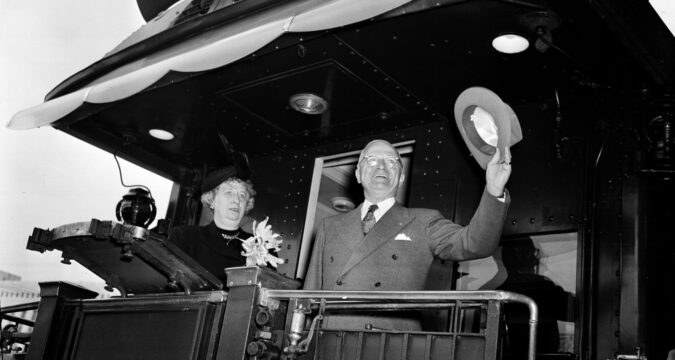
Harry S. Truman is often cited as “the poorest president to enter office in modern history,” noted Adam Hayes on Investopedia.com. Truman faced considerable money struggles both before and after his presidency. His out of office monetary hardship contributed to the enactment of the Former Presidents Act, which provided retired chief executives with a livable pension. Truman was the last less fortunate chief executive — all who followed him into the country’s highest office were millionaires.
Even though presidents have come from a wide range of financial backgrounds, one author pointed out that what really defines great leadership isn’t wealth; it’s dedication, integrity and a genuine commitment to serving the public.
Jonathan L. Stolz is a resident of James City County.