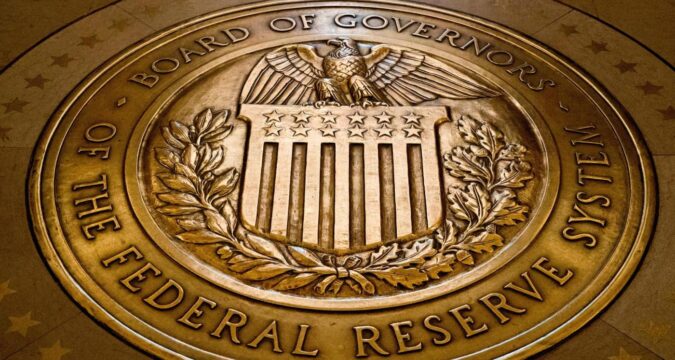
Presidential power — and the issues of currency, banking and monetary regulation — have been central to America’s political landscape since the nation’s founding. The relationship between presidents and the institutions that shape U.S. monetary policy has been defined by cycles of cooperation and conflict, reflecting shifting views on the appropriate role of government in managing the nation’s financial system.
In an article published by the Federal Reserve Bank of Minneapolis, it noted that today’s “Federal Reserve System’s unique structure has been shaped by this country’s earlier experiments with central banking, and by the political responses to those experiments.” These developments began in the aftermath of the Revolutionary War, when the newly independent nation found itself burdened with substantial debt.
Beyond the liability of war obligations, the 1780s were a time of widespread economic disruption in the fledgling United States. In response to the financial instability, George Washington’s treasury secretary, Alexander Hamilton, proposed the establishment of a national bank. As Sam Spencer explains in a piece for the University of Virginia’s Miller Center, “Hamilton believed that such a bank, independent of direct control by the government, would regulate American credit and currency based on expertise rather than political will.”
Hamilton’s vision faced strong resistance. Thomas Jefferson, among others, feared that a centralized banking system would create a financial monopoly. According to Andrew T. Hall, writing on FederalReserveHistory.org, Jefferson was concerned that a national bank might undermine state banks and adopt policies favoring financiers and merchants over plantation owners and small-scale farmers. He also argued that such a bank was not authorized by the Constitution.
Alexander Hamilton was the visionary behind the formation of the First Bank of the United States. John Trumbull/Wikimedia Commons
Despite opposing voices, Congress approved the charter for the First Bank of the United States in 1791. For the next 20 years, the institution played a key role in stabilizing and supporting the American economy. However, its charter was not renewed in 1811. Just five years later, following the War of 1812 and a severe economic downturn, President James Madison signed the bill that created the Second Bank of the United States.
Early on, the reprised bank failed to address a financial crisis. But with new leadership, its reputation recovered. By the late 1820s, it was not only functioning effectively but had become, for many, indispensable. “But not to Andrew Jackson,” as Daniel Feller declares in Humanities. The populist Old Hickory viewed the bank as a corrupt instrument of elite power. In 1832, he refused to extend its charter and soon after withdrew federal funds from its vaults. This initiated a steep decline that continued until the bank’s original charter expired in 1836.
The next 25 years marked the era of “free banking.” Although Congress attempted to establish a third national bank in 1841, the bill was vetoed by President John Tyler. In the absence of a federal monetary system, individual states began issuing charters to banks with little or no oversight. These loosely regulated institutions circulated their own banknotes, contributing to widespread pecuniary instability. The outbreak of the Civil War — and the urgent need to fund it — rekindled interest in creating a federal monetary institution.
An essay published by the Office of the Comptroller of the Currency observed that “Abraham Lincoln understood the importance of a common national currency and bank credit to support a healthy economy.” As a young man, he witnessed how unreliable paper money and limited access to credit hindered the ambitions of his neighbors. These early experiences deeply influenced his political views.
In 1863, Lincoln, working closely with Treasury Secretary Salmon P. Chase, urged Congress to establish a national banking system modeled after Hamilton’s earlier financial vision. This new system allowed banks to operate under either a federal or state charter and, for the first time, introduced a standardized national currency in the U.S. “The legislation that was passed under Lincoln forms the foundation of today’s U.S. banking system,” according to a report on NIBCoalition.com. Although the initiative successfully helped finance the Civil War, it was plagued by recurring instability, with at least one banking panic occurring in nearly every decade following the conflict.
By the early 1900s, it had become evident that a more stable and modernized banking system was needed. Following Woodrow Wilson’s election to the presidency in 1912, a long-term solution began to take shape. In 1913, he signed the Federal Reserve Act into law. As one report described it, the act was “a classic example of compromise.” The new system established 12 independent regional Federal Reserve Banks to reflect the geographic distribution of the population and financial activity across the country, all overseen by a central governing board based in Washington, D.C.
Not surprisingly, over the years — much like with the earlier national banks — there have been ongoing tensions between the Federal Reserve, the president and Congress. In 1951, the Treasury-Federal Reserve Accord marked a turning point in limiting political interference by formally establishing the Fed’s independence in setting monetary policy. However, as Brian Oettinger of Vintage Financial Partners noted, that hasn’t stopped presidents from “pushing, prodding, and at times outright battling with the Fed — particularly when elections, inflation, or recessions are at stake.”
President Trump’s recent public pressure on the Federal Reserve Chair to lower interest rates echoes similar actions by past presidents: Harry Truman in 1951, Lyndon Johnson in 1965, Richard Nixon in 1972, Jimmy Carter in 1978 and George H. W. Bush in 1992. In some cases, the Fed yielded to political pressure; in others, it maintained its independence.
The evolution of America’s central banking system traces back to Hamilton’s inspiration for the First Bank of the United States. While Hamilton might not understand many aspects of today’s Federal Reserve, he would undoubtedly recognize its fundamental goals.
Jonathan L. Stolz is a resident of James City County.