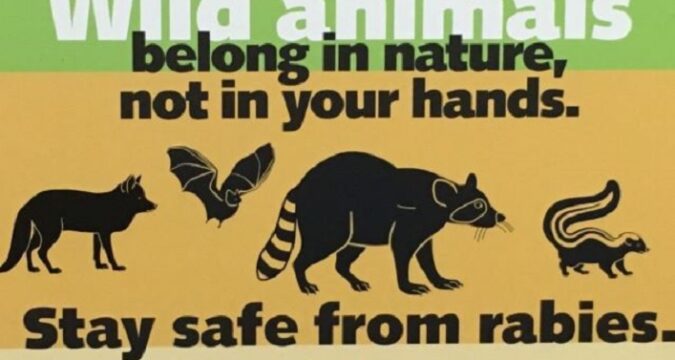
A rabid raccoon was killed in Davie on Tuesday, leading the Florida Department of Health in Broward County to issue a 60-day rabies alert for parts of the county on Wednesday.
The infected raccoon was killed near Interstate 595 in Davie, the health department said in its alert, but it did not specify a location. The alert said residents and visitors need to be aware that rabies is “currently present in the wild animal population.”
The following boundaries in Broward County are included in the 60-day alert:
Northern boundary: Interstate 595.
Southern boundary: Southwest 26th Street.
Eastern boundary: Southwest 112th Avenue.
Western boundary: Southwest 148th Avenue.
Rabies is a viral disease spread through bites or scratches from an infected animal. Bats, skunks, raccoons and foxes are among the most common in the U.S. to be found with rabies, according to the U.S. Centers for Disease Control and Prevention. The disease rarely affects humans in the U.S.; fewer than 10 deaths a year are reported in the U.S.
If someone is exposed to rabies, immediate medical care called post-exposure prophylaxis is required. Treatment includes wound care and four or five rabies vaccines that are needed as soon as possible after being exposed, according to the CDC.
Between January and June of this year, there were a little more than 50 reported rabies cases in animals in Florida, according to data from the health department. Broward and Palm Beach counties had not reported any in that time frame while Miami-Dade County reported one infected goat.
In 2024, there were no reported rabies cases in Broward, Palm Beach or Miami-Dade counties, the data shows. Statewide, there were a total of 110 confirmed cases, most commonly in raccoons and bats.
The Florida Department of Health has documented just over 50 rabies cases in animals statewide between January and June this year. (Florida Department of Health/Courtesy)
The health department recommends the following to prevent exposure:
Immunize pets and livestock.
Supervise pets on leashes.
Avoid coming in contact with wild or stray animals.
Call local animal control to remove stray animals.
Prevent wildlife from entering living spaces.